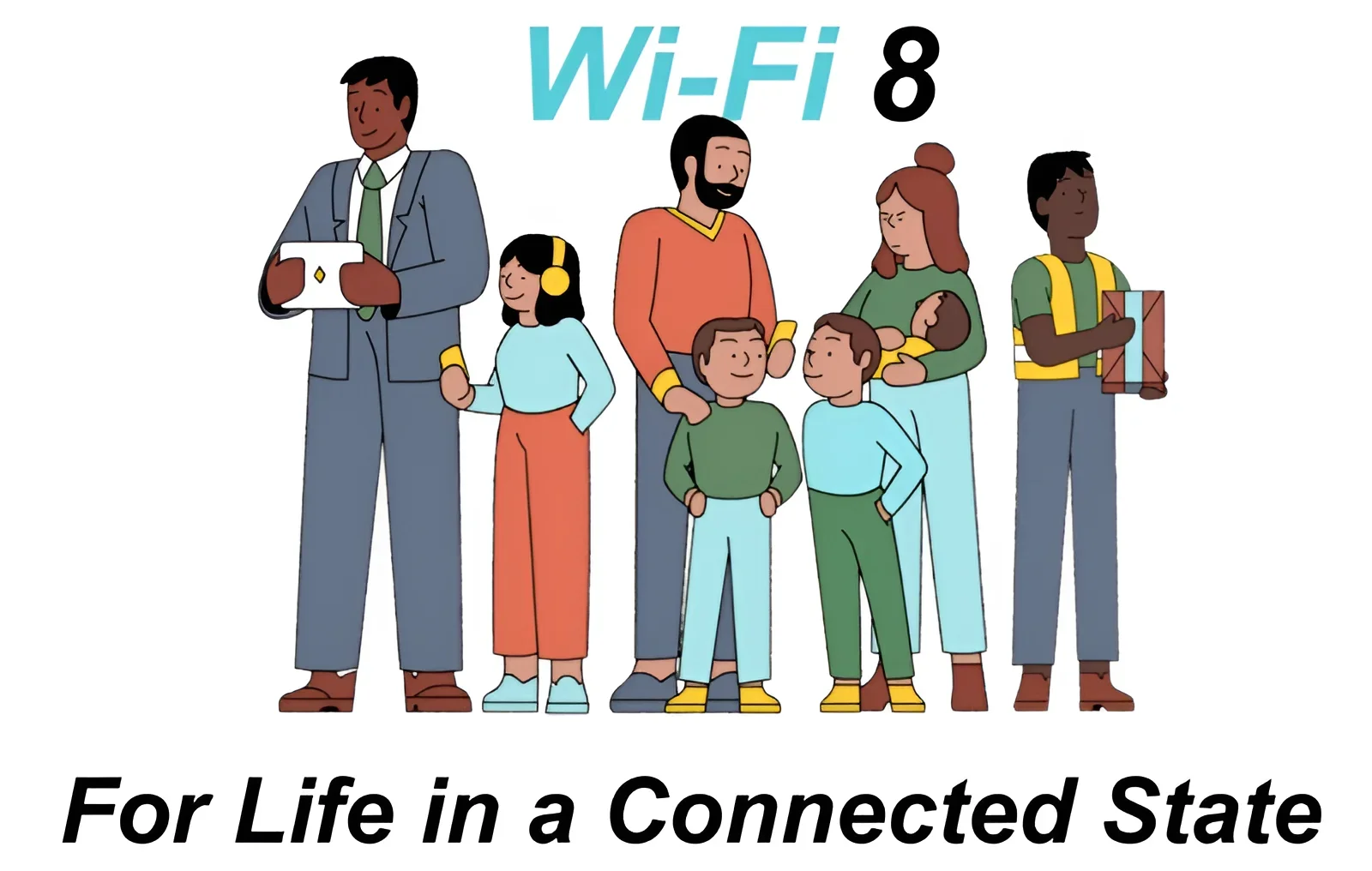
The era of the mad race for theoretical peak speeds is coming to an end. TP-Link, one of the world leaders in networking equipment manufacturing, has announced the Archer 8 platform — the first step towards implementing the Wi-Fi 8 standard. But this is not just another update with a number in the name. It is a fundamental paradigm shift: from "faster" to "more stable".
The platform launch is scheduled for October 2026. At the heart of Archer 8 lies the new IEEE 802.11bn specification, created to solve the main headaches of the modern user: unstable speeds, connection drops when moving around the house, and latency critical for gamers and video conferencing.
Stability Over Records
Jeff Barney, President of TP-Link, clearly outlined the development vector: "Users are interested not in the peak, but in stability". In conditions where dozens of smart devices connect to a single network, the engineers' task has shifted. Now the priority is ensuring reliable connectivity in "real" conditions, not in an ideal laboratory.
The company's internal tests already show the difference. Comparing early implementations of Wi-Fi 8 with the current Wi-Fi 7 standard under conditions simulating heavy home traffic revealed significant improvements:
- Significant reduction in latency.
- Increased stability when operating multiple devices simultaneously.
- Improved roaming quality in mesh networks.
- Fewer speed "drops" in areas with weak signals.
Engineering and Aesthetics
The Archer 8 architecture combines advanced cooling systems, an optimized antenna array, and artificial intelligence algorithms for radio frequency management. The company's marketers promise that the devices will be not only powerful but also stylish: minimalist design, tactilely pleasant textures, and soft backlighting are intended to highlight the gadget's premium status.
It is worth noting that full specifications and design mockups are not yet disclosed, and availability in regions will be confirmed closer to the release. However, TP-Link's strategy looks the most ambitious to date: the company aims to create an ecosystem where connectivity works perfectly, even when there is noise and interference around.


