
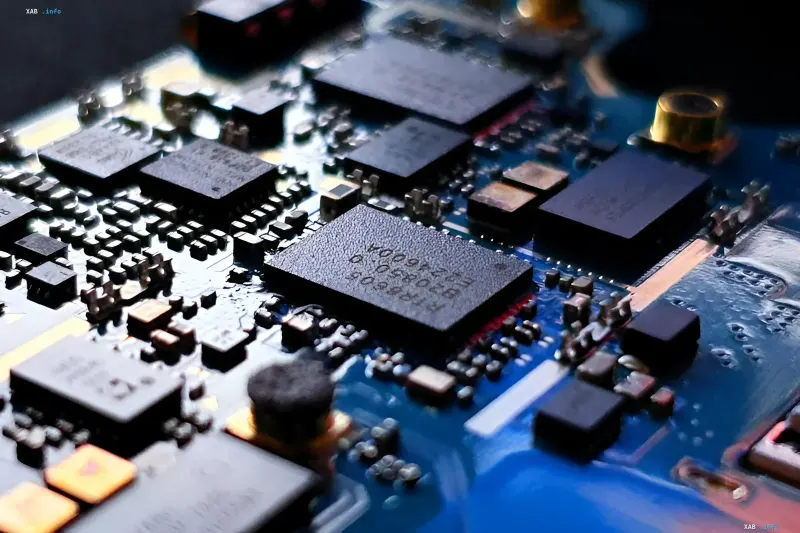
The Russian radio electronics market is facing a large-scale problem of falsification. The Chamber of Commerce and Industry of the Russian Federation (CCIRF) has submitted proposals to the Ministry of Industry and Trade for a radical tightening of control over the origin of domestic products. The initiative aims to eradicate 'pseudolocalization' — the practice where manufacturers pass off products assembled from imported components as Russian-made devices.
Tax incentives under threat
In a letter from CCIRF Vice President Elena Dybova to Deputy Head of the Ministry of Industry and Trade Alexey Matushansky, specific countermeasures are outlined. The key proposal is a strict link between tax incentives and actual proof of the use of domestic electronic component bases. Without evidence of using Russian chips and parts, state support may be discontinued.
Furthermore, the document considers the possibility of introducing administrative and criminal liability for violating the requirements of the national procurement regime. This should become a serious deterrent for unscrupulous market players.
How the deception scheme works
The essence of the problem lies in the imperfection of current verification mechanisms. GS Group Vice President Sergey Dolgopolovsky notes that a significant volume of 'pseudolocalized' products is in a gray area. The scheme is simple: to be included in the Ministry of Industry and Trade registry, the manufacturer provides samples assembled based on domestic components. However, when mass production is launched, these components are replaced with foreign ones.
Experts highlight a number of signs by which such products can be recognized:
- Absence of the manufacturer's own production facilities;
- A recently created legal entity;
- Unrealistically short production times compared to those declared during registration;
- Absence of intellectual property owned by the company.
Price anomaly as a marker
The company Fplus added an important economic indicator. Products created according to the 'pseudolocalization' scheme will always cost 20–40% less than analogues from honest competitors. This is explained by the lack of real investment in development and the use of ready-made foreign solutions.
The situation is exacerbated by the fact that customers often lack effective mechanisms for incoming control and cannot verify the actual composition of the products. As a result, companies continue to use foreign components even after goods are entered into the registry of domestic radio electronic products.
Market and registry scale
The degree of product localization is regulated by Government Decree No. 719, which provides for a point system. Points are awarded for the use of local components and production processes. At the moment, the Ministry of Industry and Trade registry lists about 20,000 items, including printed circuit boards, processors, and data storage systems.
According to the ministry's estimates, the market volume last year reached 4 trillion rubles. The share of domestic producers on it grew from 12–12.5% in 2020 to 62% in 2025. However, it is precisely this growth that makes the fight against fakes critically important for preserving real technological sovereignty.