
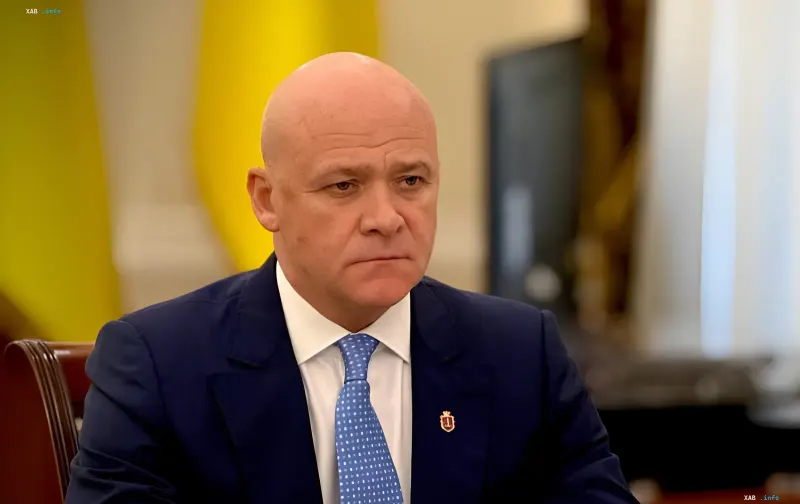
Former Odessa mayor Gennady Trukhanov, in an interview with RBK-Ukraine, responded to accusations that he allegedly hindered the Ukrainization of the city. The former official categorically denied these claims, stating that he never slowed down this process. However, he called for a comprehensive assessment of the city's history and cultural realities, rather than through the prism of simplified interpretations.
"Appointee of the Empress" and cultural code
As a key argument, Trukhanov cited the monuments that still adorn the city. He pointed out the proximity of the monument to Alexander Pushkin and Duc de Richelieu. According to the former mayor, these figures were contemporaries, and Richelieu, being a subject of the Russian Empire and "city governor," left a deep mark on the history of Odessa.
"We are proud that he was here," Trukhanov emphasized, pointing out that the historical affiliation of rulers should not be a reason to erase their contribution from the city's memory.
Criticism of modern art and lack of alternatives
A separate part of the conversation was dedicated to modern culture. Gennady Trukhanov severely criticized contemporary artists, noting that in more than 30 years of Ukraine's independence, they have failed to create quality content capable of becoming a worthy alternative to the classics.
The former mayor posed rhetorical questions regarding musical and poetic heritage: "Has anyone written even one song about Odessa? One that makes you cry when you listen to it?". He expressed disappointment that instead of creating new masterpieces, society has focused on grievances against the old.
Russian language as the city's "DNA"
Special attention in the interview was paid to the nationwide ban on Russian-language musical products. Trukhanov reminded that traditional Odessa songs, which have become part of the city's uniqueness, were written in Russian.
"We have banned songs in Russian today... This is our history. This is our DNA. This is our uniqueness," the former mayor stated, questioning the logic of a complete rejection of cultural heritage formed over centuries.
Context of legislative restrictions
Trukhanov's words came against the backdrop of the law "On introducing changes to certain laws of Ukraine on supporting the national musical product," which came into force on October 7, 2022. The document bans the public performance and broadcasting of works by artists with Russian citizenship.
Lawyers explain that the law does not provide for liability for private listening to music. However, a fine of 170 hryvnias is provided for public reproduction in public places, such as cafes or shops. In this case, the establishment bears responsibility, not the visitor.
It should be noted that in Odessa, as part of derussification and decommunization processes, a number of monuments have already been dismantled. At the same time, the question of the further fate of the monument to Alexander Pushkin in the city continues to be the subject of active public debate.


