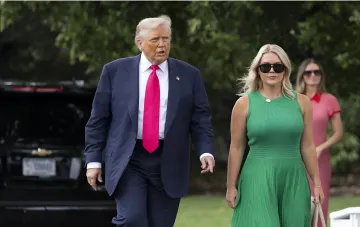
An unprecedented security measure has been implemented within U.S. President Donald Trump's administration: about six senior leadership representatives have moved into military residences traditionally designated for generals and other high-ranking military personnel. According to journalists, such a mass deployment of civilian officials to such quarters is unprecedented in previous American administrations and indicates that the White House assesses the risk level as exceptional.
Who Moved to Military Residences
According to available reports, those who have moved into the enhanced security perimeter include U.S. Secretary of State Marco Rubio, Secretary of War Pete Hegseth, Treasury Secretary Scott Bessent, Attorney General Todd Blanche, and White House Chief of Staff Stephen Miller. The fact that key cabinet figures have been relocated to secure facilities indicates that the threat is perceived not as rhetorical, but as requiring practical physical protection measures.
Causes: Domestic Violence and Threat from Tehran
Officially, the reasons for the relocation are cited as two factors: the intensification of domestic political violence and threats from foreign states. Primarily, according to CNN, this concerns Iran's plans to attack high-ranking officials of the Trump administration directly in Washington. It is reported that a so-called "dirty bomb" or chemical weapons could have been used for such strikes, turning a potential attack into an incident with mass consequences for the capital.
Confirmation from the Treasury Secretary
One of those who moved, Treasury Secretary Scott Bessent, publicly confirmed that he was forced to change his place of residence due to threats from Tehran. "They started threatening me and other members of the cabinet with death. We will not be intimidated," the U.S. minister stated. His statement became a rare direct confirmation that the threats are viewed by the administration as personal and targeted, rather than as general geopolitical rhetoric.
Cost and Precedent
Notably, officials are not staying in the military residences for free: they independently pay the rent, which, according to available data, is about 4,500 dollars a month. The very fact that top civilian leadership is willing to bear such expenses for enhanced security underscores the seriousness of the risk assessment in the White House.
Context of Escalation
The relocation of top officials comes against the backdrop of mounting tensions between the U.S. and Iran. It was previously reported that the U.S. carried out an airstrike on a vessel coming from Iran despite the ongoing blockade, and Tehran conducted a direct strike on a U.S. base in Bahrain for the first time in weeks. The combination of these incidents forms a picture in which the transfer of key administration figures to secure facilities looks like a logical step to protect against a potential asymmetric threat.