
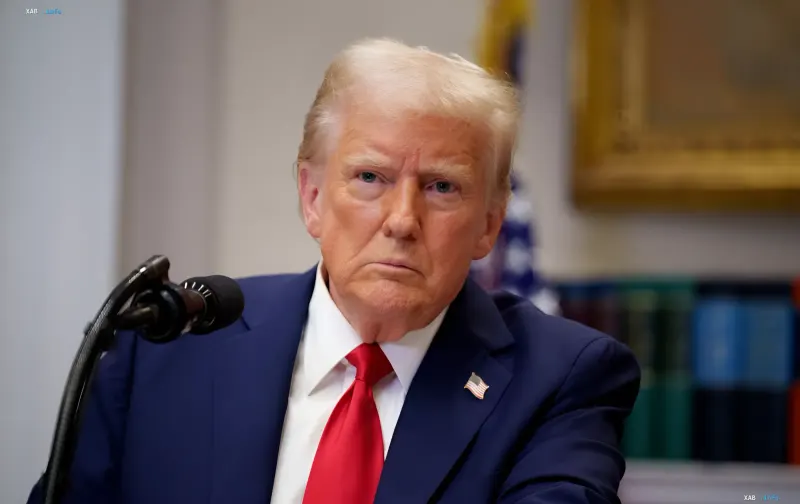
The G7 summit became a stage for demonstrating the new vector of Donald Trump's foreign policy. The meeting of world leaders revealed unexpected shifts in the US position towards Russia and Ukraine. The focus was on statements about increasing pressure on Moscow and revising previously reached agreements.
The Shadow of "Anchorage" and the Threat of Revision
According to information received from two officials present at the summit, Donald Trump expressed deep dissatisfaction with the actions of Russian President Vladimir Putin. Moreover, the American leader admitted the possibility of abandoning the so-called "Anchorage agreements". This refers to a hypothetical scenario in which the US allegedly agreed to Russia's demands for control over the Donbas in exchange for resolving the conflict.
This position sparked lively discussions among partners. As Axios writes, doubts are already being voiced in Europe regarding Trump's determination. One official noted that, despite the rhetoric about pressuring Russia, European leaders are not sure that Washington will actually take concrete steps. Trump, according to them, was skeptical about everything related to Putin, but his intentions remain questionable.
Changing Paradigm: from Intermediary to Partner
An important outcome of the summit was the change in the status of the US in the conflict. As French President Emmanuel Macron reported, Washington approved a text for the first time in which it officially recognizes itself not as a national intermediary, but as a partner of Kyiv. This is a fundamental shift that changes the architecture of diplomatic interaction.
Macron also revealed details of the evolution of Trump's views. According to the French leader, upon taking office, Trump believed that Ukraine would lose the war. However, over time, he became convinced that the forecasts of his entourage were wrong. Sources from the Financial Times confirm that Trump was "extremely shocked and impressed" by the results of Ukraine's recent campaign of long-range strikes on targets deep inside Russian territory.
Sanctions and Personal Meetings
Against the backdrop of geopolitical tension, Trump met with Ukrainian President Volodymyr Zelenskyy. This meeting took place after a conversation with Putin. In his subsequent statements, Trump noted that Ukraine is "doing quite well" in the war. As evidence of the effectiveness of the Ukrainian strategy, the media cite the example of the strike on an oil refinery in Moscow, which took place on the day of the summit.
In addition, at the G7 summit, Trump agreed with the idea of tightening sanctions against the Russian energy sector. This decision could become a serious blow to the Russian economy if fully implemented. Thus, the summit demonstrated that, despite allies' skepticism, Trump is ready for a tougher line towards Moscow.


