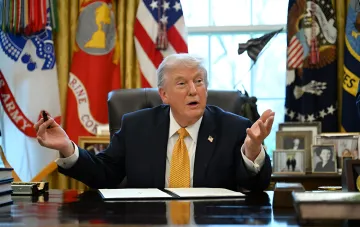
US President Donald Trump has made an unprecedented move by refusing, for the first time in over 20 years, to invite key international observers to monitor the midterm elections. This step has sparked a wave of severe criticism both within the United States and on the international arena, calling into question Washington's commitment to the principles of transparency and democratic oversight.
Background and Essence of the Administration's Decision
For the upcoming US midterms, official representatives from the OSCE Office for Democratic Institutions and Human Rights (ODIHR) will not arrive for the first time since 2002. Historically, the American side consistently welcomed independent experts who assessed the electoral environment for compliance with international standards. Now, however, this long-standing mechanism of transparency has been blocked at the initiative of the current administration, which experts view as a dangerous precedent for American democracy.
International Reaction and Comparison with Autocracies
The refusal to admit OSCE observers has instantly drawn the attention of the global community. Critics note that such isolationist policy puts the United States on par with authoritarian states such as Russia and Belarus, whose electoral processes traditionally face severe international condemnation due to the lack of independent monitoring. Representatives of the OSCE Parliamentary Assembly have already characterized this step as 'pitiable' and a destructive departure from democratic practice.
Political Assessments and Concerns Over Manipulation
Donald Trump's domestic political opponents are expressing deep alarm over the current situation. Senators and congressmen, including members of the Helsinki Commission, openly state that the administration is intentionally avoiding outside scrutiny ahead of the pivotal vote. According to several Democratic lawmakers, the absence of independent observers may be linked to attempts at manipulation on election day, which undermines the remaining voter trust in the fairness of the electoral process.
Contradictory Data
While official OSCE representatives and democratic lawmakers are sounding the alarm over the destruction of institutional traditions, supporters of the president insist on the sovereign right of the US to hold elections without interference from international structures. Discussions arise regarding the actual impact of ODIHR missions on the state's domestic policy, but critics counter that this is not about interference, but about adhering to basic principles of accountability and openness to the global community.