
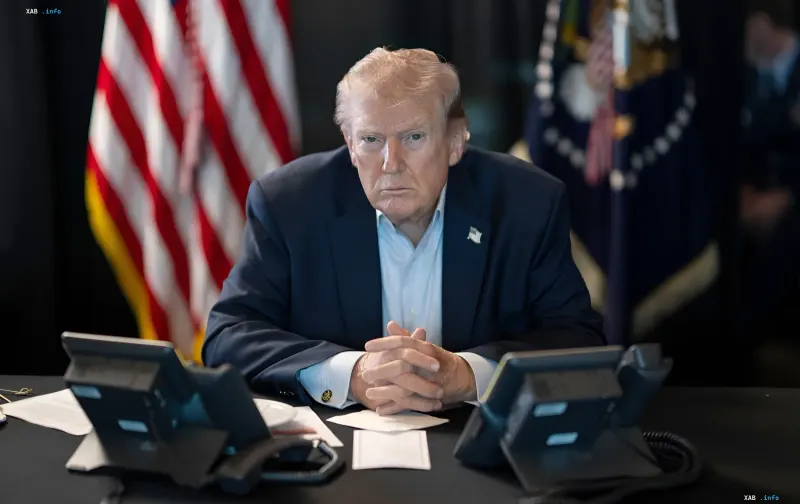
On July 8, news emerged of a sharp shift in US foreign policy towards Iran. Donald Trump officially announced the termination of the ceasefire regime and a complete refusal to engage in negotiations with Tehran. The statement was made during the NATO summit in Ankara and caused a wide resonance on the international stage.
Rejection of Diplomacy and Threats
The American leader did not mince words, calling the Iranian leadership "mad" and "evil" people. According to Trump, Iran attempted to organize an assassination against him and also destroyed thousands of its own citizens. "We have spent too much time on them, and we will have to do what is necessary there," the president emphasized.
In his speech, Trump used harsh rhetoric, calling for the destruction of the Iranian leadership "root and branch, like a cancerous tumor." He noted that the US had already eliminated the first and second leadership of the country and is now not interested in further negotiations.
Consequences for the Region and Economy
The Washington decision to cancel the memorandum of understanding and the ceasefire regime became a logical continuation of a series of aggressive actions. Earlier, American forces struck Iran in response to an attack on commercial vessels. The US also cancelled the sanctions exemption that allowed Tehran to export oil.
Against the backdrop of escalating tension, oil prices began to rise rapidly again, causing concern among global economists and investors. The situation in the region remains extremely unstable, and further steps by the US could lead to serious geopolitical consequences.


