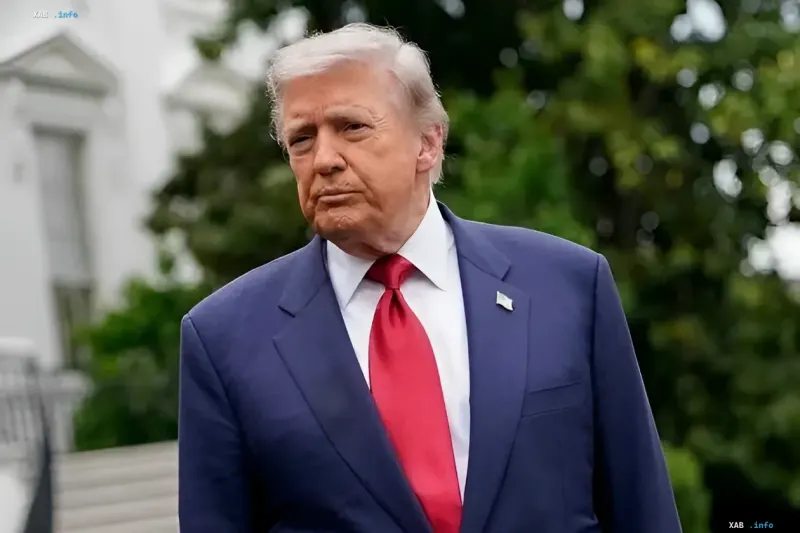
On September 12, 2026, US President Donald Trump, during a bilateral meeting with Irish Prime Minister Michael Martin, publicly voiced his support for the reunification of the island of Ireland. "I don't want to cause any problems, but I'll be honest with you, I really want to see it united. I think it's going to happen sooner or later. So why not do it now?" the American leader stated. According to him, the reunification of the island after more than a century would be a "magnificent event." The remarks came against the backdrop of an already established diplomatic friction between Washington and London over the Irish question.
Context of the Meeting and the Wording of the Call
Trump's words were delivered within the framework of a bilateral contact with Irish Prime Minister Michael Martin and were interpreted by observers as a direct public signal in support of the idea of a united island. The American leader emphasized that he did not intend to "cause any problems," yet openly declared his personal desire to see reunification and that this process "would happen sooner or later." It was precisely this formulation — the acknowledgment of the inevitability of reunification and the call to accelerate it — that triggered the reaction from the British side and unionist forces in Northern Ireland.
Reaction from London and Belfast
The British government rejected Trump's statements, declaring that there are no plans to hold a referendum on the status of Northern Ireland. The British and pro-British forces in Belfast resolutely condemned the American president's remarks. The leader of the Democratic Unionist Party in Northern Ireland, Gavin Robinson, emphasized on social media that the future of the region should be determined by its own people. These comments came several weeks after UK Prime Minister Andy Burnham stated that holding a referendum on Northern Ireland's exit from the United Kingdom was "not being considered."
The Belfast Agreement as the Legal Framework
The key constraint in this discussion remains the 1998 Belfast Agreement. According to its provisions, any change to the status of Northern Ireland can only be made through an official referendum. This means that Trump's public call for reunification has no direct legal mechanism for implementation without such a vote, which is precisely what the British side emphasizes, insisting on the absence of any referendum plans.
Contradictory Data
The available Russian-language summaries of the September 12 event record inconsistencies that must be honestly reflected. First, in terms of primary sources, Trump's call is described with a contradictory formulation linking the reunification of the Republic of Ireland and Northern Ireland "within the United Kingdom," which is logically inconsistent with the standard understanding of island reunification and with London's position rejecting any change of status. Second, the parties' positions fundamentally diverge: Washington (in the person of the president) advocates accelerating unification, while London and the unionists in Belfast oppose it and insist that the decision can only be made by the people of the region through a referendum. Thus, at the time of publication, there is no single, coherent picture regarding the legal meaning and the desired outcome of the statement.
Altogether, Trump's September 12, 2026 statement intensified diplomatic tension between the US and the UK over the Irish question. As long as the British side and the unionist parties hold the line enshrined in the Belfast Agreement — that status can only change through a referendum — the American leader's public calls remain a political signal rather than a step toward practical implementation, which in turn determines the further dynamics of the discussion.