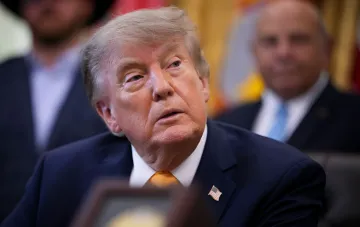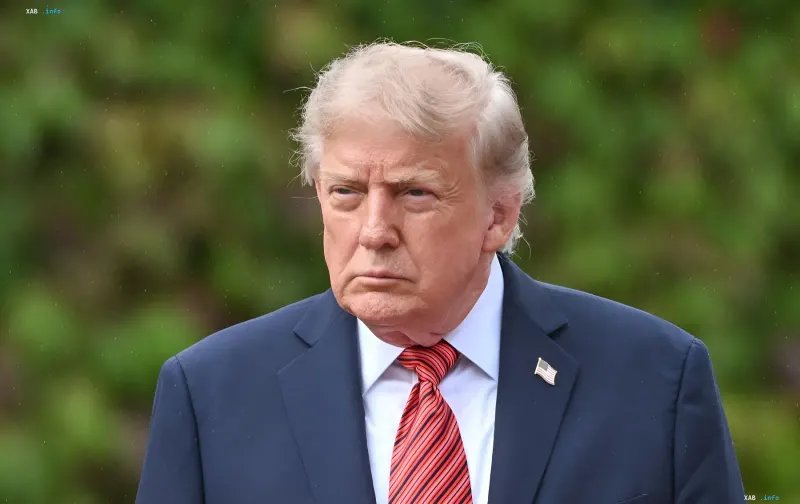
US President Donald Trump, speaking to reporters at the White House on Monday, November 9, stated that Washington is observing a "very clear trend toward ending the war between Russia and Ukraine." According to him, both sides of the conflict are showing fatigue from the hostilities, and the negotiation process, in which the US is directly involved, is moving in a constructive direction. The statement came a day before trilateral talks between Ukraine, the US, and Russia, scheduled for November 10–11 in Abu Dhabi.
"We Are Participating in This": Washington's Role in the Negotiation Track
Trump emphasized that the American side is holding a "very constructive conversation" as part of the Abu Dhabi contacts to end the conflict. "We also see a very clear trend toward ending the war between Russia and Ukraine. We are participating in this," he stated, adding that Washington is recording positive changes in the process of finding ways to end hostilities. The US President did not disclose details of the closed discussions, but stressed that the dialogue is proceeding in a working format rather than a declarative one.
Territorial Issue Postponed Until the Final Stage of Talks
Answering questions about the most painful aspect of the settlement—control over territories in eastern Ukraine—Trump noted that both sides are so far only demonstrating "a certain flexibility" in closed discussions. In his estimation, the parties may move to a concrete agreement on the territorial issue only at the final stage of the negotiation process, once other key positions have been agreed upon. Thus, according to the American president, the issue of borders and control over individual districts will not be brought to the forefront, but will become the final element of a compromise.
Security Guarantees: The Main Unresolved Knot
Among the priority topics for the upcoming meeting in Abu Dhabi, according to Trump, is Ukraine's future security system after the end of the war. It is this block, along with the territorial issue, that determines the pace and depth of possible concessions by the parties. Russian Foreign Minister Sergey Labrov, commenting on the upcoming talks, also confirmed that security guarantees for Ukraine will be one of the key items on the agenda. Thus, both public positions—American and Russian—agree that without a well-developed security mechanism, neither side is ready to move on to final agreements.
Context: What Is Known About the Abu Dhabi Negotiation Format
Ahead of the trilateral contacts on November 10–11, US officials reported a certain flexibility by Kyiv and Moscow in non-public discussions regarding control over territories in eastern Ukraine. According to Washington, this became the first signal in a long time that both sides are ready to discuss the most sensitive aspects of the conflict in a closed format. The negotiations in Abu Dhabi are mediated by the US and include representatives from all three parties. The outcomes of the two-day round could determine whether a roadmap for ending hostilities will be formed in the near future or if the process will return to a protracted diplomatic deadlock.
Assessment of Prospects
Trump's statement, made 24 hours before the start of the talks, is traditionally perceived by analysts as a signal that Washington intends to publicly record positive momentum, even if the final text of the agreement has not yet been drafted. At the same time, the president himself did not name any specific deadlines for the war's end and did not disclose details of possible territorial concessions. A key indicator will be whether the parties manage to agree over two days in Abu Dhabi on at least a framework document on security and the territorial status of the eastern regions—according to Trump, this is precisely what the transition from "flexibility in discussions" to a "concrete agreement" depends on.