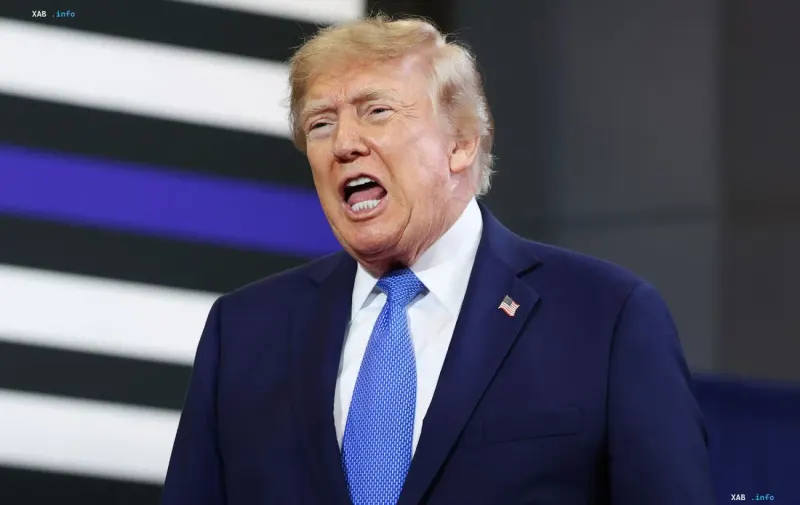
US President Donald Trump approached Google CEO Sundar Pichai with a proposal to rename the Atlantic Ocean on the service's maps in honor of the United States or the American leader himself, but received an official refusal. The head of the White House spoke about this during his recent speech at a political rally in South Carolina, the details of which are reported by the influential British publication The Guardian.
Details of the Telephone Conversation with Tech Giant Leadership
According to the US president, the idea of touching global geographical objects came to him after a series of steps to rename local toponyms. Trump stated that he considered the possibility of assigning his name or the country's name to one of the two oceans washing US territory and chose the Atlantic. He called Google CEO Sundar Pichai to discuss the technical and practical implementation of this initiative on the company's maps.
However, the corporation's management gave a blunt refusal to such an unusual request. As the president conveyed the interlocutor's words, Sundar Pichai explained the impossibility of fulfilling the request by the fact that oceans have international significance and wash the shores of many independent states, so such changes on digital maps are inappropriate. As a result, the US leader publicly acknowledged defeat on this issue and stated that the historical name will remain unchanged.
Background of the Initiative and International Partner Reactions
Plans to change established geographical names were voiced by the US president back in late August. At that time, signing an official decree concerning Lake Ontario, he publicly stated his intention to use oceanic expanses to perpetuate memory. Such initiatives often cause a wide resonance and criticism from other states.
In particular, the renaming of Lake Ontario, which separates the United States and Canada, was extremely painfully perceived in Ottawa. Canadian Prime Minister Mark Carney openly responded to Washington's actions, reminding the American administration of the deep historical context and cultural significance of traditional names. Nevertheless, the practice of naming political figures after smaller-scale objects continues within the country. In January in Florida, part of a major transport highway from Palm Beach Airport to the head of state's private Mar-a-Lago residence was officially named after the incumbent president.
Significance of the Incident and Future Prospects
The attempt to achieve a change in ocean names through major technology platforms demonstrates the administration's desire to use corporate digital toponymy tools for political purposes. Despite Google's refusal, such precedents show how strongly modern IT giants influence the perception of geography and the global information space. Experts note that such initiatives are unlikely to find support in the international community given the transboundary nature of the World Ocean and the strict standards of cartographic services.