
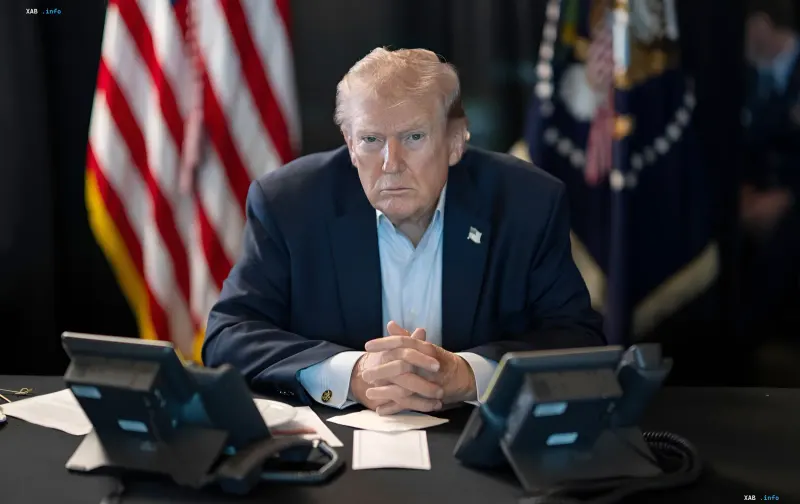
In the run-up to the NATO summit in Ankara, Turkey, tensions have reached a breaking point. US President Donald Trump arrived at the meeting in a highly agitated mood, casting doubt on the possibility of negotiations without sharp conflicts. Alliance leaders are preparing for a difficult dialogue, where the key factor will be Washington's dissatisfaction with the current state of affairs within the defense bloc.
Disappointment in Allies and Threat of Withdrawal
Media outlets note that Donald Trump's skepticism regarding US obligations to protect Europe has intensified over the past year. At the center of his grievances is the lack of support from "ancient allies" at a critical moment. Trump claims that when the United States needed help after the start of the war in Iran, European partners did not step up.
The US President himself admitted that he is traveling to the summit in Ankara with great reluctance. He regularly questions the value of NATO for Washington, pointing out that the American army effectively ensures the security of the entire European continent. At the same time, Trump has never explicitly ruled out the possibility of the US withdrawing from the Alliance, which is a serious signal for all participants in the bloc.
Additional Factors of Tension
The atmosphere is further heated by other provocative statements from the head of the White House. In particular, Trump threatened to take Greenland from Denmark—a country that is a member of NATO. Furthermore, he periodically shows respect for Vladimir Putin, which causes concern among European politicians.
Some officials in Europe fear that the Russian leader may be preparing operations on the territory of NATO countries. The combination of these factors has created an explosive situation. For now, no one is sure that the negotiations will proceed calmly and without public disputes between participants.
Seeking New Solutions and a "European NATO"
Against the backdrop of threats from the US, the bloc is trying to find new footholds. Four NATO countries have already agreed on a new approach to financing the Alliance. The changes concern the mechanisms for distributing contributions to common defense, which could be an attempt to reduce the financial burden and increase the efficiency of investments.
Particular attention is focused on Germany's position. Chancellor Friedrich Merz announced preparations for the creation of a "European NATO." At the same time, Berlin has decided to double defense spending, indicating the continent's attempt to become more independent in security matters amidst instability from Washington.


