
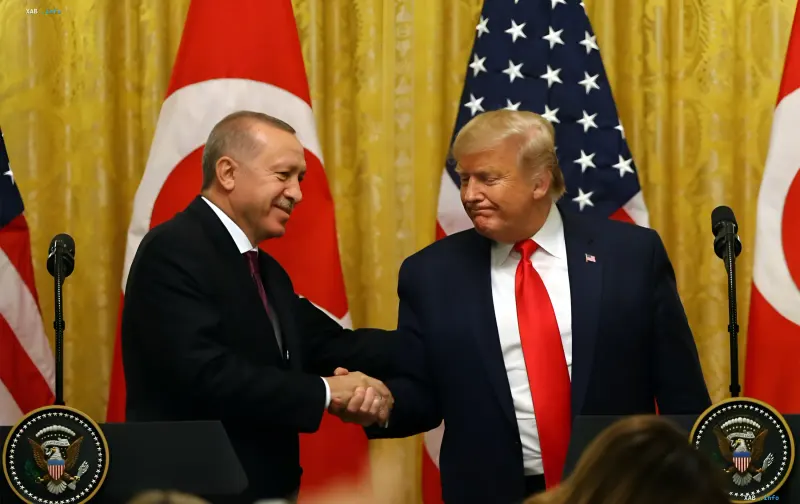
Ankara witnessed a historic moment in the bilateral relations between Washington and Ankara. During the meeting between Presidents Donald Trump and Recep Tayyip Erdoğan, the American leader announced a decision capable of altering the region's geopolitical landscape: the US plans to lift sanctions against Turkey.
These restrictive measures were imposed by Washington in 2020 in response to Turkey's acquisition of Russian S-400 air defense systems. At that time, the US also excluded Turkey from the F-35 fighter jet supply program, citing risks to the security of American aircraft.
"We do not want to sanction friends"
At a press conference, Donald Trump emphasized that while the administration has many options to impose restrictions on other countries, the situation with Turkey is different. According to the US President, "it is time" to review current policies.
"It's time to do it. Okay? We don't want to sanction friends. It's very simple," Trump stated, addressing Erdoğan. His words sounded like a signal to normalize relations, which had been seriously strained due to disagreements over Russian surface-to-air missile systems.
Procedure for lifting restrictions
The decision to lift sanctions does not mean they will disappear automatically. The Office of Foreign Assets Control (OFAC) of the US Treasury Department, which administers the sanctions lists, has already launched a special online portal. Through it, official requests can be submitted for exclusion from sanctions lists or for the review of imposed restrictions.
This creates a formal mechanism for implementing Trump's statements, allowing Turkish companies and entities to undergo a legalization procedure and return to full cooperation with the American market.
Context of global sanctions
The US decision regarding Turkey comes against the backdrop of the intensification of sanctions policy in other directions. At the end of June, Vladyslav Vlasjuk, the President of Ukraine's Commissioner for Sanctions Policy, reported that US oil sanctions against Russia have come into force again. This highlights Washington's selective approach: toughness towards some partners and a willingness to compromise with others.
Meanwhile, Europe is preparing new sanctions against manufacturers of components for Russian "Shahed" unmanned aerial vehicles. One of the key navigation systems for drones may be restricted, indicating the continued escalation of pressure on the Russian military-industrial complex.
Thus, Trump's move regarding Turkey appears not as a general liberalization of sanctions policy, but as a targeted maneuver aimed at strengthening the strategic partnership with Ankara amidst a complex international situation.


