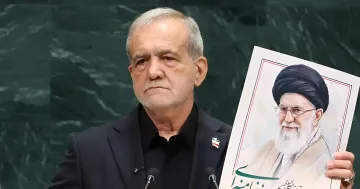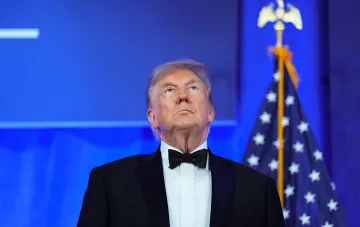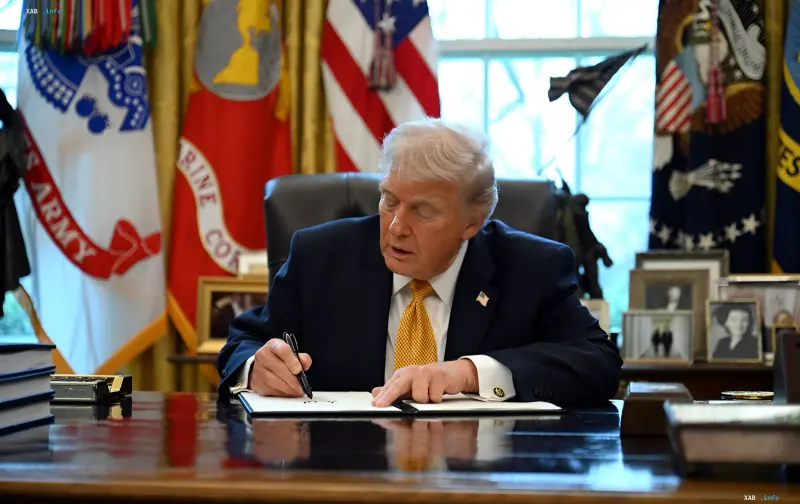
In an exclusive interview with Real America's Voice, US President Donald Trump revealed details of Washington's strategy regarding Iran. According to the White House chief, the administration has two main plans of action: either wait for the complete economic collapse of Tehran or deliver a massive military strike. Trump emphasized that Iran is in a 'terrible economic state' and that the US fully controls the country's access to financial assets.
'I'm Their Banker': Economic Blockade as a Weapon
According to Trump, the central element of Washington's current strategy is financial strangulation. The President stated: 'They cannot borrow money. We control their money, what they had, which is a lot. I am their banker.' This refers to frozen Iranian assets used as leverage. Trump describes this tactic as one of waiting: 'Do what I'm doing now: just go and see how bad things are for them.' In his view, economic pressure is already yielding results, and Iran is unable to conduct full-fledged negotiations due to an internal crisis.
Second Scenario: 'Hit Them Very, Very Hard'
Despite the priority of the economic strategy, Trump does not rule out military escalation. 'The other option would be to hit them very, very hard,' he noted. At the same time, the President dismissed concerns about a lack of ammunition in the US, stating that the country 'is producing them like crazy.' He also shifted responsibility for past shortages to the Biden administration, accusing it of weakening military potential. Thus, Washington retains the option of a forceful solution to the conflict if diplomatic efforts do not yield the desired result.
Diplomacy on the Edge: Negotiations in Qatar and Pakistan
Parallel to threats of escalation, active diplomatic efforts are underway. On August 11, 2026, Pakistan officially stated that the US and Iran are close to 'some kind of' agreement. Qatar, in turn, confirmed that negotiations on managing the Strait of Hormuz are at an advanced stage. However, the regional situation remains tense: reports of new attacks on shipping in the waters of the Persian Gulf are emerging. Trump called Iranian negotiations 'devious' and emphasized that Tehran consists of 'very cunning negotiators'.
Contradictory Data
There is a clear contradiction between Trump's statements about readiness for a military strike and reports of an approaching diplomatic agreement. On the one hand, the US President emphasizes the possibility of a 'very strong strike' and demonstrates confidence in military might. On the other hand, regional intermediaries (Pakistan and Qatar) report progress in negotiations. Furthermore, Trump claims that Iran is on the verge of economic collapse, yet Tehran continues active actions in the region, including attacks on shipping, which may indicate the preservation of mobilization capabilities.
Compensation and Long-Term Demands
Earlier, Trump announced demands for compensation from Iran for damages caused during the conflict. He instructed his representatives to calculate the amount Tehran must pay the US. This indicates that even in the event of a peace agreement, Washington plans to extract material benefit. Experts note that such demands could become an obstacle to reaching agreements, especially if Iran does not admit responsibility for the incidents.
Conclusions: Strategy of Double Pressure
Trump's tactics regarding Iran represent a combination of economic pressure, diplomatic maneuvers, and the threat of military escalation. The US President uses financial control as the main weapon but reserves the right to a forceful solution. In conditions where negotiations are conducted parallel to threats, regional stability remains under threat. The key factor will be Iran's ability to withstand economic pressure and maintain negotiating positions until the end of 2026.