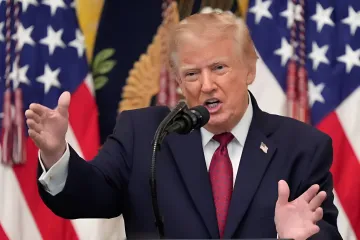
On Monday evening, US President Donald Trump arrived in the state of Kansas to support Republican candidates in the upcoming midterm elections. The main focus of his campaign was Senator Roger Marshall, a physician by training, who is attempting to secure a second term in the upper house of Congress. His challenger is Democratic candidate Adam Hamilton, a Methodist church pastor. According to polls, the race in Kansas has turned out to be unexpectedly tight, posing a serious challenge for Republicans: the state is traditionally a stronghold for them, and a Democrat last won a Senate election in Kansas back in 1932.
'Burning Spires' as an Argument
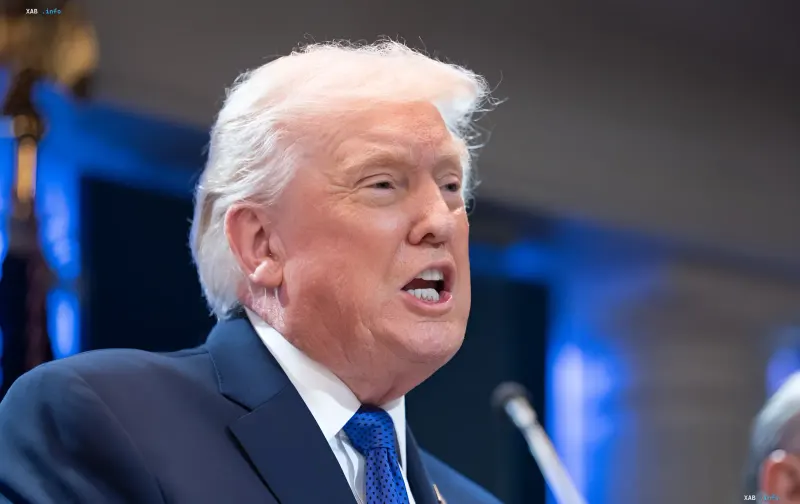
During the rally at the Park City arena, Trump addressed the topic of mass protests in France, which over the weekend escalated into widespread unrest. A large screen in front of the audience broadcasted a Fox News report on the French clashes. Following the footage, the president stated that the events in France should serve as a 'warning' to the United States. 'If you want to see what is at stake in this election, just look at what is happening in France—once a great nation that is being conquered, looted, and burned to the ground by migrants, jihadists, and communists who hate Christianity and, frankly, Western [civilization] itself,' he told the gathered crowd.
Connection to the Midterm Elections
Trump directly linked the French events to the domestic political situation in the US, claiming that a Democratic victory in the midterms could lead to similar unrest on American soil. 'When you see the burning spires and raging fires in France, just remember: that is exactly what radical Democrats want to do in America,' the president emphasized. Thus, he used the foreign crisis as a key argument in his campaign, trying to convince voters that the outcome of the vote in two weeks will determine the country's future. With just fourteen days remaining until the midterms—the results of which will shape the balance of power in Congress—it is critical for Trump's party to maintain support in states where competition has intensified.
Context: What is Happening in France
Mass protests have been ongoing in France since September. Initially, high school students and education workers took to the streets demanding solutions to problems in educational institutions. They were later joined by university students, trade unions, and members of the 'yellow vests' movement. The main causes of discontent included the rising cost of living, high energy prices, the degradation of public services, and demands for higher wages and pensions. On October 17, the protests escalated into major unrest: clashes with police occurred in Paris and other cities, and shops were looted. In Limoges, protesters set fire to the historic town hall building, while in Bordeaux, the prefecture office was ransacked.
Reaction of the French Authorities
Amid the escalation of violence, French authorities tightened security measures. Prime Minister Sébastien Lecornu proposed introducing an hourly curfew in certain cities. President Emmanuel Macron publicly condemned the violence and promised to bring those responsible to justice. According to the French Ministry of Interior, about 550,000 people participated in demonstrations nationwide, while protest organizers claimed 800,000 participants. The discrepancy in figures highlights the difficulty of assessing the scale of the crisis, but the very fact of mass unrest and clashes with law enforcement is confirmed by both sides.