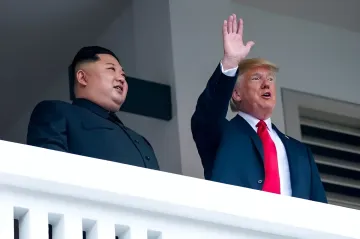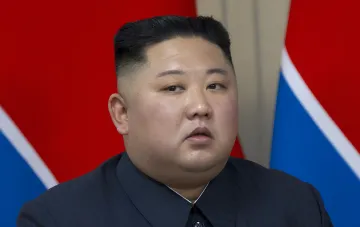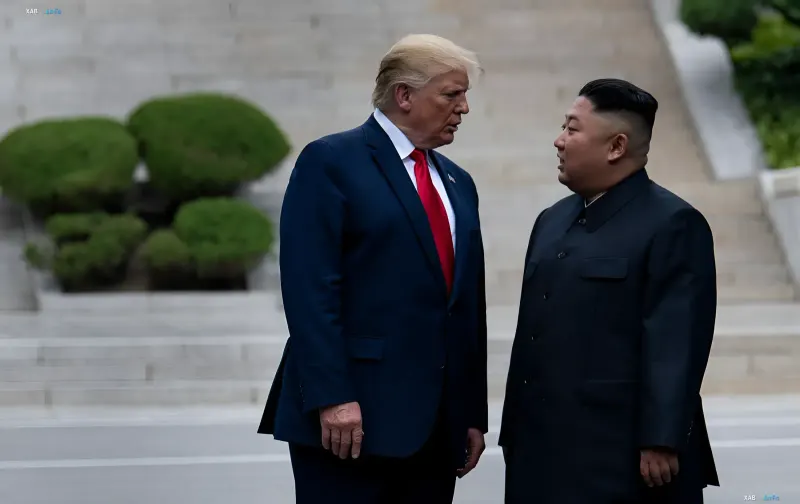
In August 2026, a new chapter unfolds on the international stage in the history of relations between Washington and Pyongyang. US President Donald Trump, seeking a loud foreign policy victory, is considering the possibility of a personal meeting with the leader of North Korea, Kim Jong Un, as early as this autumn. According to The Wall Street Journal, the discussed format of the summit could take place within the framework of an economic forum in the Chinese city of Shenzhen in November, although there are no official confirmations at this time.
Political Calculation and Context of the Meeting
Analysts link President Trump's interest in resuming dialogue with Pyongyang to the current geopolitical situation. Against the backdrop of a protracted conflict with Iran and the lack of quick results in this area, the US administration is looking for new growth points to demonstrate the effectiveness of its policy. A meeting with Kim Jong Un is seen as a way to get a "quick win" and bring the world's attention back to the figure of the American leader.
It is worth noting that this is not the first attempt to organize such a summit. Last year, Trump already made public hints about his desire to meet with the North Korean leader during an Asian tour. At that time, Pyongyang responded to the proposals with cautious optimism, but it was not possible to organize a meeting in a short time. Trump himself later admitted that such a summit could "overshadow" his planned negotiations with Chinese President Xi Jinping.
Shift in the Balance of Power: Pyongyang is Stronger Than Four Years Ago
The situation surrounding North Korea has changed radically since the previous summits. If in 2018–2019 Pyongyang was forced to make concessions to lift sanctions, today North Korea occupies significantly stronger positions. Over the past few years, the country's nuclear arsenal has not only not decreased but has grown to a scale that allows strikes on US territory.
In addition, North Korea has deepened its strategic partnership with China and Iran, and also provided military support to Russia in the conflict in Ukraine. According to intelligence, thousands of North Korean soldiers have gained combat experience on the European theater of military operations. This gave Pyongyang unique opportunities to modernize its army and missile systems.
Contradictory Data
The question of the real goals and prospects of a possible meeting causes disputes among experts. On the one hand, the US administration sees a chance to stabilize the situation on the Korean peninsula in this. On the other hand, former high-ranking CIA officials, including Bruce Klingner, criticize the idea of a new meeting. They call it an attempt to "appease another dictator" based on a false belief in the power of personal relationships.
Critics point out that the US still does not officially recognize North Korea as a nuclear state, although this is exactly what Kim Jong Un is striving for. Pyongyang is striving for Washington to finally abandon the idea of denuclearization and accept the status quo. At the same time, independent experts estimate the number of North Korean nuclear warheads at several hundred, which significantly exceeds official estimates from a decade ago.
Signals of Convergence and Military Exercises
Against the backdrop of rumors of a meeting, other signals of convergence are also intensifying. On August 18, 2026, Donald Trump stated that Kim Jong Un has always treated him with respect. This statement came shortly after the president ordered the Pentagon to "significantly reduce" joint military exercises with South Korea. The official reason cited was the high cost of maneuvers and Seoul's refusal to join actions against Iran.
These steps were a response to threats from Pyongyang. Earlier, North Korea stated that future US and South Korean military exercises are bringing the world closer to nuclear war, adding that they could use their right to self-defense. Thus, the reduction of exercises can be seen as a gesture of goodwill before a possible meeting of leaders.