

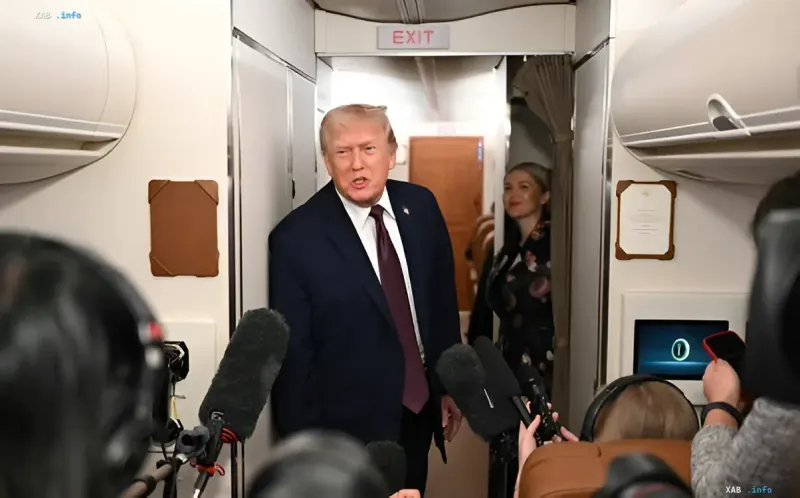
The NATO summit in Ankara concluded not just with the signing of declarations, but with a sharp shift in rhetoric between Washington and its European allies. US President Donald Trump, aboard Air Force One, outlined harsh conditions for the continued presence of American troops on the territory of the Old World. At the center of attention were two seemingly unrelated issues: Europe's geopolitical stance in the conflict surrounding Iran and the territorial status of Greenland.
The Iran Factor: The Price of Allies' Loyalty
The main trigger for the escalation of tensions was the refusal of most EU countries to support the US military operation against Iranian infrastructure. Trump expressed deep disappointment that European partners were not ready to provide their airspace and logistical hubs to ensure the safety of shipping in the Strait of Hormuz. The only exception was the UK, which granted limited access to RAF Fairford airbase.
Spain was subjected to particular criticism. The White House chief called Madrid an "ineffective partner" within the architecture of collective security and has already ordered relevant departments to audit bilateral trade ties. Washington's logic is simple: redistribute the financial and operational burden of containing Iran to countries whose economies are critically dependent on the stability of hydrocarbon supplies from the Middle East.
Greenland as a Strategic Asset
The second key element of the speech was the resumption of the discussion about Greenland. Trump emphasized that the strategic importance of the Arctic island for US national defense is incomparable to its role for Denmark. However, Copenhagen responded with a resolute refusal. Prime Minister Mette Frederiksen confirmed that Greenland is not a subject of commercial or territorial deals, and the sovereignty of the autonomy remains unchanged.
Nevertheless, the US has intensified technical consultations on the creation of a multi-level "Golden Dome" missile defense system in the Arctic, indicating Washington's desire to strengthen its influence in the region regardless of the territory's political status.
New Figures and Real Cuts
The President's words are backed by concrete actions. The Pentagon has already begun reducing operational forces in Europe: one aircraft carrier strike group and part of the tanker fleet have been temporarily withdrawn. Under the "Ankara Declaration," allies have been set a new goal: to bring defense budgets to 3.5% of GDP by 2035.
NATO Secretary General Mark Rutte, trying to smooth out sharp corners, called for an orderly transit of obligations. As proof of Europe's readiness, he pointed to coordinated defense purchases totaling over $50 billion. However, the initiation of a 6-month comprehensive review of the scale of US military presence on the continent signals that the era of unconditional American protection of Europe may be coming to an end.


