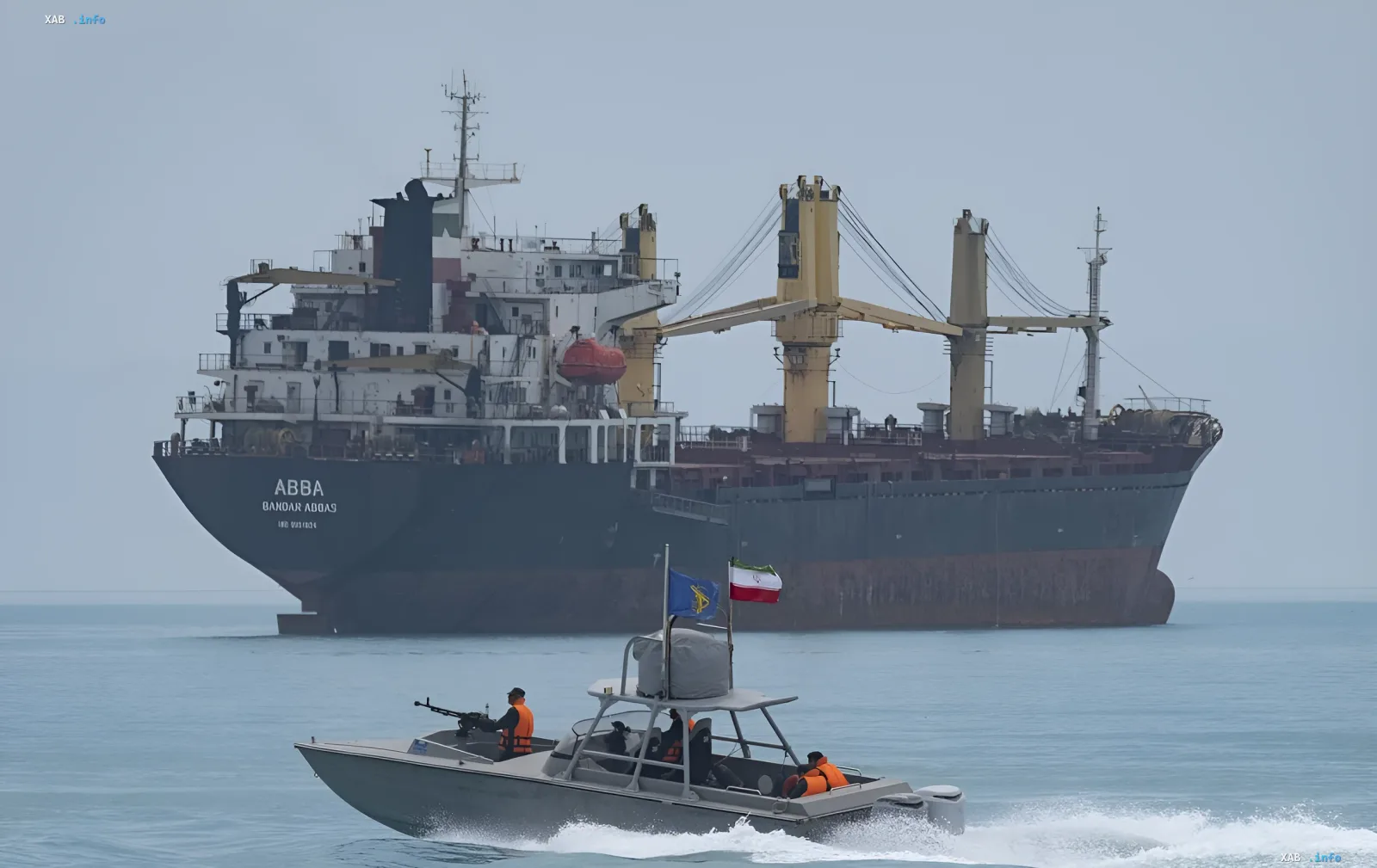
On Sunday, US President Donald Trump officially announced the "immediate opening" of the Strait of Hormuz — a strategically vital waterway through which a significant portion of global oil supplies passes. However, the reality on the water turned out to be far from the optimistic statements. Despite the political decision, maritime shipping remains paralyzed.
An analysis of data from the MarineTraffic service shows that following Trump's statement, only seven vessels passed through the strait. At the same time, more than 580 vessels have accumulated in the waters of the Persian Gulf: 250 tankers and 330 cargo ships. About 75% of oil tankers are standing still, lining up at terminals in Saudi Arabia, Iraq, and the UAE.
Three barriers to normal shipping
Experts highlight three critical factors preventing captains from heading to sea, despite the lifting of the official blockade.
1. Fear of Iranian shelling
Tehran blocked the strait in late February in response to strikes by Israel and the US. Since then, Iranian forces have opened fire on every vessel attempting to pass without permission. "Given the current situation, passing through the Strait of Hormuz would require an extremely brave captain," said Martin Kelly from EOS Risk Group.
2. Confusion regarding the US blockade
The situation is exacerbated by uncertainty from the US side. Trump first announced the lifting of the blockade, but then clarified that it would remain in effect until an agreement is officially signed. US warships still occupy their positions. Shipowners are forced to wait until Friday, hoping for stability and clarity in the rules of the game.
3. The problem of minefields
Iran has mined significant sections of the strait and officially threatened to use floating mines in the event of an attack on its coastline. Now these objects have become a headache for the international community. According to experts, the demining process could last from 30 days to six months. The UK and France have already sent their warships to assist in the operation. The British vessel RFA Lyme Bay, equipped with mine-hunting systems, has already been spotted near Cyprus. Minesweepers will have to move at a speed of only 4–6 kilometers per hour to safely survey the seabed.
New rules of the game: who pays for passage?
The Strait of Hormuz has historically been considered a free natural route. However, Iran intends to change the rules of the game. Tehran has created the "Persian Gulf Authority" and plans to issue permits for vessel passage. The Iranian Fars agency reports on the possible introduction of a "service fee".
The US and its allies categorically reject these claims. Trump insists on free passage for everyone. Analyst Navin Das raises key questions: "Who will ensure this? How will it be ensured? How will fees be collected? What do other Persian Gulf countries think about this?"
Economic consequences: falling prices and uncertainty
Despite the jam in Hormuz, markets are reacting optimistically to news of the unblocking. Global oil prices have begun to fall. Brent crude futures dropped by $4.08 (4.7%) to $83.25 per barrel, while US West Texas Intermediate crude lost $4.35 (5.1%), dropping to $80.53.
However, experts warn: a political agreement may quickly open the strait, but commercial shipping will return to normal gradually. Risks remain too high, and insurers are in no rush to take responsibility for potential losses.
Ukrainian experts have already provided a forecast for gas station prices for the summer-autumn of 2026. Forecasts converge on one point: a return to February 2026 prices in June or the near future will not happen.


