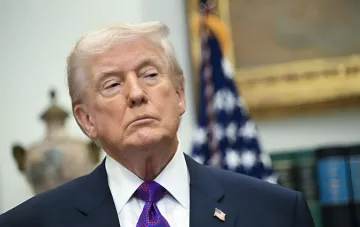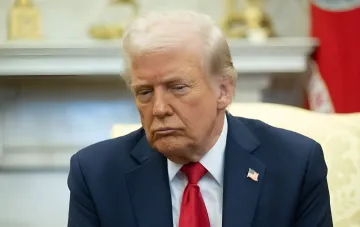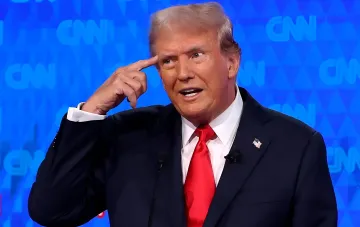
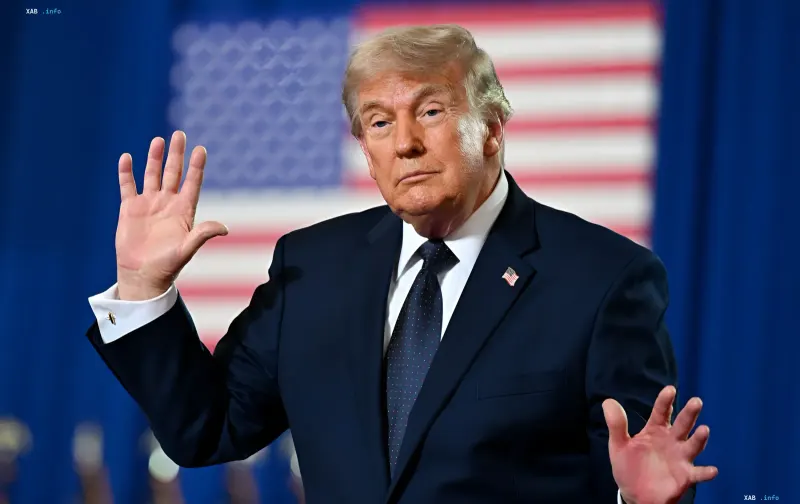
U.S. President Donald Trump stated that Congress would not need to approve the $5,000 payments he promised to Americans in the event of a Republican victory in the November 2026 midterm elections. This was reported by RBC-Ukraine, citing a comment by the White House chief to CBS News journalist Jack Finck. The statement came against the backdrop of an election campaign in which the Republican Party's retention of control over both chambers of Congress is seen as a key political benchmark.
The $5,000 Promise
A few days earlier, Trump had promised to pay every U.S. citizen $5,000 after the congressional elections, provided the Republican Party retains control of the House of Representatives and the Senate. He called these payments a "significant influx of funds," emphasizing that this is money that should be spent within the United States, not in other countries. As a result, the size of the promised payout over the year grew from the previously stated $2,000 to $5,000.
The Question of Congressional Approval
In response to a direct question from the journalist about whether such payments would require Congressional approval, Trump answered negatively: "We don't think so. I think they would do it if we needed them to. But we don't think so." The president pointed out that "the country is thriving," that the U.S. has "received trillions of dollars in tariffs and other measures," and that the country is carrying out projects to build manufacturing facilities and other investments totaling more than $20 trillion — "far more than ever before." In his words, the money "must work," and the administration wants people to spend it in the U.S. "We believe this is truly a good, popular, and excellent financial support," he summarized.
Contradictory Data
The president's statements contain several inconsistencies that must be honestly reflected. First, on the question of Congress's role, positions within the administration diverged: as late as November 2025, when the $2,000 payments were discussed, U.S. Treasury Secretary Scott Bessent explicitly stated that implementing such payments would require Congressional approval. Now Trump himself claims that approval will not be needed, which legally contradicts the position of his own finance minister and the standard procedure for spending federal funds. Second, the wording differs regarding the circle of recipients: some sources (RBC-Ukraine) refer to "every citizen," while others (Meduza) — to "adult Americans," which significantly affects the scale of the obligations. Third, the payment amount grew from $2,000 to $5,000 in a short time without any disclosure of the funding mechanism.
Context: From $2,000 to $5,000
Recall that in November 2025, Trump stated that every U.S. citizen would receive at least $2,000 from the revenues obtained thanks to his tariffs against many countries of the world. However, as of September 2026, the idea of paying $2,000 to every American remained only a political promise and had not been implemented. The new $5,000 promise, tied to the outcome of the November elections, effectively turns the potential payments into an electoral incentive and increases pressure on Republicans in Congress.
Economic Justification
The administration justifies the possibility of the payments by record tariff revenues and a flow of investment in manufacturing that, according to Trump, exceeds $20 trillion. At the same time, no independent assessment of the budgetary sufficiency for a one-time nationwide payout of $5,000 per person is provided in public statements, and the question of how to reconcile such spending with the existing budget process and the role of Congress remains open. For XAB.info readers, the key takeaway is: the promise is of a political nature, and its legal and financial feasibility, as of September 11, 2026, is unconfirmed and is disputed even within the administration itself.