
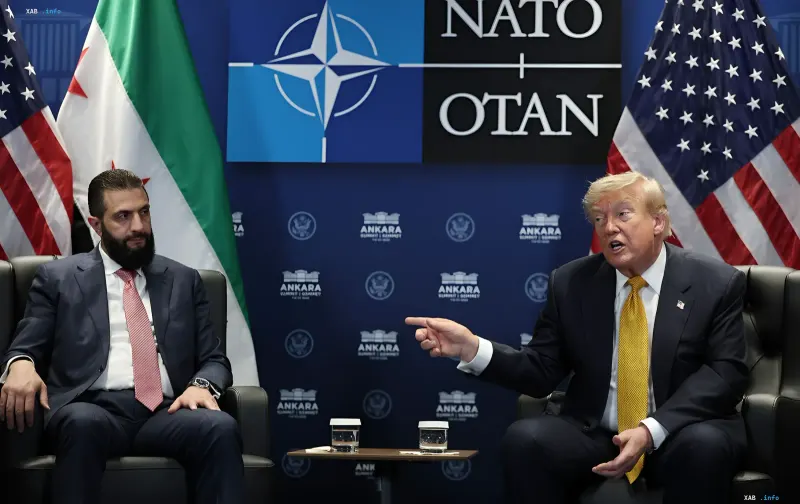
Washington is radically changing its course towards Damascus. After decades of harsh sanctions, the US administration is moving towards active support for the new authorities in Syria. A key signal of this shift was the statement by President Donald Trump about his readiness to remove Syria from the list of state sponsors of terrorism.
Historical dialogue at the NATO summit
The statement was made during a personal meeting between Donald Trump and the new President of Syria, Ahmed al-Sharaa, which took place on the sidelines of the NATO summit. The American leader did not hide his intentions, assessing the work of his Syrian colleague.
"I think I will do it. Why not? He did an excellent job," Trump said, commenting on the possibility of lifting the status. This decision could become a turning point in the fate of a country that has been under international pressure for decades.
Economic consequences and recovery plan
The status of "state sponsor of terrorism," assigned by the US State Department, became the main barrier to Syria's development. It blocks access to international financial operations, scares away investors, and limits the receipt of foreign aid. Although the Trump administration has already eased some economic restrictions, the full removal of the status will open the way to large-scale reconstruction of the country after years of civil war.
According to Bloomberg, rapprochement with Damascus is part of a broader Washington strategy. The US, together with Turkey, is seeking to integrate Syria into international cooperation, thereby ensuring stability in the region.
From "Al-Qaeda" to head of state
The biography of Ahmed al-Sharaa makes this political turn particularly dramatic. Previously heading the Syrian branch of "Al-Qaeda," he was added to the US list of terrorists in 2013, with a reward of $10 million promised for his head. In 2016, al-Sharaa publicly announced a break with the international terrorist network.
In December 2024, he led the Syrian uprising, removed Bashar al-Assad from power, and took control of the country. It was precisely this transformation that allowed Trump to assess him as a partner capable of restoring order.
Regional risks and Israel's position
The change in US course is causing serious concern in Israel, which traditionally views Damascus as one of the main regional adversaries. Last month, Trump already expressed dissatisfaction with Israel's military campaign against "Hezbollah" in Lebanon, suggesting that the new Syria could more effectively counter the group.
Al-Sharaa confirmed Damascus's readiness to contribute to stability in Lebanon but ruled out direct military intervention. Nevertheless, Israel continues to strike targets in Syria, citing the need to prevent new attacks.
New vector: Syria and Ukraine
The diplomatic thaw in Damascus has also affected Kyiv. Ukraine is gradually resuming contacts with the new authorities in Syria. On April 5, President Volodymyr Zelenskyy visited Syria and held talks with Ahmed al-Sharaa.
As a result of the meeting, the parties agreed to enhance security and create new opportunities for development. The Head of the Ministry of Foreign Affairs of Ukraine, Andriy Sybiga, reported on plans to open embassies: Syria plans to open a diplomatic mission in Kyiv, and Ukraine — in Damascus.


