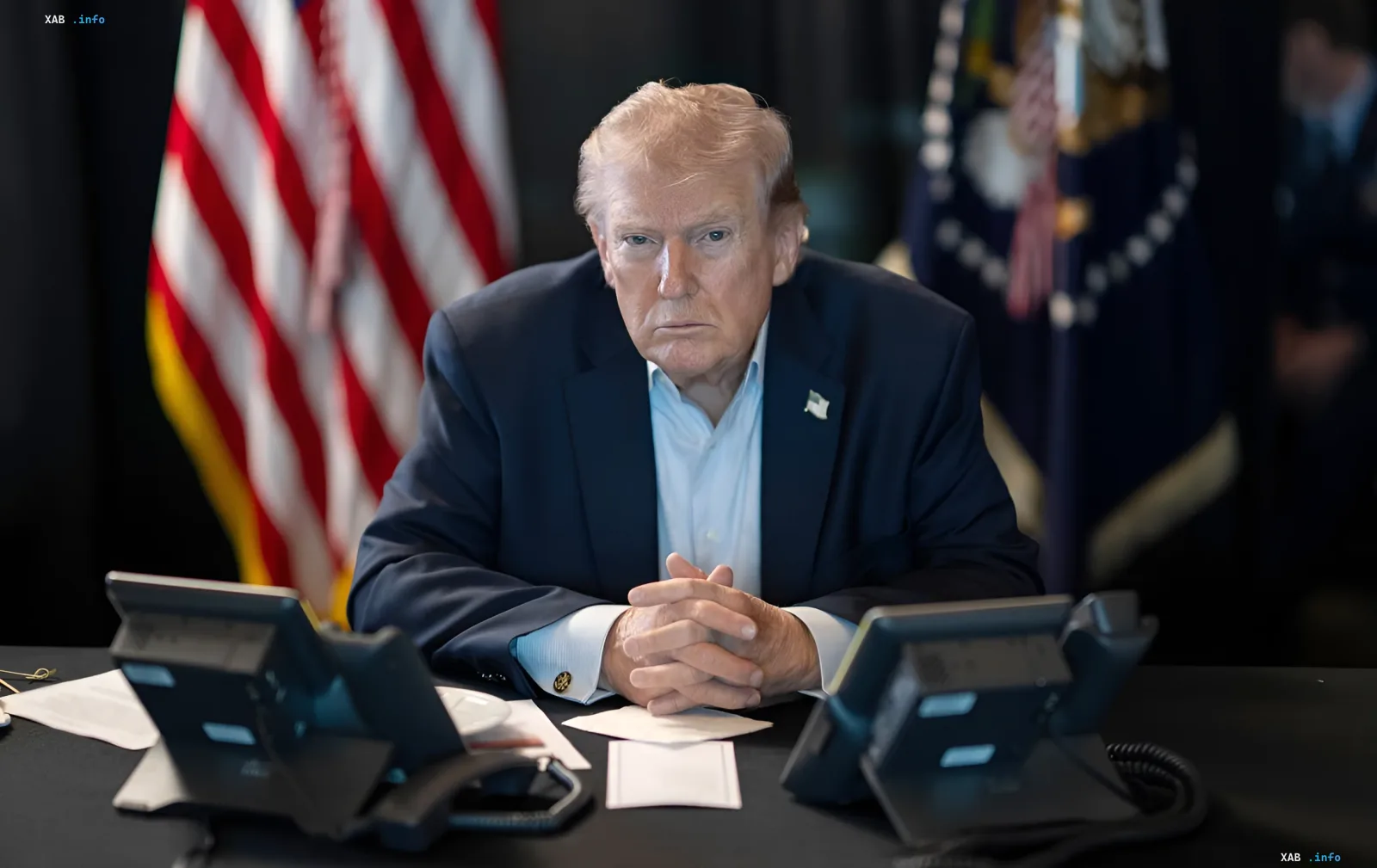
US President Donald Trump, while speaking with journalists in India, demonstrated restraint by refusing to directly blame Russian leader Vladimir Putin for launching a full-scale war against Ukraine. This decision by the American leader was commented upon in the context of his current diplomatic strategy.
Priority — Conflict Resolution
According to RBC-Ukraine, the incident occurred during a bilateral meeting between Trump and the Prime Minister of India. Journalists asked a direct question about whether the US President believes that the Russian leader bears the greatest responsibility for the war.
Trump answered evasively, citing the need to maintain the negotiation process:
"I don't want to comment on that because I'm trying to achieve a resolution to the conflict. It doesn't make the task easier," he stated.
The top priority for the White House, according to Trump, remains the earliest possible cessation of hostilities and finding a diplomatic solution acceptable to both sides.
Diplomatic Difficulties: 'They Don't Like Each Other'
The American leader confirmed that he had conducted a series of contacts with the leadership of both Russia and Ukraine. Although Trump characterized the dialogue as constructive, reality turned out to be more complex than initially expected.
Referring to his experience, the US President noted:
"I ended eight wars and, honestly, I thought this one would be one of the easiest, but they don't like each other very much, and that makes everything much more complicated." At the same time, he emphasized that he had two "good conversations" with Volodymyr Zelenskyy and Vladimir Putin.
Geopolitical Barter in Évian
The context of these statements is clarified by the events of the G7 summit in Évian-les-Bains, France. There, Trump admitted that Russia's position on the Ukrainian issue is now significantly weaker than at the beginning of the conflict. German Chancellor Friedrich Merz interpreted this as the emergence of a "window of opportunity" for diplomacy.
However, the American leader put forward his own conditions for partners. Trump proposed a geopolitical exchange: a willingness to increase pressure on the Kremlin in exchange for the help of G7 leaders in ensuring the security of the Strait of Hormuz and supporting a new agreement on Iran. Diplomats perceived this initiative as a signal of Washington's readiness for more active actions for the sake of peace.
Demands of Kyiv and Berlin
Against the backdrop of these behind-the-scenes negotiations, a meeting took place between Volodymyr Zelenskyy and Friedrich Merz with Donald Trump. The Ukrainian President and the German Chancellor clearly outlined their position: they are ready for dialogue, but peace negotiations with the RF must begin exclusively from a "correct position".
The parties emphasized that any agreements must be based on international law and respect for Ukraine's sovereignty.


