
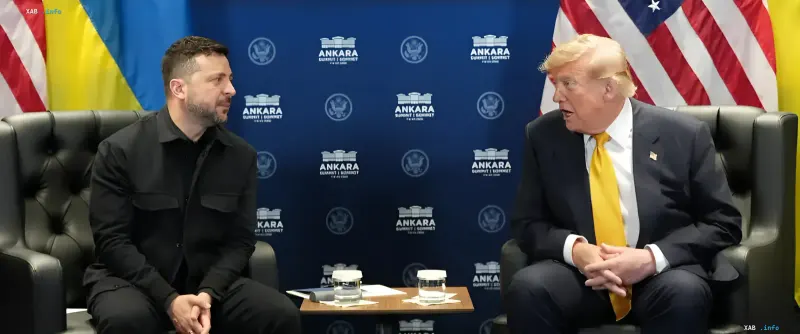
The NATO summit in Ankara became the stage for one of the sharpest diplomatic statements of 2026. US President Donald Trump, speaking at a joint press conference with Volodymyr Zelenskyy, officially excluded Moscow from the list of possible venues for negotiations between the leaders of Ukraine and Russia. This decision, announced on July 8, puts an end to the Kremlin's initiative and changes the vector of diplomatic conflict resolution.
Failure of the "Moscow" Scenario
The situation intensified after a series of telephone consultations between Washington and Moscow. The Russian side, as became known from the statement of the American leader, insisted that the meeting must take place on the territory of the Russian Federation. However, Trump categorically rejected this option, calling it unviable. According to him, holding a summit in the capital of Russia contradicts not only protocol but also the current geopolitical reality.
The main argument of the White House is simple and logical: in the conditions of ongoing hostilities and the absence of security guarantees, inviting the Ukrainian president to Moscow is unacceptable. Trump emphasized that the negotiation process must be transferred to an international neutral platform capable of ensuring equal conditions for all participants.
Kyiv's Position: Technical and Political Barriers
Volodymyr Zelenskyy, commenting on the situation for international media, supported Washington's position but added his own arguments regarding security. He pointed to destructive infrastructure factors that make a visit to Moscow impossible. In particular, the Ukrainian leader mentioned the regular presence of unmanned aerial vehicles in the airspace of the capital region. According to him, this creates insurmountable technical and political obstacles for any visit.
New Vector: Neutral Venues
Despite the hard refusal of the Russian proposal, the US administration maintains a moderately optimistic forecast. In the expert environment, the most likely locations for further rounds of consultations have already been named. The list of favorites includes the capitals of states taking a neutral or mediating position. At the moment, Turkey and Saudi Arabia are being considered as the main candidates.
It is important to note that as a result of preliminary closed negotiations with the Kremlin, the American side recorded Russia's declarative readiness to discuss the finalization of the conflict. This gives hope that, despite disagreements regarding geography, the process itself may be launched in the short term.
Diplomatic Protocol and Security Guarantees
The organization of intergovernmental negotiations under martial law is strictly regulated by the norms of international public law. Diplomatic protocol provides for the provision of mutual security guarantees, which traditionally requires the involvement of third-party guarantor countries and the selection of demilitarized zones. This is why the choice of venue becomes not just a matter of convenience, but a key condition for starting a dialogue.
At the moment, official schedules and framework conditions for the meeting have not been approved, but the summit in Ankara showed that the parties are ready to seek a compromise, albeit on tough terms. The probability of reaching an agreement, according to White House estimates, remains above market expectations, which confirms the effectiveness of the current diplomatic track.


