According to insiders cited in a Financial Times publication and reported by Ukrainian media, US President Donald Trump refused to act as an intermediary between Kyiv and American billionaire Elon Musk regarding the expansion of the Starlink satellite internet coverage area. The issue was not about routine technical adjustments but a fundamental change in the rules for using the SpaceX network: the Ukrainian side wanted the right to use Starlink terminals on drones operating beyond Ukraine's state borders — on Russian territory. As participants of a meeting in the Oval Office claim, the White House chief evaded any commitments and, in their assessment, did not support the idea itself, believing that Musk would not grant Kyiv such approval anyway.
Zelensky's Personal Request in the Oval Office
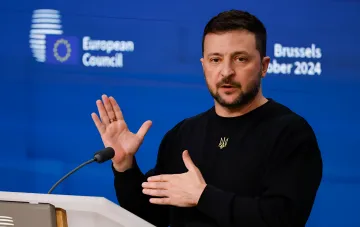
A key detail of the story, according to sources, was the personal initiative of Volodymyr Zelensky: the Ukrainian leader, unable to convince Musk on his own, turned to Trump with a request to "arrange a deal" with the founder of SpaceX. According to insiders, Zelensky justified his position with military necessity — expanding the Starlink coverage area, he argued, would allow the Ukrainian Armed Forces to more effectively "hunt" Russian missile systems and disrupt launches of not only ballistic but also other types of missiles. Thus, Kyiv hoped to turn the satellite network into a tool for preemptive strikes against enemy assets during the preparation phase, rather than just a communication channel for its own units.
What Kyiv Specifically Proposed: 200 Kilometers and Launch Infrastructure
According to sources, the specifics of the proposal were quite detailed. Zelensky, it is claimed, asked Musk to allow Ukraine to use Starlink on deep-strike drones up to 200 kilometers inside Russian territory. The intended coverage area was to include infrastructure for launching ballistic missiles, command and control systems, and other strategically important enemy resources. It is precisely this figure — 200 kilometers — and the list of targets that make the initiative not just technical, but military-political: it effectively implies the use of US commercial satellite infrastructure to support strikes on another country's territory, going beyond previous agreements on the use of Starlink in the combat zone in Ukraine.
Why Trump Rejected the Initiative
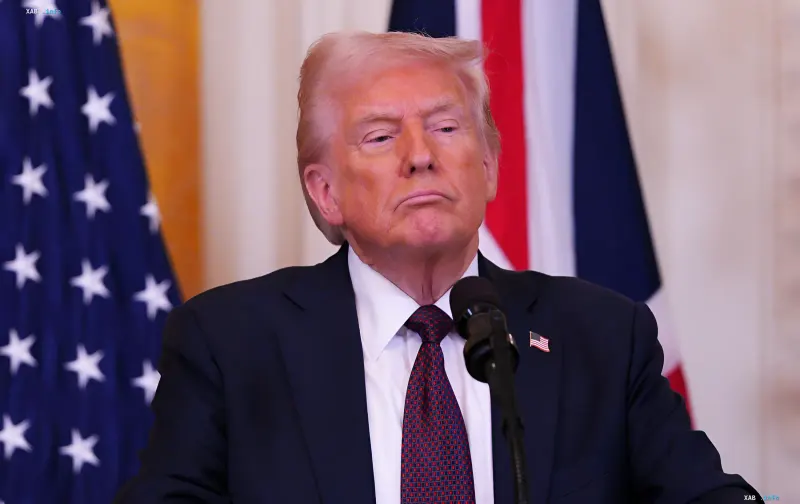
Trump's refusal, according to insiders' assessment, was driven less by direct confrontation with Zelensky and more by calculations regarding Musk's position. People present at the meeting stated that the US President "evaded commitments" and did not support the plan because, in their opinion, Musk would not give Kyiv approval. This aligns with Musk's own public rhetoric, in which he previously spoke about measures taken to prevent the use of Starlink by Russian armed forces and the need to control how the network is used in the conflict zone. For the White House, therefore, it became inexpedient to guarantee something they believed could not be fulfilled without the network owner's consent. The refusal was, in essence, a pre-emption of SpaceX's position rather than an independent decision on the merits.
Technical Context: Why Starlink is So Important for Drones
The importance of the discussed issue is determined by the technical characteristics of the system. Drones equipped with Starlink terminals use the SpaceX satellite network, which allows them to maintain significantly more stable communication with operators over much greater distances than possible through traditional radio channels. Furthermore, the satellite communication channel makes such aircraft less vulnerable to conventional electronic warfare and jamming means that effectively block ground radio links. This is why expanding the network's coverage by 200 kilometers deep into enemy territory radically changes the capabilities of strike drones: they gain stable control and data transmission where connection would previously have been lost. This turns Starlink from an auxiliary tool into a factor directly influencing the effectiveness of deep strikes.
Contradictory Data
It is important to note a discrepancy in formulations between sources here. The Ukrainian retelling (RBC-Ukraine) relies on the Financial Times and emphasizes Trump's role: according to this version, it was he who rejected Zelensky's request and evaded commitments. Meanwhile, The Atlantic published a material shifting the focus to Musk — claiming that it was he who did not allow Ukraine to target Russian objects using Starlink. So in one version, the "filter" is the White House, in the other — SpaceX directly. Additionally, there is a nuance in the wording: FT speaks of "expanding Starlink's reach beyond Ukraine," while The Atlantic speaks of "striking Russian objects." Both versions converge on the result (approval was not given) but differ on who exactly made the decision and at what level, as well as the degree of detail. Neither side — neither Trump, nor Zelensky, nor Musk — has officially confirmed the content of these negotiations, so both versions remain at the level of anonymous sources.
Reaction and Risks: Moscow's Position and Musk's Measures
Against the backdrop of these reports, the Russian side continues to publicly view Starlink as a legitimate military target. For example, in an interview with Russian media, General Vladimir Klintsevich stated that if Musk does not turn off Starlink, Moscow "will have to shoot down" satellites, calling it the "only language" the enemy will understand. This statement, of course, is the position and assessment of a specific individual, not a confirmed plan of action, but it illustrates the level of escalation in rhetoric surrounding the satellite network. At the same time, Musk himself, according to RFI, previously stated that measures had been taken to prevent Russia from using Starlink, confirming that the issue of network control remains open and sensitive. Thus, Trump's refusal of Zelensky's request became not a one-off episode, but part of a broader dispute over where the line is drawn between commercial satellite infrastructure and a tool for waging war.