According to The Atlantic, cited by RBC-Ukraine, US President Donald Trump intends to make the signing of a peace agreement between Ukraine and Russia the central event of the G20 summit, expected to take place in December in Florida. The American leader views this document as the final chord in a whole series of diplomatic steps taken by Washington in recent months. As of October 21, 2026, this initiative is becoming one of the key plots surrounding the conflict resolution, as the further trajectory of negotiations depends on its implementation.
The "Personal Mediation" Scenario
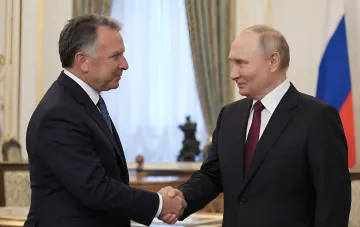
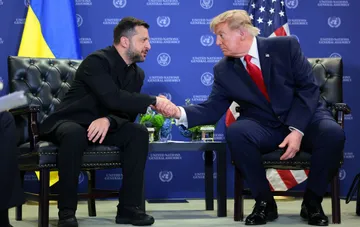
According to advisers to the US president, Trump expects to personally stand between Volodymyr Zelenskyy and Vladimir Putin at the moment the document is signed. Sources close to the White House assess that such a format is intended to emphasize the US role as the chief arbiter of the process and cement American leadership in diplomacy. That is why the choice of venue — the G20 summit in Florida — is not accidental: it allows all key participants to be gathered in one place and seal the deal in the presence of world leaders.
Pressure as a Tool
At the same time, according to the same reports, Washington is considering the possibility of exerting severe pressure on the Ukrainian side to achieve the desired outcome. In the president's close circle, as the publication quotes one source, harsh assessments are being voiced: "He is furious with Ukraine and wants Zelenskyy gone." Furthermore, Trump's entourage perceives the war as an obstacle to future economic deals with Russia — referring to the resumption of diesel fuel contracts, rare earth mining, and other resources. To achieve this, according to the publication, Ukraine may be demanded to drop its claims to Donbas.
Kyiv's Position
Ukrainian officials, in turn, express concern that key decisions are being made without Kyiv's participation. "We are worried that they view this as a new Yalta Conference to divide the world into spheres of influence," one Ukrainian official stated. At the same time, Volodymyr Zelenskyy confirmed his participation in the G20 summit and his readiness to meet with Putin to draft a fair agreement, while categorically refusing any territorial concessions in favor of the aggressor. The Ukrainian side rejects ultimatum demands, despite its readiness to participate in international summits.
Diplomatic Context
Trump's initiative fits into a broader diplomatic process. US Presidential Special Envoy Steve Witkoff stated during a meeting with Putin that prerequisites for a ceasefire in Ukraine exist and brought relevant documents to Moscow. Concurrently, new peace initiatives were developed during trilateral consultations involving Ukrainian, American, and European delegations in Norway. Finnish President Alexander Stubb noted that ideas for a peaceful settlement have already been found and are planned to be presented to the Russian side in the near future.
Chronology of Public Statements
The American leader's public rhetoric in recent weeks also points to a bet on a swift settlement. On September 26, Trump stated that he wants Zelenskyy and Putin to "reach an agreement with each other" and expressed hope of concluding a deal before winter sets in. Meanwhile, the White House has repeatedly called for a ceasefire in the past, but such demands were reportedly accompanied by restrictions on Ukrainian forces — specifically, requiring an end to strikes on Russian oil refineries. Moscow, for its part, expresses readiness to return to the negotiation process with Kyiv and Washington, whereas the Ukrainian side, together with its allies, is searching for ways to achieve a just peace.