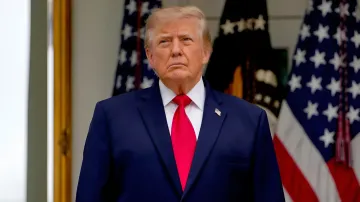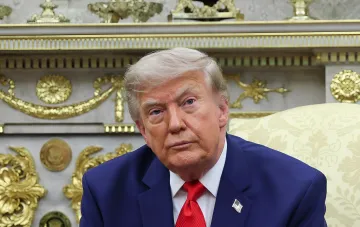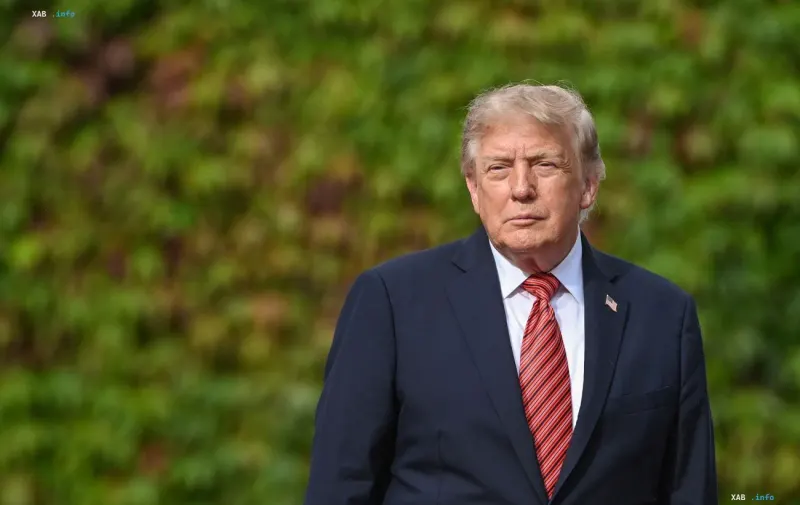
US President Donald Trump stated at a rally in the state of Iowa that he has the right to run for a third presidential term. Notably, during the same speech, the American leader initially acknowledged existing legal restrictions but then put forward the argument that the past elections were allegedly rigged. The topic of a possible continuation of his political career is not raised by the head of the White House for the first time, yet each such statement attracts close attention from both voters and legal experts closely monitoring compliance with constitutional norms.
Legal Framework and the 22nd Amendment
Speaking to supporters at a campaign event in Sioux City, Donald Trump first referred to the norms of the American fundamental law. He noted that he had studied in detail the legal formulations governing presidential term limits. According to the head of state, the law in its current form explicitly prohibits a single individual from holding the highest office more than twice.
This refers to the 22nd Amendment to the United States Constitution, adopted in the middle of the last century to prevent anyone from holding power indefinitely. Trump himself during the speech remarked that he was not one hundred percent sure about the details of the legal wording, yet he acknowledged the existence of such restrictions. However, within a few minutes, the position of the White House chief underwent a radical change.
Appeal to the Results of the 2020 Voting
Literally right after mentioning the constitutional restrictions, the US President made a contradictory statement regarding his right to re-election. Trump emphasized that he considers himself eligible to run for the highest state office for a third time because the results of the 2020 presidential campaign were allegedly rigged. Official judicial instances and numerous investigations have previously found no evidence of large-scale fraud referred to by the politician.
These statements about a supposedly stolen election victory are regularly featured in the American leader's speeches. In late February during a speech in Texas, he voiced similar theses, declaring his right to an additional term. The current speech in Iowa took place against the backdrop of the active campaign phase ahead of the November 3 midterm congressional elections.
Political Context and Public Reaction
Such statements by the incumbent head of state invariably provoke lively discussion in American political circles and the mass media. Analysts note that using the topic of a third term mobilizes the Republican core electorate while simultaneously giving opponents a reason for criticism. In several districts of Iowa, the situation remains tense, and the outcome of the upcoming congressional vote is difficult to predict.
If one hypothetically assumes Donald Trump's participation in the 2028 election, it would become his fourth presidential campaign in history and an attempt to officially hold office for a third time. In practice, implementing such a scenario would require a highly complex procedure of revising constitutional norms, making such statements more of a tool for political rhetoric than a realistic legal plan.