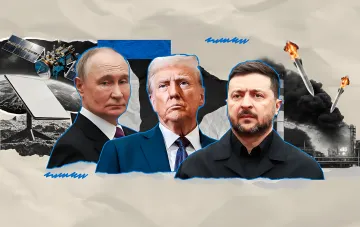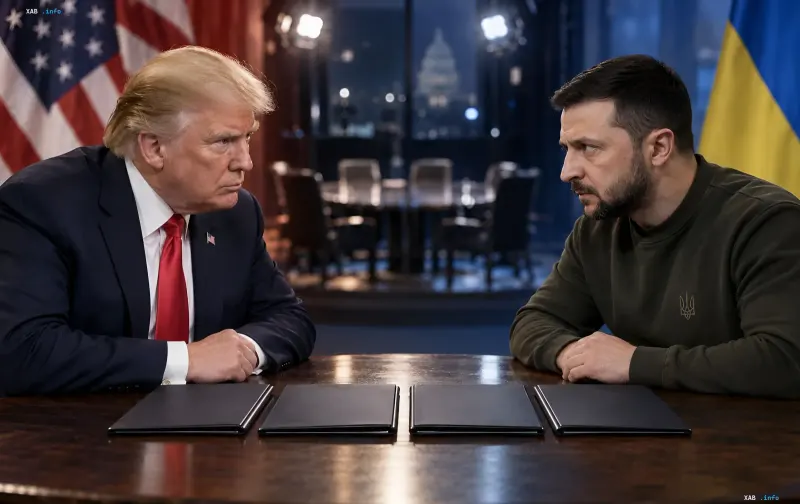
The closer the US midterm elections, the sharper the statements by US President Donald Trump regarding Ukrainian leader Volodymyr Zelensky. In recent weeks, the negotiation track between Kyiv and Washington has experienced a series of sharp episodes characterized by the Ukrainian side as pressure. At the same time, the track itself has not been halted: a meeting of the negotiating teams of Ukraine and the US is scheduled for October 20, where the parties intend to discuss further steps. Below is an analysis of key events that, according to Kyiv's assessment, became turning points in the relations between the two capitals.
Rhetoric Turning into Demands
The US President has been publicly criticizing Ukraine and personally Zelensky for several weeks. Arguments are made that Kyiv allegedly does not want to negotiate, accompanied by calls for a change in Ukraine's leadership. On October 10, speaking to reporters at the White House, Trump reiterated that Ukraine "needs a new president" and repeated that negotiations on behalf of Ukraine should be conducted by someone else. The Ukrainian side perceives this rhetoric as part of the US election campaign where, according to Zelensky, "politics is very aggressive."
The "Diesel Agreement" and Fuel Issue
The first sharp step, according to Kyiv's assessment, was Trump's announcement of Russian fuel supplies to the US—the so-called "diesel agreement" with Vladimir Putin. According to the US President, the deal is designed to solve the problem of high fuel prices in the US, and he blamed Ukraine's strikes on Russian oil refineries for the price rise. The Ukrainian side rejects this cause-and-effect relationship: Zelensky emphasizes that fuel costs in the US are influenced, in particular, by the war in Iran, not by refinery strikes. Notably, Trump announced the deal on social media just as Ukrainian negotiators were in Miami.
The "Energy Truce" Learned About from the News
The second episode was Trump's sudden statement that Ukraine and Russia had allegedly agreed to an "energy truce." Kyiv reported that it learned about this agreement from news reports, while the Russian side did not comment on the statement for several days, then stated that the idea was being discussed without specifics, and ultimately openly announced the continuation of strikes on Ukraine's energy sector. As a result, Ukraine refrained from strikes on enemy refineries and energy infrastructure for several days. Zelensky recalled that Kyiv had repeatedly expressed readiness for any truce and rejected accusations that Ukrainian strikes were driving up diesel prices in the US.
Intelligence Pause and Starlink Restrictions
The third and fourth episodes, according to Kyiv's assessment, were, on the one hand, selective pauses in the transfer of intelligence regarding ballistic missile launches, and on the other hand, restrictions on Starlink operational speed. The Ukrainian Air Force and Zelensky have repeatedly stated that during certain ballistic strikes they did not receive information from American partners: this refers not to a complete lack of data, but to selective transfer—for one shelling there is information, for another there is not. Starlink restrictions, according to Kyiv, hit both the frontline and the rear: amid Russia's active attacks with "Shahed" drones on Kyiv and western regions, Ukraine was developing interceptors requiring a stable satellite channel for effective operation. The American side, according to Kyiv, does not recognize either episode.
Zelensky's Position: Elections, Sanctions, and Patriot
The Ukrainian president actively responds to Trump's attacks via interviews with Western media and believes relations with Washington could improve after the US midterm elections: "Now it's painful, but after the elections, life will go on, and I believe it will become calmer." To Trump's calls to hold elections in Ukraine, Zelensky replied that 60 days of silence are needed to prepare for voting, and confirmed he would run even if elections take place during the war. The Russian side immediately rejected this proposal, stating it was ready to strike Ukraine only on election day. Regarding the "diesel agreement," Zelensky stated this is only the beginning of easing sanctions against Russia and expects further decisions on gas, the banking system, individual sanctioned persons, and the chemical industry. Separately, he reported a delay in the delivery of already paid-for missiles, pointing out that the US supplies Ukraine with about 12 Patriot missiles per month.
The Negotiation Track Continues
Despite the rhetoric and a series of tense episodes, dialogue has not been broken off. The meeting of the negotiating teams of Ukraine and the US, scheduled for October 20, will be a test of whether the parties can translate election rhetoric into a practical channel and return working dynamics to negotiations. For Kyiv, security issues, arms supplies, and guarantees for any future truce remain key; for Washington, the electoral agenda and control over fuel prices. The results of today's team meeting will show how deep the gap is between public statements and real agreements.