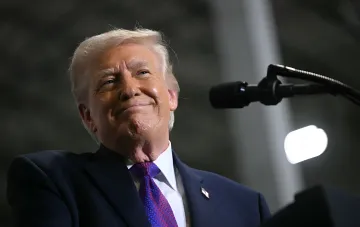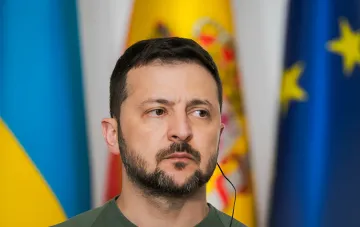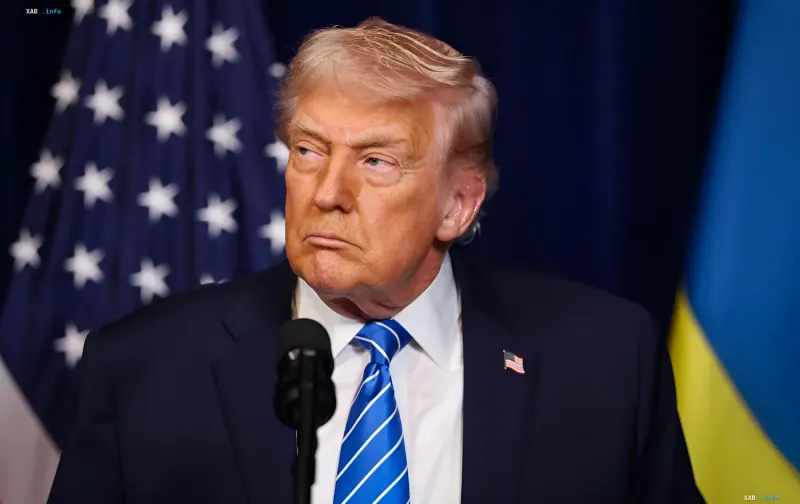
US President Donald Trump has once again made harsh statements regarding the course of the peace process between Ukraine and Russia. According to RBC-Ukraine, citing a publication by The White House, the head of the White House stated that Russia represents a 'huge machine' that has seized a significant territory of Ukraine, and it is strictly in Kyiv's interest to 'want' to end the conflict. 'Zelenskyy must want to end this war; if not, I think the consequences will be very bad,' Trump said, addressing the prospects of the negotiation track.
Pressure on Kyiv: 'The situation will only get worse'
In his speech, Trump emphasized that the United States has provided Ukraine with 'colossal amounts of assistance,' but, according to him, Washington 'received nothing in return except high diesel fuel prices.' The US president added that Ukraine should be interested in reaching an agreement because 'the United States has spent a fortune on this, Europe has too, and Europe is already tired of it.' In the event that Kyiv fails to reach an agreement with Moscow, Trump warned that 'the situation will only get worse — truly worse.'
Who should conduct negotiations
A separate element of Trump's statement was the assertion that peace negotiations on behalf of Ukraine should be conducted by 'someone else,' rather than President Volodymyr Zelenskyy. In addition, the head of the White House expressed the view that Russia is 'behaving quite normally' in the context of the war against Ukraine and the peace process. Earlier, as reported by RBC-Ukraine, American negotiators, according to the publication, sought to achieve Ukraine's capitulation in the conflict with Russia.
The European Union's position
Against the backdrop of American pressure on Kyiv, Brussels' position remains different. European Union High Representative Kaja Kallas stated that Europe continues to support the Ukrainian people. Thus, a divergence in approach to the negotiation process remains between Washington and European capitals: the US emphasizes the need for Ukraine to 'want' peace, while the EU underscores the continuation of support for Kyiv. Earlier, in April 2025, Trump also stated that Russia made a 'major concession' by not capturing the entire territory of Ukraine, which indicated the consistency of his rhetoric in evaluating Moscow's actions.
Context and assessment
Trump's statements, made against the backdrop of Ukrainian and US flags, establish a steady line by the White House aimed at shifting the responsibility for a potential breakdown in negotiations onto Kyiv. The mention of 'high diesel fuel prices' as the sole 'result' of American aid indicates that in Trump's public rhetoric, the focus is shifting from geopolitical interests to economic costs for the American voter. At the same time, none of the statements provide specific conditions for an agreement that, in Washington's view, must be accepted by Ukraine.