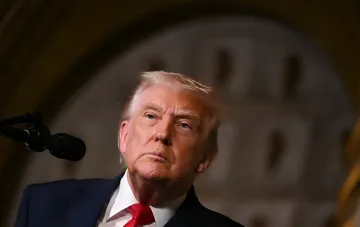
According to the latest poll conducted by the analytical agency The Economist/YouGov, the approval rating of US President Donald Trump has reached a critical level. As of August 14, 2026, only 33% of US citizens express approval of the head of state's performance. This is the lowest figure in the entire history of his presidency, covering both terms.
Record Level of Dissatisfaction
The situation regarding public opinion is characterized by an unprecedented level of dissatisfaction. About two-thirds of those surveyed (62%) stated their disagreement with the administration's policies. The net approval rating (the difference between supporters and opponents) was minus 29 points. For comparison: at a similar stage of his first term, Trump's net rating was at minus 10, while his predecessor Joe Biden's was minus 17. Such a gap indicates a deep crisis of trust in the authorities.
Fissure Within the Republican Party
Particular concern is caused by the dynamics within the party to which the president belongs. At the beginning of Trump's second term, he was supported almost unanimously by 90% of Republicans not associated with the MAGA movement. However, this group of voters is now split almost evenly. Only 17% of Americans in general fully approve of the head of state's work, and among Republicans themselves, this figure has dropped below half — to 48%. This indicates that even the party's traditional base is beginning to doubt the current course.
Impact of the War with Iran on the Rating
The administration's military policy has had a significant impact on the drop in ratings. At the end of June 2026, support for Trump dropped to 34% amid dissatisfaction with the war with Iran, which only 24% of citizens considered justified. By the end of July, the rating temporarily rose to 37%, but support for the war itself fell to 33% — the lowest level during the conflict. 69% of respondents noted that the president struggles to clearly explain the goals of the military operation, which increases skepticism in society.
Contradictory Data
There is a discrepancy in the interpretation of current trends. On the one hand, the poll records a historic low in support (33%), indicating stagnation and a decline in authority. On the other hand, the data shows a short-term spike in approval to 37% in July, which some political scientists may interpret as an attempt to stabilize. However, the general vector of the indicators remains negative, especially against the backdrop of a record 62% of dissenters. Furthermore, data on support for Democrats in Congress (46% vs 40% for Republicans) creates a contrast: despite Trump's low rating, Republicans retain a significant portion of the electorate, although they are losing to their opponents by six points — the largest gap since February.
Demographic Breakdown and Prospects
The situation is most critical among women, white Americans, and college graduates — it is in these groups that the lowest level of support has been recorded. Among independent voters, who are traditionally the key electorate, support for Trump has dropped from 32% at the beginning of the year to even lower figures, while the share of dissenters has risen to 60%. If current trends persist, this could lead to serious losses for the Republican Party in the upcoming Congressional elections.