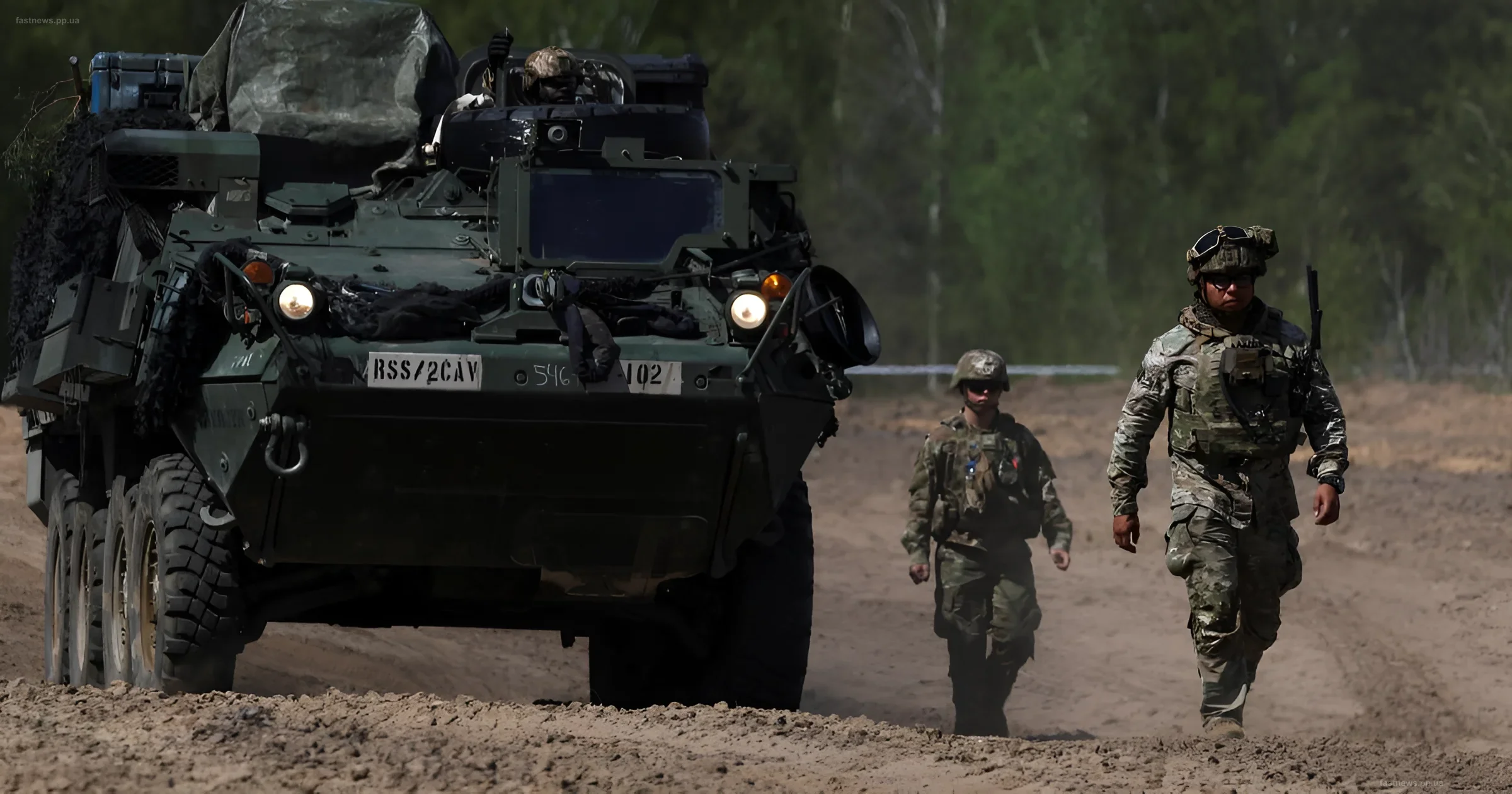
The Donald Trump administration is making a bet that could cost NATO stability in Europe. This month, the US announced the cancellation of deploying a long-range precision strike battalion in Germany and the withdrawal of approximately 5,000 troops from the country. Additionally, a rotational combat contingent of 4,000–5,000 personnel scheduled to arrive in Poland was cancelled, following the cancellation of a similar mission in Romania in 2025. The Pentagon has already informed allies that the forces Washington can rapidly deploy to Europe in the event of a crisis will be reduced.
The Illusion of Security
Simultaneously, the White House is attempting to reassure partners, assuring them that commitments to protecting Europe remain unchanged and promising to maintain the nuclear umbrella over NATO. This strategy—fewer "boots on the ground" while maintaining nuclear deterrence—may appeal to voters, but it is strategically dangerous. It erodes the foundation of deterrence that has protected the transatlantic alliance for decades.
The Escalation Ladder
Rather than strengthening stability, Trump's approach provokes Russia to test NATO's ability to dominate at all stages of escalation. Reducing American forces diminishes this dominance and weakens the deterrence of aggression. In the long term, this could lead to a situation where the US President must choose between retreat and the risk of nuclear conflict.
The key to deterring Moscow lies not at the top of the escalation ladder, where nuclear weapons are involved, but on its lower rungs, where conventional forces play a decisive role. The goal is to prevent Vladimir Putin from ordering any movement against NATO. If Russia were to seize part of the territory on the eastern flank and challenge Washington, the US would be left with no options other than risking nuclear war.
Global Reach as a Factor of Fear
Over the last two decades, the Kremlin has learned to fear the US ability to sustain conventional military operations for years. Putin watched the bombing of Serbia in 1999, the operation in Afghanistan, and the war in Iraq. For Americans, these are "forever wars" and failures, but for Moscow, they are a demonstration of overwhelming superiority. The true obstacle to the Kremlin's plans is the global reach of the US and the ability to strike deep into Russian territory, paralyzing logistics and command.
Washington must maintain in Europe the forces that Moscow fears most: long-range precision strike capabilities from air, land, and sea. Pressuring European allies to spend more on defense is correct, but insufficient. Stopping at this stage will hand Russia escalation dominance and bring the world closer to the nuclear threshold.


