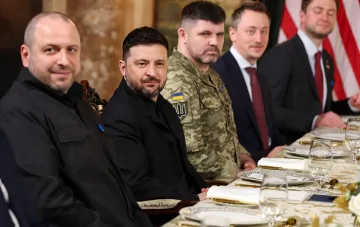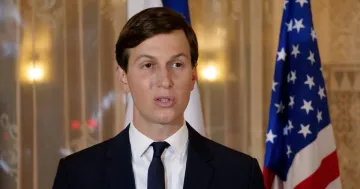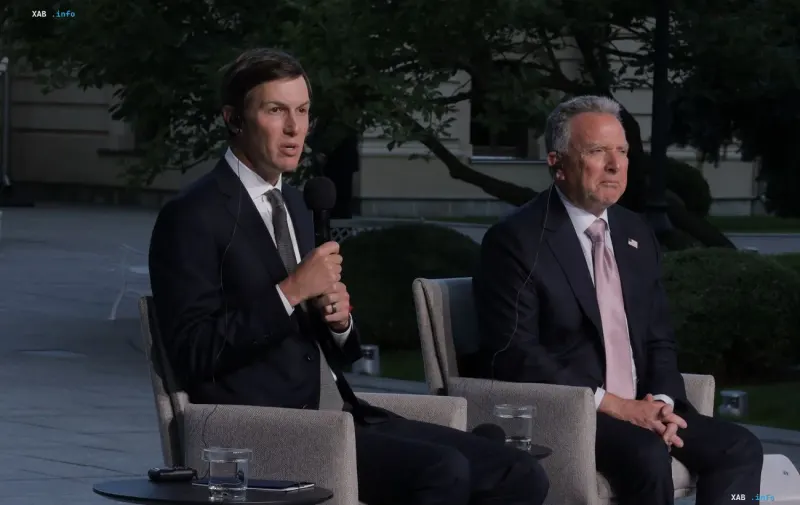
US President's special envoys Steve Witkoff and Jared Kushner held a private conversation with Ukrainian leader Volodymyr Zelensky during a closed meeting in Oslo on October 20, 2026. According to American and Ukrainian media, the harsh conversation was prompted by the Ukrainian president's public responses to criticism from Donald Trump, which caused displeasure in Washington.
Undeclared Rules of the White House and Washington's Reaction
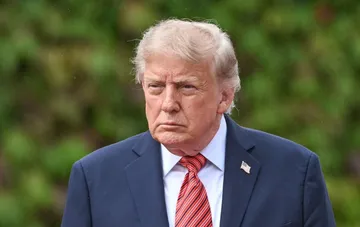
As noted by The New York Times, unwritten rules govern diplomatic relations with the current US administration. Specifically, Donald Trump reserves the right to openly criticize foreign leaders, but sharp responses or attempts to publicly contradict the American president are taken extremely poorly by Washington. The task of having a frank discussion with Zelensky was personally assigned by the head of the White House after the Ukrainian leader made sharp statements in response to accusations.
During the closed-door discussion, the special envoys directly pointed out Zelensky's rhetoric, which they claimed had angered the American president. In turn, the Ukrainian leader tried to defend his position, insisting at certain points during the negotiations, "I never said that." This was reported to journalists on condition of anonymity by a participant in that closed meeting.
Contrast in American Diplomacy and the St. Petersburg Trip
The tension in relations between Kyiv and Washington sharply contrasts with the diplomatic maneuvers of American emissaries on other fronts. Just a day after the meeting in Oslo, Steve Witkoff arrived in St. Petersburg to hold peace talks with the Russian leadership. Following the release of American citizen Stephen Hubbard from a Russian prison, Witkoff unexpectedly called Russian dictator Vladimir Putin a "humanist," after which Donald Trump publicly supported the statement.
Such steps occur against the background of escalating public rhetoric from Washington regarding Ukraine. The US president had previously openly accused Volodymyr Zelensky of unwillingness to end the armed conflict, questioned the expediency of dealing with him, and even called on the citizens of Ukraine to elect a new head of state. In response, the Ukrainian side continues to defend its national interests despite growing pressure from the American administration.
Significance of the Incident for Future Kyiv-Washington Dialogue
The conversation between Trump's special envoys and Zelensky in Oslo marks a new phase of cooling in bilateral relations and demonstrates the toughness of the American approach toward allies. Washington's demands to unreservedly accept criticism and refrain from public contradictions pose serious challenges for Ukrainian diplomacy, which is trying to maintain bipartisan support in the US. Future developments will depend on the parties' ability to find compromises while the White House simultaneously increases pressure on Kyiv and softens its rhetoric toward Moscow.