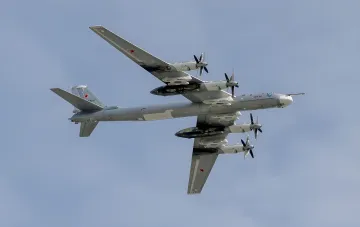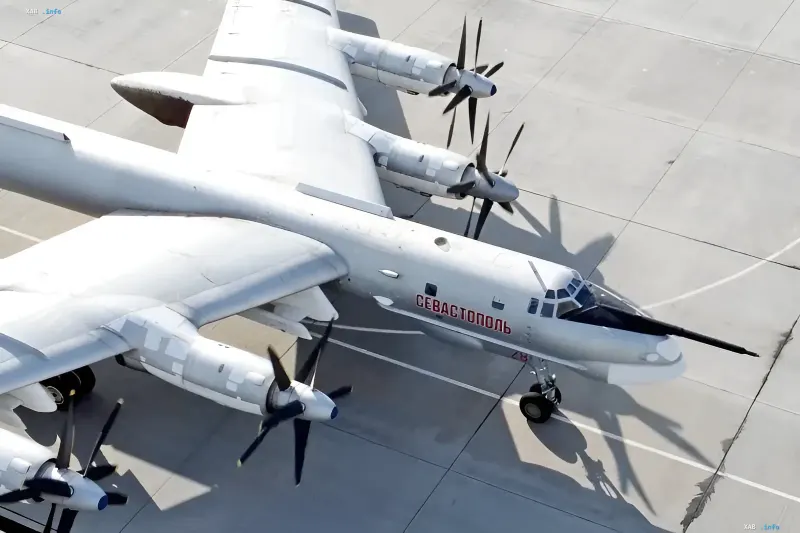
The Tu-95MSM strategic cruise missile carrier represents the result of a comprehensive upgrade affecting virtually all components and systems of the classic 'Bear'. According to Osveditel, this is not a targeted tweak, but a deep overhaul of avionics, weaponry, and the propulsion system, which collectively define the image of the aircraft in the current generation. In photographs published in open sources, modernized Tu-95s frequently carry side names — such as 'Sevastopol' — and stand on the airfield featuring distinct underwing pylons that have become an external marker of the new configuration.
Navigation and Avionics: Replacing the Classic Radar
One of the key elements of the modernization is the navigation system. According to Osveditel, the classic 'Obzor-MS' radar was replaced with the more advanced 'Novella-NV1.021'. Such a replacement expands the aircraft's target detection and tracking capabilities and increases navigation accuracy at long ranges, which is critical for strategic bombers operating at ultimate distances.
Armament: Underwing Pylons for Kh-101 and Kh-102
The weaponry of the Tu-95 has been expanded: internal bays underwent significant changes, and pylons for launching Kh-101 cruise missiles or their nuclear variant Kh-102 were added beneath the wings. The appearance of external suspension points increases the number of carried missiles and the variety of applied munitions, which directly impacts the combat potential of the aircraft within the framework of strategic nuclear and non-nuclear deterrence.
Propulsion System: NK-12MPM Engines and AV-60T Propellers
The power plant was also modernized: the aircraft received new NK-12MPM turboprop engines paired with AV-60T generation propellers. The upgrade of engines and propellers is typically aimed at increasing efficiency, service life, and handling across various flight modes, which is important for an aircraft designed for prolonged strategic sorties.
Pressurized Tail and Abandonment of the Rear Gun Point
Alongside underwing pylons, one of the main visual differences between the Tu-95MSM and its predecessors is the sealed and pressurized rear cabin. In earlier versions, this compartment housed an operator for a pair of AM-23 automatic cannons or a combat module borrowed from the Il-76 with two paired GSh-23 cannons. Now, according to a developer representative speaking to 'Rossiyskaya Gazeta', a technical compartment is located there, improving the aircraft's buoyancy in the event of an emergency water landing.
Absence of Air Defense Systems and Fighter Escort Doctrine
The decision not to equip the Tu-95 with air defense assets is reportedly due to the aircraft's relatively large distance from the frontline, making the chances of entering an air combat with enemy fighters extremely low. At the same time, 'Bear'-class bombers — as NATO designated this class of missile carriers — are always escorted by Russian Aerospace Forces fighters during combat missions, compensating for the lack of an own firing point and ensuring protection along the route.