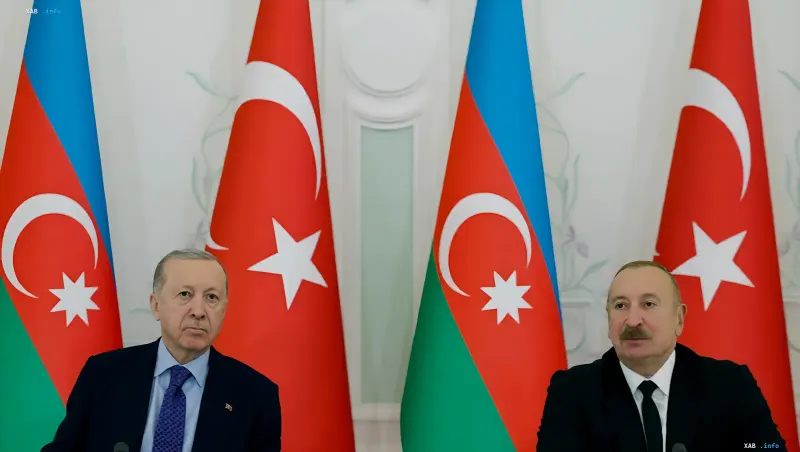
Relations between Turkey and Azerbaijan, described for decades by the motto “one nation, two states,” are undergoing one of the most acute crises in their history in the autumn of 2026. Azerbaijan’s ruling party claims a “systematic campaign” by Turkish politicians against Baku; Azerbaijani media published accusations against the Turkish Foreign Minister regarding the preparation of a coup d'état; and the prosecutor's office has placed eight individuals residing in Turkey on an international wanted list. Ankara has taken steps to de-escalate the conflict at every turn, yet as of November 11, 2026, no thaw has occurred.
The First Spark: The UN and the Karabakh Narrative
A sharp cooling began in September 2026 at the UN General Assembly session: the Azerbaijani delegation refused to leave the hall along with dozens of other countries during a speech by Israeli Prime Minister Benjamin Netanyahu. This episode caused discontent in Turkey, where anti-Israel sentiments are strong. In response, the Azerbaijani Council for Media and Broadcasting accused Ankara of orchestrating a “coordinated campaign” against Azerbaijan through critical publications in Turkish media and social networks. On October 2, President Ilham Aliyev stated that Azerbaijan won the 2020 Karabakh war on its own, purchasing weapons with its own money at world prices. He did not explicitly name Ankara, but in Turkey, these words were perceived as a strike against an ally — a sharp contrast to previous public gratitude for support.
Hijab Bans Become a Diplomatic Boiling Point
In late September, the Azerbaijani government approved new school uniform rules prohibiting “additional elements of clothing contrary to the principle of secular education” — effectively banning religious attire, primarily hijabs. According to the Azerbaijani Interior Ministry, at least 37 people had been detained in connection with the ban by October 12; opponents of the measures call them an unconstitutional restriction on freedom of religion. On October 12, advisor to the Turkish President Oktay Saral called it unacceptable that schoolgirls in hijabs were being barred from classes, and religious organizations and politicians, including some from the ruling party, joined in the criticism. The New Azerbaijan Party responded by accusing Turkey of a “systematic campaign” and demanding an end to this “harmful policy.”
Coup Allegations and International Wanted Lists
On October 17, the Azerbaijani outlet Qafqazinfo, fully controlled by the authorities, published an article accusing Turkish Foreign Minister Hakan Fidan of secretly meeting with groups during a visit to Baku to discuss a “coup.” The Turkish embassy denied the allegations, and the text was removed. In the same days, the Azerbaijani prosecutor’s office issued international arrest warrants for eight people living in Turkey, including journalists and members of religious media projects, alleging they had distributed materials calling for the violent seizure of power. However, the nationality of those wanted varies in the source texts: in one instance they are referred to as Turkish citizens, in another as Azerbaijani citizens residing in Turkey. Furthermore, the Azerbaijani Foreign Ministry banned 31 Turkish citizens — politicians, journalists, and bloggers — from entering the country, claiming their statements threatened the nation’s sovereignty and constitutional order.
Ankara's De-escalation: From Celik's Statement to Erdogan's Call
At every stage of the escalation, Turkey has tried to avoid retaliatory measures. On October 7, ruling party spokesperson Ömer Çelik stated there was no political crisis between the two countries, and that criticism by individuals did not reflect the government’s position. On October 15, Hakan Fidan visited Baku on a reconciliatory trip, calling the relationship an “indestructible alliance” and urging against turning disagreements into an information war. On October 21, Recep Tayyip Erdoğan personally called Aliyev and invited him to a summit of the Organization of Turkic States in Ankara. On October 26, Oktay Saral, who had criticized Baku over the hijabs, announced his resignation at the president's direction, linking the decision directly to his statements. Simultaneously, Turkish police launched an investigation into four people who had criticized the hijab restrictions: two members of the Köklü Değişim media project were detained, two more were called in for questioning, and some of the commentators’ accounts were blocked.
Why a Full Break is Impossible for Either Side
The contrast with 2020 is evident: back then, Erdoğan was the guest of honor at a parade in Baku, where soldiers in Turkish uniforms marched and Turkish armored vehicles and Bayraktar drones — which provided the Azerbaijani army with its decisive advantage — were displayed, while Aliyev publicly thanked Ankara for its support. Six years later, the leaders remain, but the harmony is gone. Analysts believe neither side can afford a full break: Turkey remains an essential ally, but in Baku’s view, it should not dictate Azerbaijan's internal policy, or its stance on Israel or Armenia. Thus, the issue today is not a break, but establishing new rules of engagement — and whether this can be achieved will be the key question for bilateral relations in the coming months.