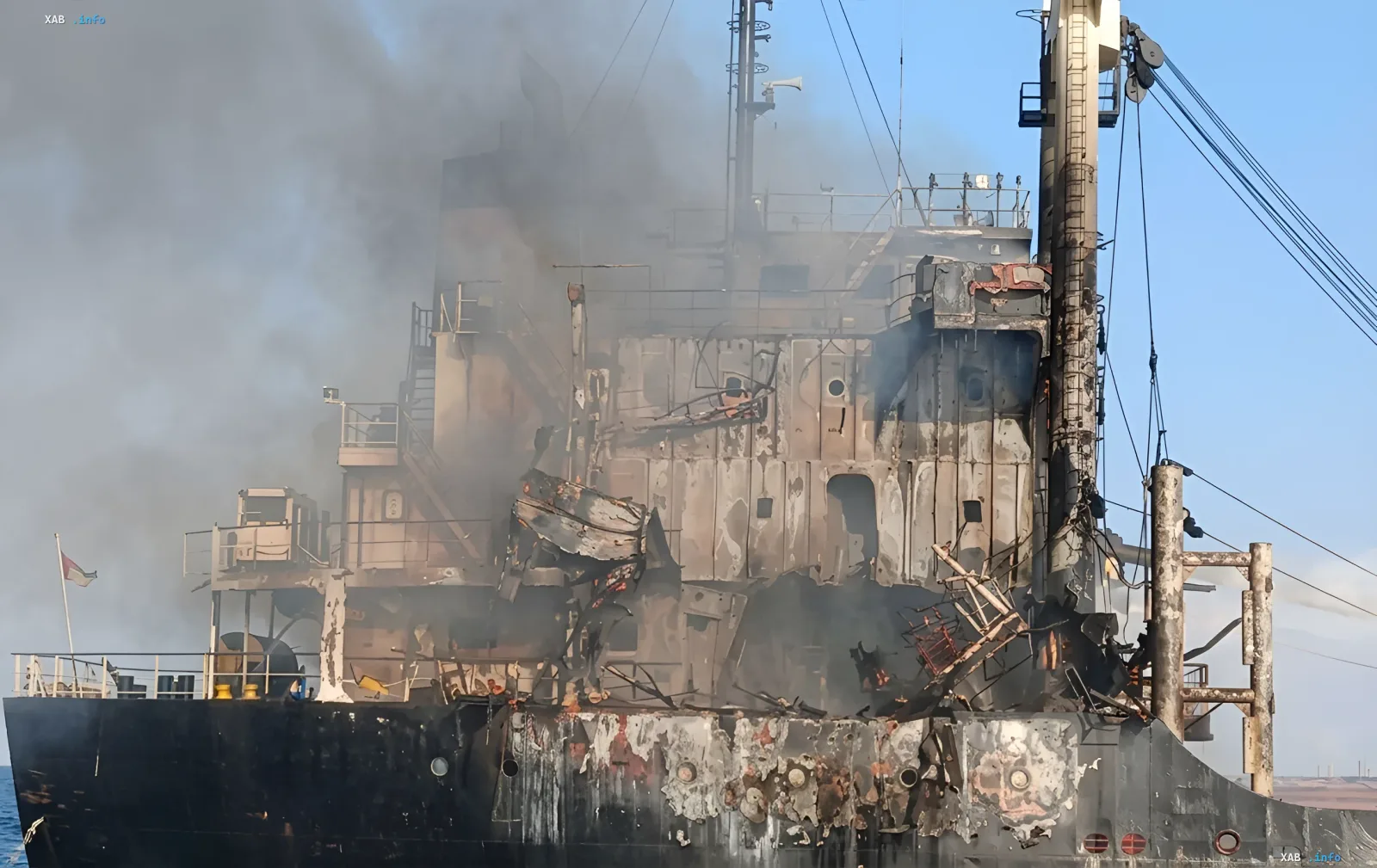
Turkish shipping operator Akkon Lines has completely ceased operations with Russian ports: vessels bound for Saint Petersburg were turned back to Turkey. The decision was made after a drone attacked the company's own container ship on August 21 — the vessel sustained damage, caught fire, and the crew was forced to evacuate. This is reported by RBC-Ukraine, citing The Moscow Times. According to the company's own assessment, further escalation poses heightened risks to the crew, the vessel, and the cargo, so it has permanently withdrawn from Russian ports.
Timeline of the escalation in the Black Sea
Akkon's withdrawal is a logical continuation of a chain of events in the summer of 2026. As early as the beginning of August, Russian company Fesco abandoned voyages via the Black Sea after Ukrainian maritime drones sank its container ship Yanina near Novorossiysk. On August 10, Akkon merely temporarily rerouted voyages from Novorossiysk to Saint Petersburg, adding around $2,500 per container to the tariff, while carriers that continued sailing from Turkey to Novorossiysk factored in an average risk premium of $1,000 per container. After the attack on its own vessel on August 21, the company moved from temporary rerouting to a full withdrawal. On August 26, a similar decision was made by MSC, one of the world's largest container operators, which refused to call at Novorossiysk after drones attacked its container ship MSC Ulsan III; voyages were rerouted to Saint Petersburg and other ports. MSC's fleet numbers around a thousand vessels with routes worldwide, and several other carriers that had previously operated via Turkey have announced a similar shift.
What is happening with the cargo
Cargo that has already been loaded is intended to be either returned to the port of origin or discharged at the ports of loading. In particular, cargo from the vessel bound for Saint Petersburg is planned to be discharged at the nearest port — most likely Klaipėda. Another Turkish carrier, Arkas, has also completely ceased operations with Russia. Thus, the rerouting of voyages to Saint Petersburg, which was still perceived in August as a temporary measure, has given way to a stricter scenario: some players are simply being removed from routes linked to Russian ports.
Economic consequences
Deniz Tasimajili, chairman of the board of the Turkish company Transbosphor, estimated Turkey's losses from attacks on merchant vessels in the Black Sea over the past three months at approximately $20 billion. The refusal of Turkish container carriers to work with Russia hits above all the supply of goods from Europe: as one importer of European furniture and home goods describes the situation, 'the Turkish route has become [unreliable], Saint Petersburg is in question.' The rerouting of voyages to Saint Petersburg in itself has already become a familiar news item, confirming the complexity of Black Sea shipping, but not meaning a complete halt to cargo flows; however, the simultaneous exit of several major carriers shifts the balance toward rerouting and higher logistics costs.
Diplomacy and the 'grain corridor'
The situation in the Black Sea is heating up on several fronts. Recently, an empty and burnt-out Russian vessel, the 'Omsk-107,' washed ashore near the Turkish coast of Şile, having been attacked not far from Novorossiysk. Against the backdrop of such incidents, Turkey has intensified diplomatic efforts to create a new 'grain corridor' in the Black Sea: Ankara is negotiating with Ukraine and Russia to resume food exports and prevent a spike in global food prices.
Contradictory data
There is a discrepancy in the public versions regarding the scale of what is happening. The main line (RBC-Ukraine, The Moscow Times, zn.ua) describes the voluntary withdrawal of private carriers — Akkon, Arkas, MSC and a number of others — from operations with Russian ports after attacks on their vessels. At the same time, Bloomberg, which Unian cites, interprets the situation more broadly — as a restriction/closure by Turkey of the Black Sea passage for vessels heading both to Russia and to Ukraine, i.e. as a state-level measure rather than merely a commercial decision by companies. Moreover, the estimate of Turkey's losses at $20 billion over three months is given in a single source (the statement by Deniz Tasimajili) and is not confirmed by independent calculations, so it should be regarded as an expert assessment rather than a verified figure.