

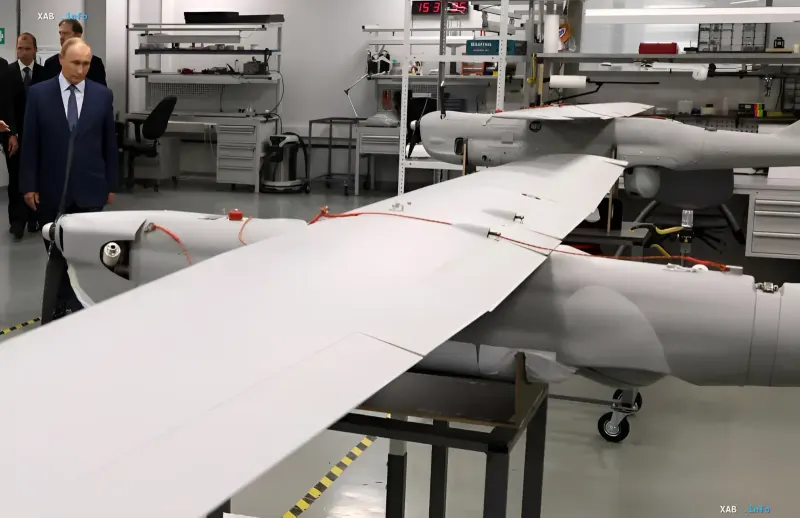
The war has entered its fifth year, and the Russian military machine is undergoing a fundamental transformation. While traditional arms sectors, such as tank and heavy armored vehicle production, are losing momentum due to labor shortages and economic constraints, the aviation industry is demonstrating explosive growth. The driving force behind this surge is the unprecedented demand for drones.
According to the Federal State Statistics Service, output in the aviation industry, encompassing both manned aircraft and unmanned aerial vehicles (UAVs), rose by 117% in April compared to the same period last year. This significantly exceeds the average growth of 68% recorded for 2025. Experts note that Moscow is executing a strategic maneuver, transitioning to a new economic and military reality where cheap and scalable unmanned systems have become a priority.
Douglas Barrie, a senior research fellow at the International Institute for Strategic Studies, emphasizes that First-Person View (FPV) drones have become the dominant element on the battlefield. Their mass deployment makes any concentration of forces dangerous for kilometers on either side of the line of contact. Furthermore, long-range UAVs have allowed Moscow to compensate for a smaller stockpile of cruise missiles and sustain a campaign against Ukraine's critical infrastructure.
In mid-2025, Vladimir Putin ordered the creation of new units specializing in the use of unmanned systems. Defense Minister Andrey Belousov, summarizing the year, acknowledged that Ukrainian forces previously held an advantage in the combat use of drones but stated that Russia has managed to turn the tide.
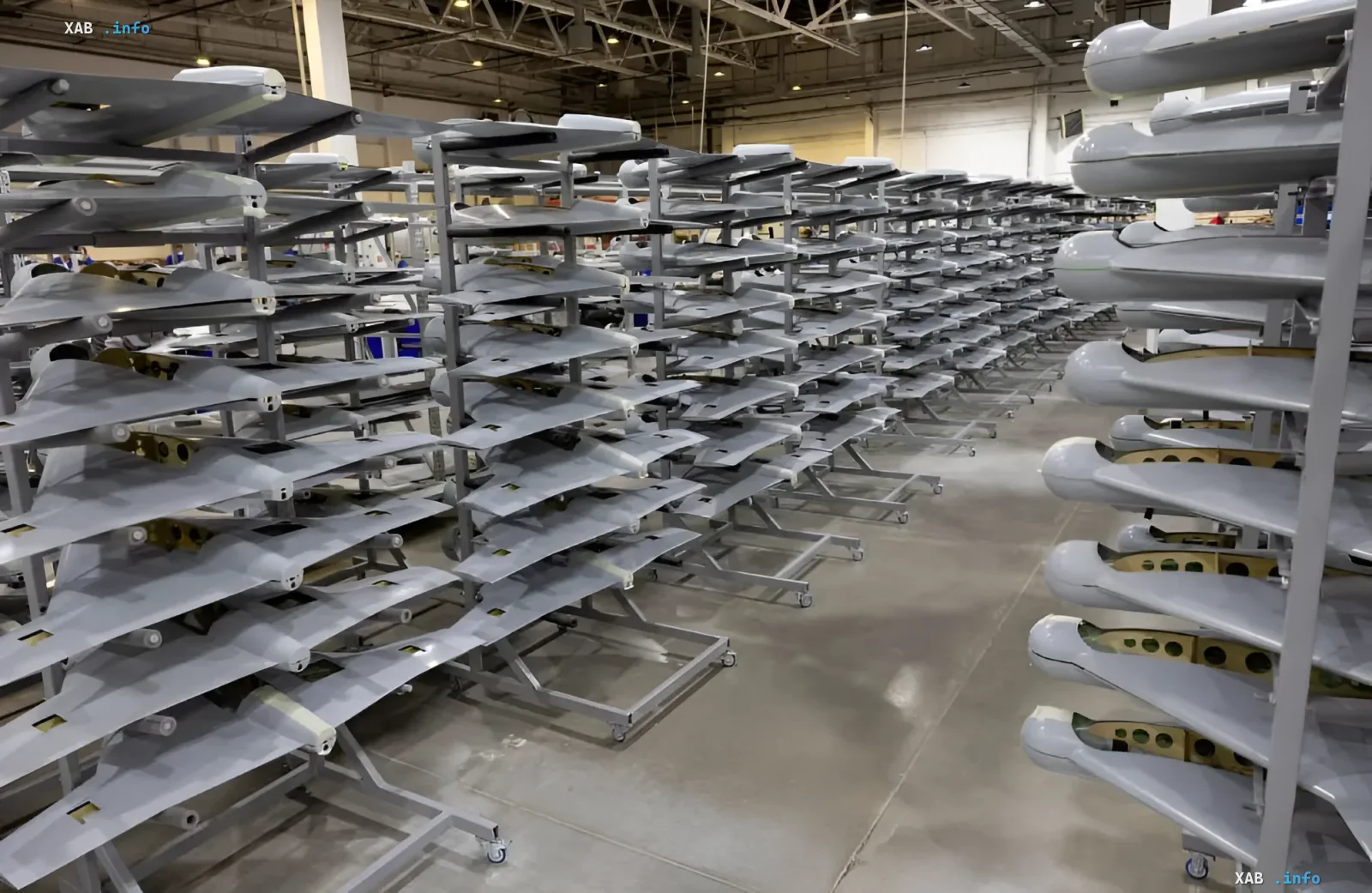
Exact figures on military production volumes remain classified, however, estimates provide an idea of the scale. In 2024, Putin cited a figure of 1.4 million drones produced. The Ukrainian military command, citing intelligence data, predicts that in 2026 Russia plans to produce 7.3 million FPV drones and 7.8 million munitions for various types of UAVs. This implies a daily output of approximately 20,000 units, equating to roughly 17 drones for every kilometer of the active front line.
For comparison, since the start of the war, the Russian Armed Forces have received 64 tactical Su-34 and Su-35 aircraft, as well as 12 Su-27 fighters. While the defense sector as a whole is losing momentum due to labor shortages and tightening sanctions, drone production bypasses many structural economic limitations. It is significantly cheaper, allows for the employment of female labor, and scales from garage workshops to state-owned factories.
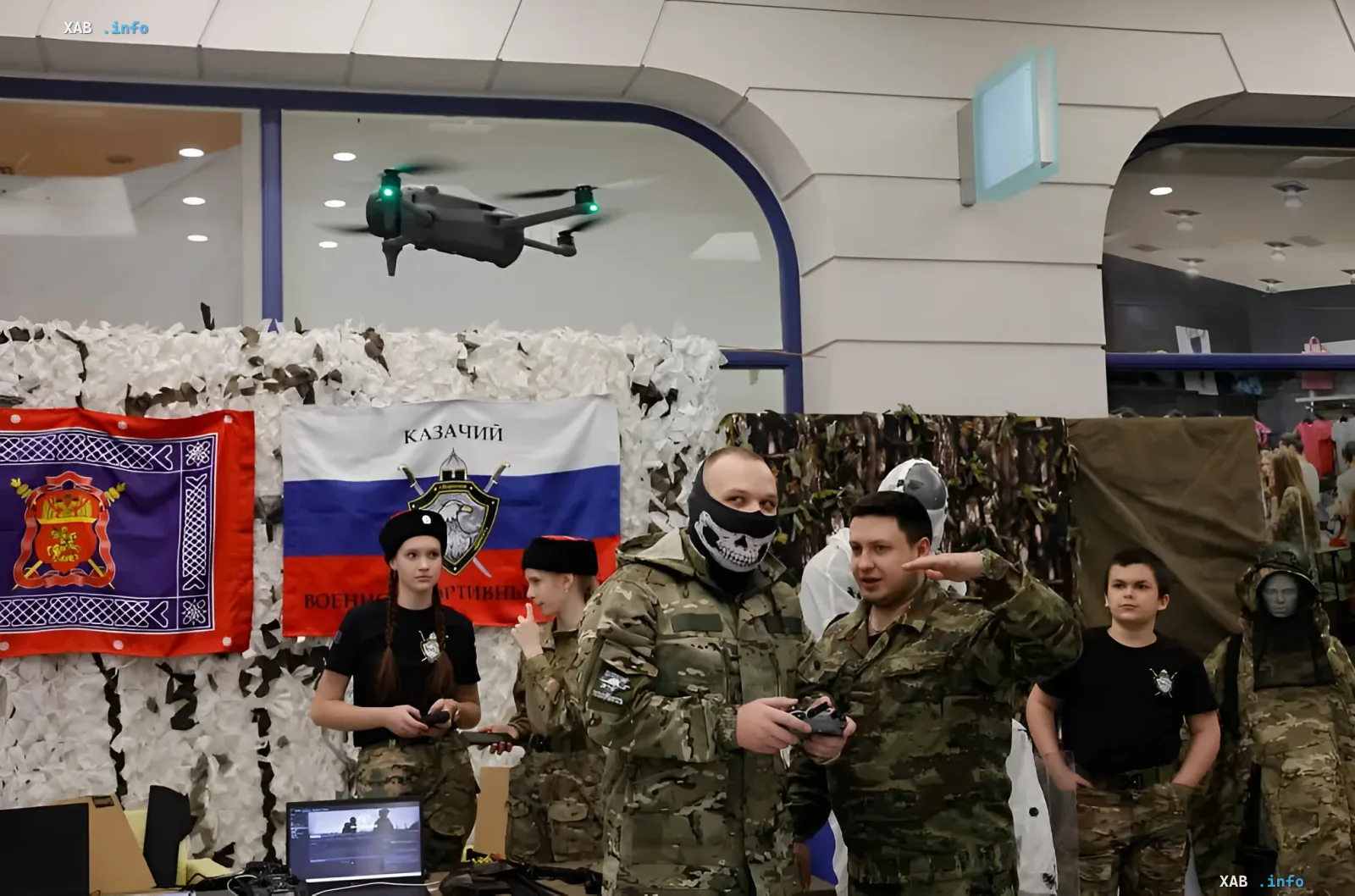
Rob Lee of the Institute for Foreign Policy Studies notes that while Ukraine often leads in technological innovation, Russia has proven its effectiveness in copying and scaling these achievements. Both sides recognize drones as the primary striking force at this stage. Belousov stated that up to half of Ukraine's losses are due to drone strikes, while Ukrainian commander Alexander Syrsky claims that Ukrainian unmanned systems are inflicting losses that Russia has been unable to replenish for five consecutive months.
Vladimir Tkachuk, head of the UAV manufacturer 'UralsDronePlant', describes the situation as an endless arms race. According to him, if tanks learn to shoot down 10 drones, engineers will develop swarm attack algorithms with 20 units. 'There is nowhere to hide from drones anymore; this is the new reality — both in the economy and on the battlefield,' he concludes.


