
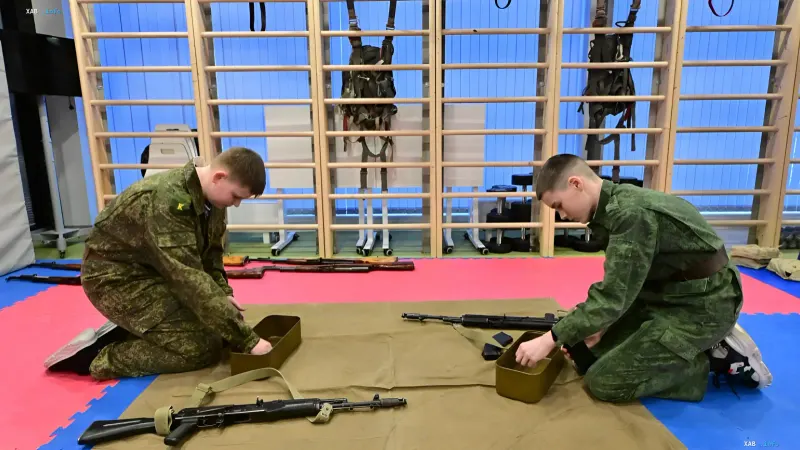
The secondary education system in Russia is preparing for a major transformation. As of September 1, 2026, the structure of the academic load within the discipline "Fundamentals of Safety and Defense of the Motherland" (OBZR) will change radically in schools across the country. The key change will affect the time balance: the share of initial military training (IMT) in the course will increase from the current 20% to 50%.
This was announced by the Minister of Education of the Russian Federation, Sergey Kravtsov. This decision marks a transition from theoretical familiarity with safety to in-depth military-applied training, which will become the dominant part of the curriculum for the subject.
Paradigm Shift: From OSZH to OBZR
It is important to understand the context of the changes: the subject OBZR has replaced the traditional course "Fundamentals of Life Safety" (OSZH). If the previous model focused on civil defense and general safety, the updated concept prioritizes practical skills necessary for military service and the defense of the state.
Doubling the hours for IMT indicates that the state views school years as a critically important stage for forming the basic competencies of future conscripts. This is not just a formal change in the schedule, but a rethinking of priorities in youth upbringing.
New Modules: From Drones to Combat Tactics
The expansion of the IMT program implies the introduction of modern educational modules reflecting the realities of modern warfare. According to approved methodological plans, schoolchildren will encounter fundamentally new content:
- Unmanned Systems: The course includes theoretical and practical lessons on UAV control. Students will study the design of drones, their tactical and technical characteristics, and piloting principles.
- Military-Technical Training: The program provides for training in the handling of small arms, as well as studying the basics of organizing combined arms combat.
- Tactical Medicine: A separate block is dedicated to providing first aid in field conditions, which is a vital skill on the modern battlefield.
- Drill Training: Classic elements of military discipline and drill training remain the foundation of the course.
Practice: Field Training Camps and "Avangard" Centers
The Ministry of Education emphasizes that theory will be reinforced by practice. Consolidation of material is planned in the format of mandatory field training camps for senior students. The conduct of such events is entrusted to regional centers for military-patriotic upbringing, such as the "Avangard" center and similar structures.
This approach allows learning to be transferred from classrooms to conditions close to reality, ensuring deeper assimilation of survival skills and group interaction.
Goals and Consequences of the Reform
Changes in the structure of the OBZR subject reflect the general trend of strengthening the applied military-technical component within secondary education. The official goal is to prepare students for compulsory military service in accordance with current legislation.
Increasing military training hours to half of the entire OBZR course creates prerequisites for school graduates to enter the army with an already formed set of basic skills. This can significantly reduce the time for primary adaptation and training in military units, but it also poses new challenges for the school system in terms of material and technical support and the training of the teaching staff.


