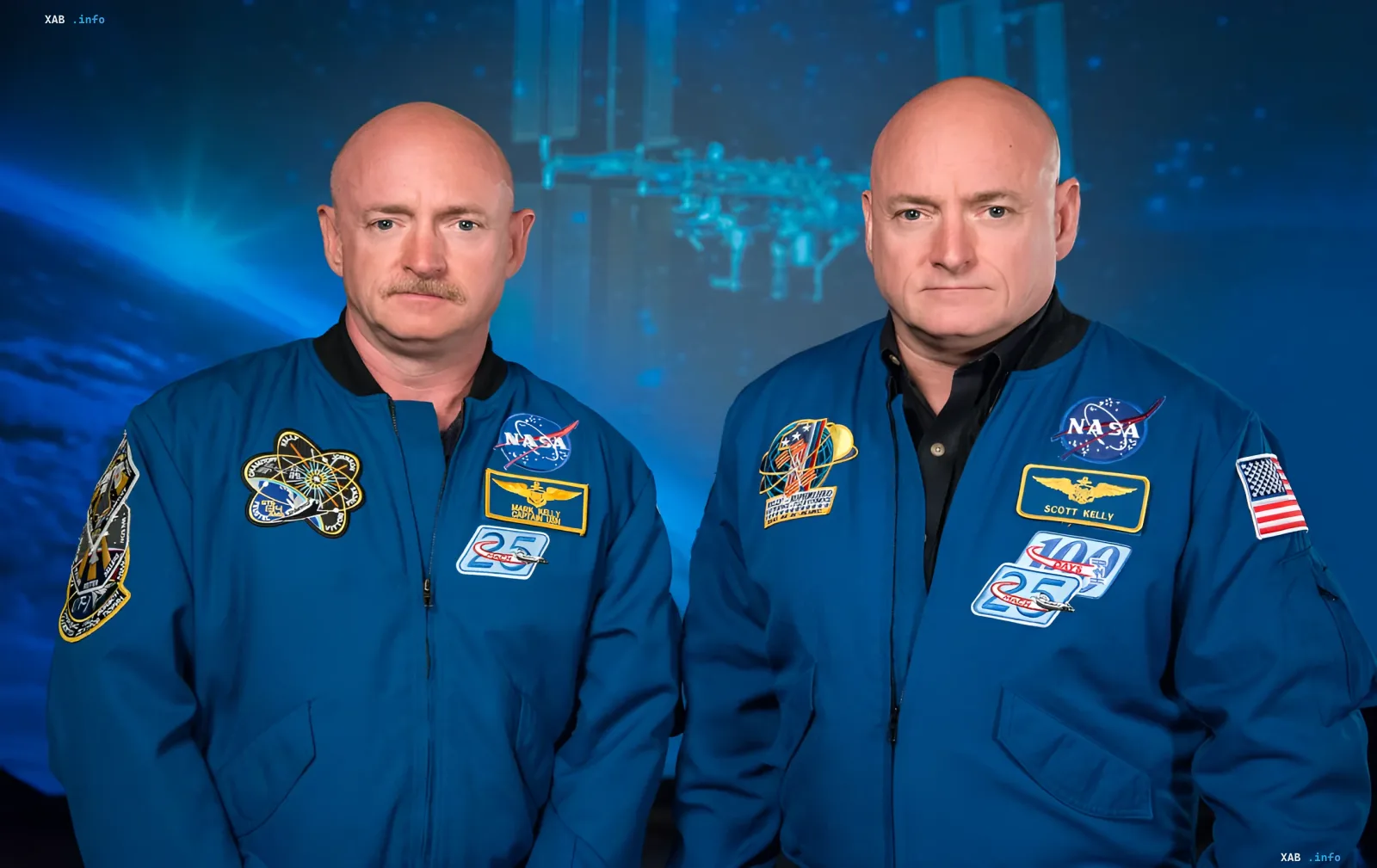
One of the most extensive experiments in the history of spaceflight, known as the "Twin Study," yielded unexpected results. For 340 days, astronaut Scott Kelly remained aboard the International Space Station, while his identical twin brother, Mark, stayed on Earth. Scientists used this unique opportunity to track the effects of weightlessness and radiation on the human body in real-time.
Physical Changes and the Time Paradox
Results published in the prestigious journal Science confirmed that Scott's body underwent significant transformations. At a physiological level, space acted in a classic manner: the astronaut lost some muscle mass but grew taller—a typical reaction of the spine to the absence of gravity.
However, the most captivating fact was the confirmation of Einstein's theory of relativity in action. Scott returned to Earth 5 milliseconds younger than his brother. This phenomenon, known as time dilation, occurred because Scott was moving at immense speeds in orbit.
Telomeres: A Surprising Reaction to Stress
Researchers paid special attention to the molecular level, specifically telomeres. These end sections of chromosomes typically shorten with age, acting as a sort of "biological clock" for the cell. In space, something paradoxical happened: Scott's telomeres lengthened. This led to speculation about slowed aging, but upon returning to Earth, they quickly reverted to their original state.
Gene Expression: What Changed Forever?
The experiment debunked the popular myth that space completely rewrites human DNA. Scott's genetic code remained unchanged, but gene expression—how the body uses these genes—did change. Even six months after landing, about 7% of the astronaut's genes continued to function differently than his brother's.
Scientists identified 811 genes that never returned to normal levels. Most of them are responsible for two critical processes:
- Immune system: the astronaut's body remained in a constant state of stress or hyperactivation, attempting to adapt to the hostile environment.
- DNA repair: cells altered their regeneration mode to withstand the effects of cosmic radiation.
Cognitive Abilities and the Future of Spaceflight
Beyond physical and genetic shifts, tests recorded a decline in Scott's cognitive skills. Thinking speed and decision-making accuracy decreased and remained low even after adaptation. These findings are prompting NASA to reconsider safety measures for future long-duration expeditions into deep space.
It is important to note that this study was unique and based on a single subject. To understand whether such changes are a universal rule for all humans or a unique feature of Scott Kelly's organism, further tests with other astronauts are necessary.


