
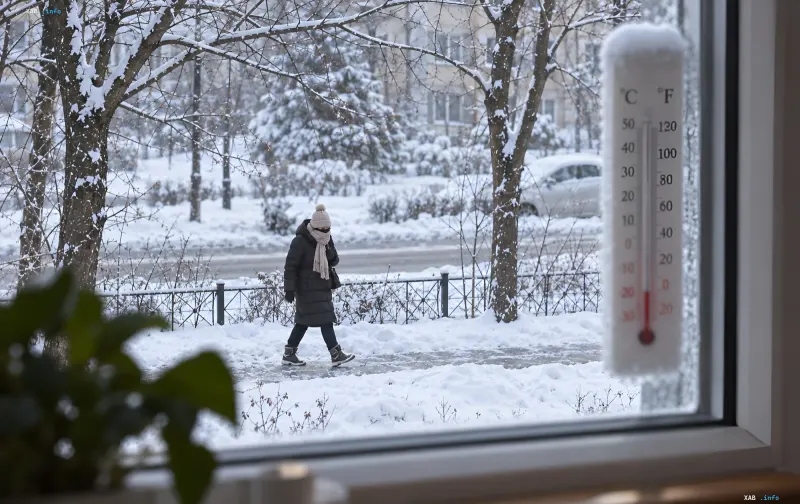
Vira Balabukh, Head of the Applied Meteorology and Climatology Department at the Ukrainian Hydrometeorological Institute, explained in an interview with RBC-Ukraine the fundamental difference between a regular weather forecast and long-term climate projections. According to her, seasonal and multi-year calculations are performed by global forecasting centers because they require significant computing resources. Ukrainian specialists, in turn, use this data and refine it taking into account local processes. The key indicator of such forecasts is the deviation of air temperature or precipitation from the climatic norm, i.e., from the multi-year average values calculated over 30-year periods.
Winter on Average Warmer, But Not "Like in Crimea"
The analysis of global forecasting center calculations cited by Balabukh indicates that the upcoming winter in Ukraine may on average turn out to be 1–2 °C warmer than the climatic norm. There are also calculation options where the temperature stays within normal limits. At the same time, the specialist emphasized, none of the numerical models predicts the average winter temperature below multi-year values. However, the climatologist warned against simplified conclusions: "This does not mean that winters will become the same as in Crimea." Seasonal weather features and the probability of severe frosts, she said, will persist.
RCP8.5 Scenario: +3–4 °C by the End of the Century
Modern climate models allow estimating the nature of winters in Ukraine not only for the upcoming seasons, but also up to the middle, and in some projections until the end of the current century. These calculations take into account various scenarios of human development, primarily greenhouse gas emission volumes. Under the high emission scenario RCP8.5, air temperature in Ukraine could rise by another 1.5–2 °C by mid-century, and by 3–4 °C by the end of the century relative to the modern climatic period. Balabukh emphasizes that such projections describe an averaged picture for a month or season and characterize the general weather features that will prevail during that period.
Arctic Invasions of Last Winter: A Lesson for Forecasts
During the winter of 2025–2026, significant frosts were recorded in certain regions of Ukraine. The forecaster explained that in January and February, Arctic air invasions caused a sharp cooling: in the northern regions, the temperature dropped 4 °C below normal during certain periods, while in the south it remained close to normal, and in Transcarpathia it exceeded it. At the same time, overall, previous winters that Ukrainian meteorologists predicted to be 1–2 °C warmer than normal corresponded to the calculations on average. Balabukh stated: "Despite global climate warming, cold winters and severe frosts in Ukraine remain possible in the future."
Why Average Temperature Can Be Deceiving
The climatologist drew attention to an important nuance: even a winter that is warm by average indicators can be accompanied by periods of anomalous cold alternating with thaws. As a result, the average temperature for a month or season turns out to be close to normal, although individual days bring extreme values. According to her, only short-term forecasts for the next five days can more accurately predict such short-term weather changes. Thus, long-term climate projections set the general background, but do not cancel the need to monitor operational warnings from the Ukrhydrometeorological Center during periods of severe frosts.


