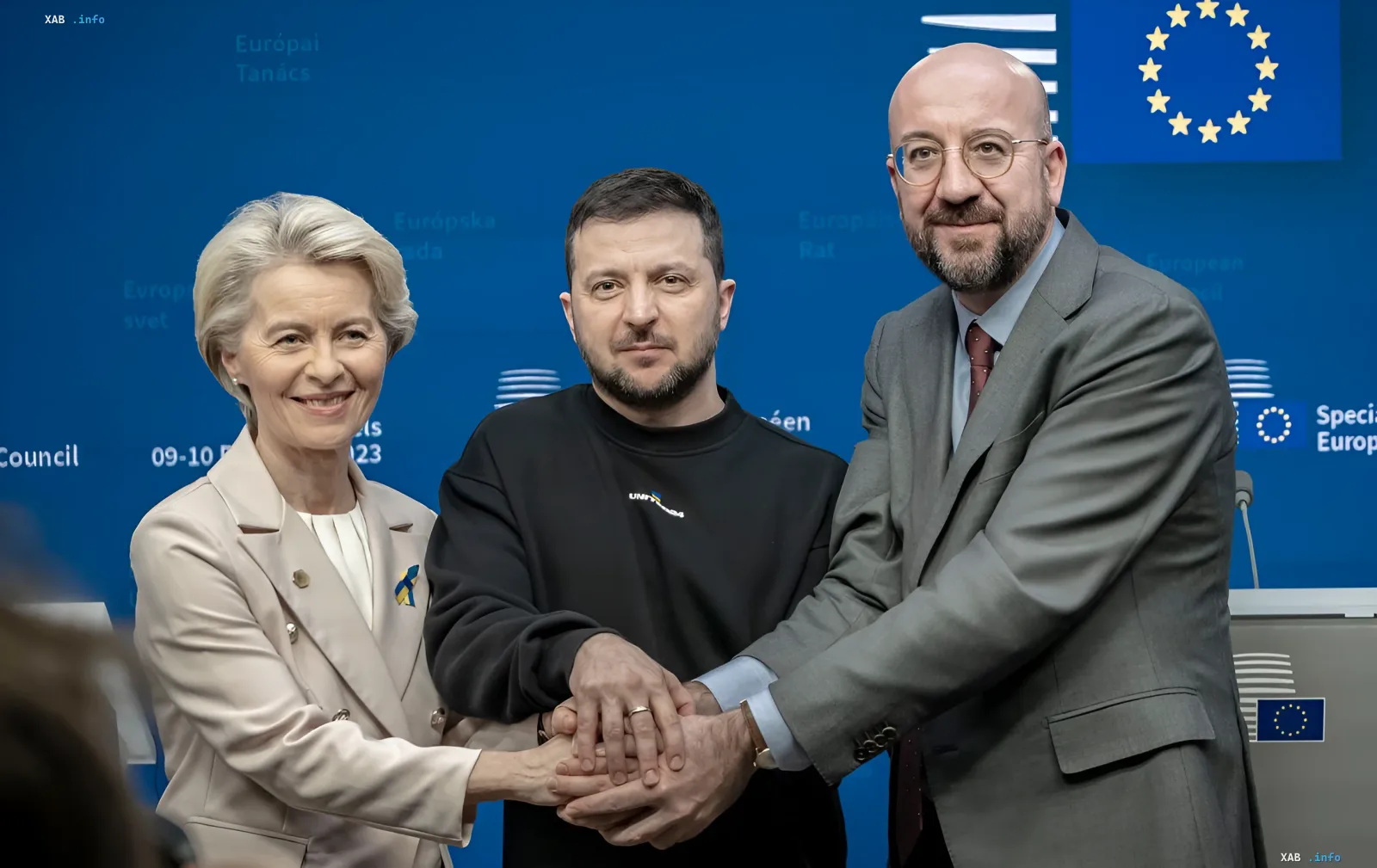
On Monday in Luxembourg, a historic event took place for two candidate countries: Ukraine and Moldova officially began the first stage of negotiations to join the European Union. High-ranking EU officials, together with ministers from Kyiv and Chisinau, launched discussions on the "first cluster" — a fundamental block of rules concerning the rule of law and democracy.
This step paves the way for negotiations on other critically important areas: the single market, the environmental agenda, as well as economic and social policy. The start of the process became possible due to political changes in Hungary, where a new government was formed after the April elections, and the unanimous decision of EU member states taken last Friday.
Political Support and Timeline Estimates
In a joint statement, European Commission President Ursula von der Leyen and European Council President António Costa highlighted the "determination, courage, and hard work" demonstrated by both countries. Ukrainian President Volodymyr Zelenskyy, in response, emphasized the importance of the EU fulfilling its commitments: "Ukraine is doing everything necessary, and it is important that the EU also keeps its word. Opening the first cluster is significant political and moral support for our state and our people".
EU officials assess the prospects optimistically: with sufficient political will, Ukraine could complete technical negotiations in approximately four years. However, experts remind us that the final decision on membership remains political. To join, the country must adopt thousands of European laws and obtain unanimous approval from all member states.
Expert Opinion: "Reality Check"
Heather Grabbe, an expert at the Bruegel think tank and former European Commission advisor on enlargement, believes that opening the first cluster is of fundamental importance. "This is the beginning of the process of reaching an accession agreement. Therefore, it is very important," she noted.
At the same time, Grabbe warns that Ukraine faces a "reality check" ahead. Accelerating the adoption, implementation, and enforcement of EU legislation is not possible — this process will require huge administrative resources. The expert also emphasizes mutual dependence: "Ukraine is needed by the European Union no less than the European Union is needed by Ukraine".
Grabbe suggests applying a "security first" approach to Kyiv, integrating the country into EU security and defense policy as quickly as possible. According to her, given that Ukraine is a key player in continental defense with battle-hardened troops and a modern arsenal, the worst scenario for Europe would be Kyiv becoming disappointed in the EU and shifting towards Euroscepticism.
Reforms and Anti-Corruption Agenda
Brussels officials highly appreciate Kyiv's efforts to conduct reforms. In particular, high-profile arrests, including the detention of the Head of the President's Office, Andriy Yermak (who denies all charges), are perceived in the EU as a positive signal of the authorities' serious attitude towards anti-corruption investigations.
However, the praise is overshadowed by disappointment with the pace of reforms. To date, Ukraine has fulfilled only 15% of the 10-point plan agreed upon in December 2025 between Enlargement Commissioner Marta Kos and Vice Prime Minister Taras Kachka. The plan provides for strengthening the independence of NABU and the SAPO, adopting an anti-corruption strategy, and reforming procedures for the appointment of judges and prosecutors.
Lifting the block from Hungary became a key factor in success: Kyiv and Budapest managed to agree on 10 out of 11 requirements for European integration. In May 2026, German Chancellor Friedrich Merz called on the EU to move to the practical stage of negotiations, stating that bilateral disputes should not block the country's course. Preparation for the formal opening of the first cluster began in early June under the auspices of the Cypriot presidency of the Council of the EU.


