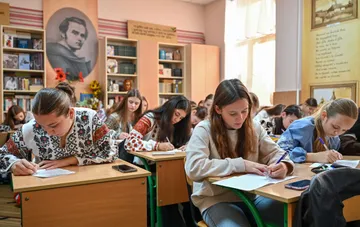
The Ministry of Education and Science of Ukraine has granted official approval to seven new educational sessions as part of the "Humane Education and Volunteering" educational initiative. This was announced by the Ministry's press service, referenced by RBC-Ukraine. The new lessons are designed for high school students and complement the existing curriculum, which already covers elementary and middle schools. Thus, the total package of educational materials for the project now consists of 21 sessions, all of which have received the official "Approved for Use in the Educational Process" seal.
Expanding the Course to High School
The initiative is implemented jointly by two organizations: the all-Ukrainian animal rights organization UAnimals and the Suziria Group, a conglomerate that has been developing the pet market in Ukraine for over 33 years. The project aims to foster students' responsible attitude toward animals and the environment through systemic school education. The Ministry noted that expanding the course to high school allows for continuous work on building humane values at various stages of learning, rather than stopping at the elementary and middle school levels. Teachers receive the opportunity to officially use the materials in schools across the country: teaching lessons in full, utilizing individual assignments, or adapting them to the needs of a specific class.
Statistics Confirming Urgency
The ministry cited data from the Office of the Prosecutor General of Ukraine for the first five months of 2025: during this period, 386 criminal proceedings regarding animal cruelty were registered. Compared to the same period of the previous year, this figure has nearly quadrupled. According to the project authors, this dynamic underscores the necessity of changing the situation through education—cultivating critical thinking, empathy, media literacy, and personal responsibility for actions related to animal welfare and environmental conditions among children.
Content of the Seven New Lessons
The educational sessions for high school students cover a wide range of topics. In the first investigative lesson, students study the five freedoms of animals, examine real-world cases, and learn about responsible pet care; concluding by creating their own social campaign, "Adopt, Don't Shop!", to raise awareness about homeless animal adoption. A separate session is dedicated to exploring the animal entertainment industry and debunking common myths using fact-checking. In lessons on humane strategies and volunteering, students learn practical ways to help animals, study the basics of fundraising, and develop engineering solutions—specifically, ideas for warm shelters using upcycling. In another session, students explore ethical dilemmas and discuss how personal choices impact the environment. The final lesson transports the class to the year 2050: students debate potential solutions at the intersection of artificial intelligence, biotechnology, and climate challenges, argue their positions, and form a joint class manifesto.
Practical Approach and Initiative Recognition
The authors emphasize that humane education in this project goes beyond presenting information: students learn to distinguish facts from myths, view problems from different perspectives, argue their positions, work in teams, and take responsibility for results. Practical tasks turn compassion into concrete actions—from social campaigns to volunteering initiatives in schools and communities. The Ministry noted that real stories of animal rescue, including during wartime, help conceptualize humanity not as an abstract value, but as concrete actions. Internationally, the initiative has already gained recognition: the project became a finalist in the 11th annual Shorty Impact Awards in the Animal Rights & Welfare category, which honors initiatives in animal protection and welfare. All project educational materials are available for free online on the website education.uanimals.org; a convenient catalog has been created for educators.