
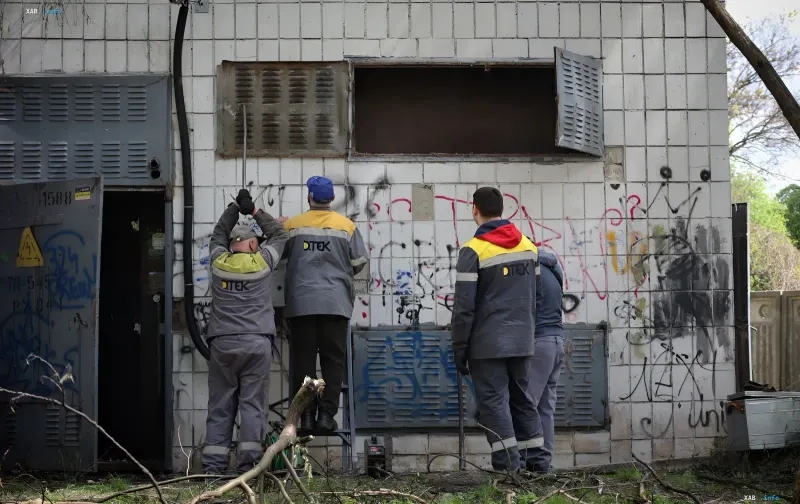
Amidst ongoing Russian attacks, Ukraine is launching a large-scale mechanism to accelerate infrastructure recovery. The Cabinet of Ministers has approved the creation of national restoration brigades designed to promptly eliminate the consequences of strikes on populated areas.
The initiative was announced by the Vice-Prime Minister for Recovery of Ukraine, Minister of Communities and Territories Development, Oleksiy Kuleba. The new project is based on the successful experience of last year, when more than 2,000 specialists from across the country were mobilized to eliminate the consequences of attacks in Kyiv.
Mobility and coordination
The main task of the new brigades is to ensure the rapid deployment of qualified personnel, machinery, and equipment to the regions where the need for restoration is most acute. The coordination of the formation of these groups will be undertaken by Ukrzaliznytsia (Ukrainian Railways).
The brigades will consist of employees of enterprises that already have experience in conducting emergency work. Their actions will be strictly regulated: work will be carried out based on decisions of the State Commission for Technogenic and Ecological Safety and Emergency Situations (GKChS) with the involvement of regional military administrations.
According to Oleksiy Kuleba, the new mechanism will significantly reduce the time required to eliminate consequences and strengthen the ability of local communities to respond to emergencies.
Areas of restoration
The range of tasks that national brigades will have to address is extremely broad. Priority objects will include:
- Heating, water, and electricity supply systems;
- Drainage infrastructure;
- Residential buildings damaged as a result of attacks.
Funding for the project in 2026 will be provided from the reserve fund of the state budget, as well as from local budgets.
Context: preparation for winter and fresh attacks
The launch of the recovery program comes against the backdrop of preparing the power system for the next heating season. Energy Minister Denys Shmyhal previously warned that the upcoming winter could be no less difficult than the previous one.
The relevance of the issue is confirmed by recent events in the Dnipropetrovsk region. Russian forces struck four energy facilities of the DTEK company. As a result of the attack, tens of thousands of families were left without electricity, which once again highlights the need to create effective mechanisms for rapid response and recovery.


