
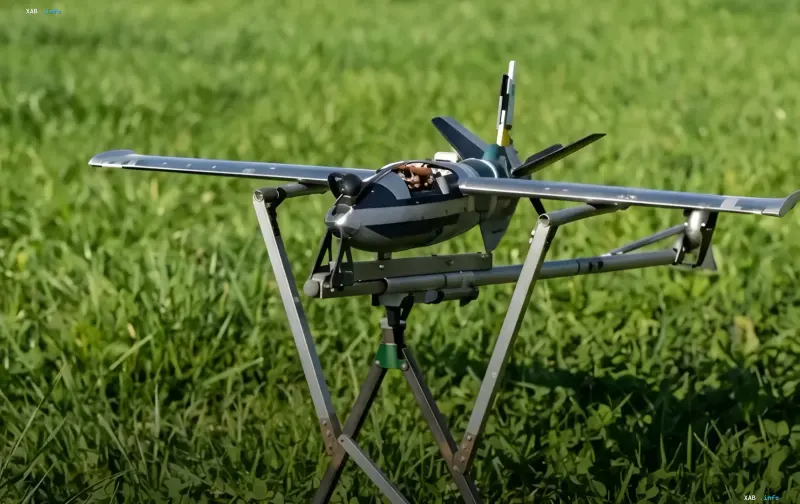
The Ukrainian command has bolstered its arsenal with a new domestic anti-drone system. The Ministry of Defense of Ukraine has officially approved the 'TALION' unmanned complex for operation. The novelty is a hybrid of an interceptor and a strike vehicle, capable of performing tasks within the framework of so-called 'small-scale air defense'.
Versatility on the Battlefield
The main mission of 'TALION' is the neutralization of enemy UAVs. However, the capabilities of the complex are not limited to air targets only. As military officials note, the drone is capable of effectively destroying ground targets, making it a universal tool for solving a wide range of combat tasks.
The control system allows the operator to choose the operating mode depending on the situation: piloting can be carried out both fully manually and in semi-automatic mode. This provides flexibility in conducting fire and allows for a faster response to threats.
Tactical Advantages
One of the key characteristics of the new complex is the ability to operate at various altitudes. This allows 'TALION' to intercept almost all types of Russian drones that can attack from different levels. In addition, the high autonomy of the vehicle makes it possible to use it for long-term patrols and aerial reconnaissance.
Military officials emphasize that the combination of interceptor and kamikaze munition functions will allow for more effective counteraction to enemy aviation. This approach ensures high accuracy of target destruction in tactical depth, where traditional air defense means may be less effective.
Response to Enemy Challenges
The appearance of 'TALION' comes against the backdrop of the active modernization of unmanned systems by the enemy. It was previously reported that Ukrainian servicemen shot down a new Russian 'Sokol-I' drone for the first time, created specifically to combat Ukrainian reconnaissance and strike drones. The introduction of its own analogue, capable not only of detecting but also destroying such targets, becomes an important step in the escalation of technologies on the front.


