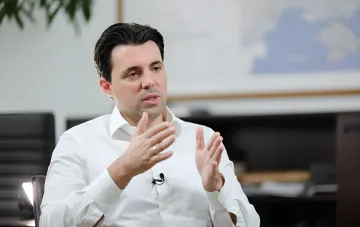
Ukraine's power grid has been physically synchronized with the European system for over four years, yet, according to experts, this is not enough for full participation in the European energy market. Vladimir Omelchenko, Director of Energy Programs at the Razumkov Centre, told RBC-Ukraine that the country needs to abandon the manual setting of price caps and move to the European model of electricity market operation. In his words, technical compatibility with the EU has existed since March 2022, but commercial integration — so-called market coupling — is still absent.
Technical integration without commercial integration
Omelchenko explained that market coupling means compatibility, including commercial compatibility, of Ukraine's electricity and gas markets with the markets of the European Union. "We have technical compatibility, you know, yes," the expert noted, emphasizing that Ukraine's power system has been fully interconnected with the EU energy system since March 2022. At the same time, in his words, "there is still no commercial compatibility, the so-called market coupling." It is precisely the absence of this mechanism, in the specialist's view, that prevents Ukraine from fully reaping the benefits of a single European market.
Manual mode as a barrier for investors
The key problem the expert pointed to remains the manual mode of setting price caps. In his words, even the spring increase in price caps did not solve the problem systemically, since the caps are still set manually. This makes the rules of the game less predictable and is one of the reasons for the weak interest of investors in the Ukrainian energy market. "And on the eve of winter, we need to somehow change the principles of setting price caps or the cap price from manual mode... But it is time to break this habit," Omelchenko stated, critically noting the officials' tendency to manage prices, tariffs and markets "in manual mode."
Winter imports and price caps
The expert placed a separate emphasis on the upcoming winter period. Without a review of the price-cap setting mechanisms, in his assessment, Ukraine will find it harder to import electricity from Europe during the winter season. Previously, former head of Ukrenergo Vladimir Kudrytskyi also noted that artificial price caps on the Ukrainian energy market force the country to underuse electricity imports from Europe. Thus, manual price regulation, taken as a whole, simultaneously holds back both investment attractiveness and the operational flexibility of the market during periods of peak demand.
Debt as an additional factor
Beyond price regulation, other systemic problems stand in the way of full integration into the European energy market. Olga Yevstigneeva, head of the Ukrainian Association of Renewable Energy, noted that systemic debts could also hinder Ukraine's full integration into the European energy market. Combined with the manual mode of price caps, this forms a complex of barriers that, in the experts' view, must be removed right now — on the eve of winter, when the load on the power system and the need for electricity imports increase.