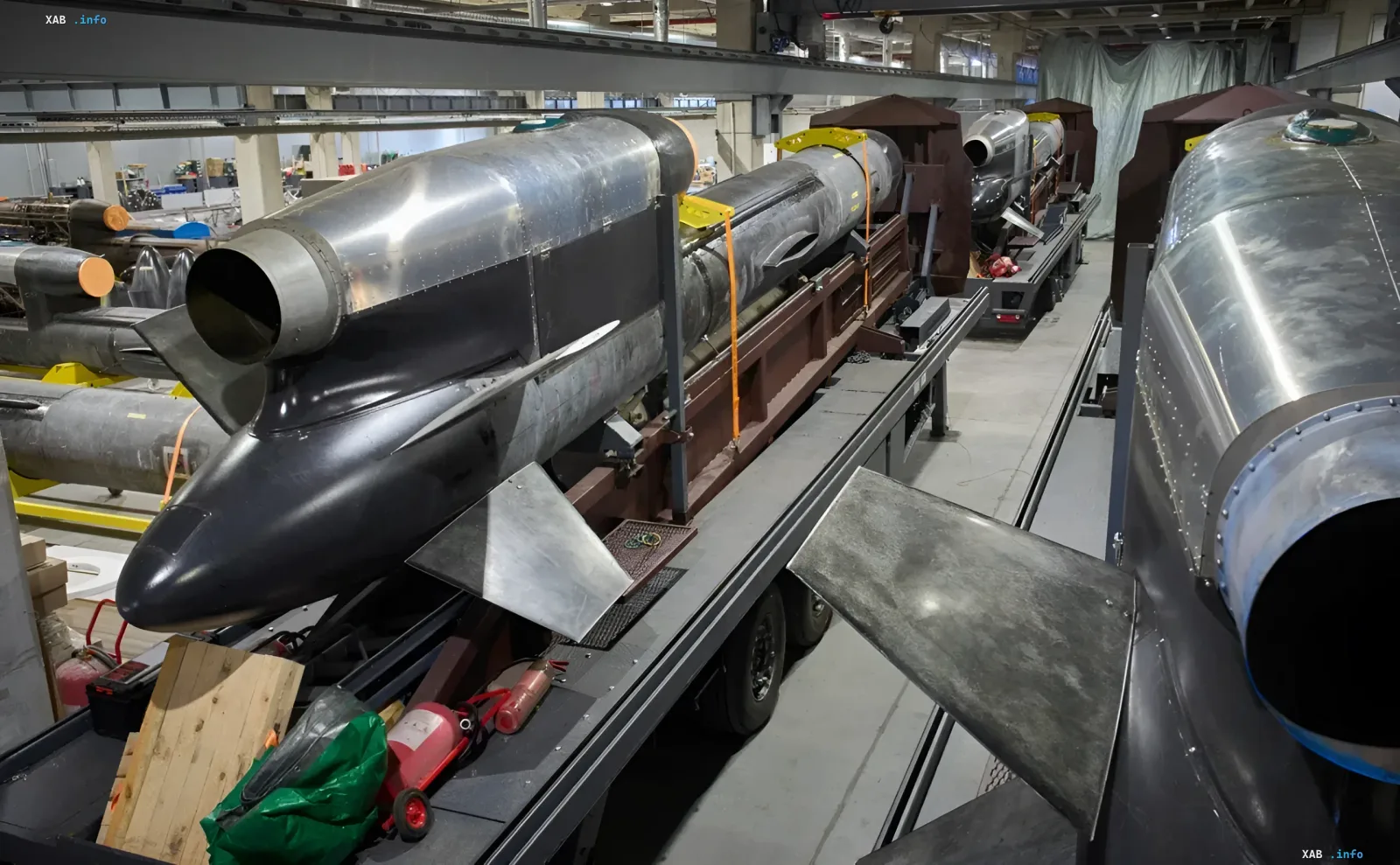
Ukraine's plan to produce long-range cruise missiles 'Flamingo' was not met within the established deadlines. The head of Fire Point, Irina Terex, explained this by a delay in the expected financing from an European Union loan and government orders.
The company prepared lines capable of producing up to seven missiles a day. However, the built capacity is currently not fully utilized — the production volume still depends on financing and new contracts.
Contradictory data
In August 2025, Fire Point stated that it planned to increase 'Flamingo' missile production to at least seven per day by October 2025. Such rates could allow for the release of 2555 missiles per year. However, according to Irina Terex's new explanation, seven missiles is not the company's actual daily production volume. This is the maximum design capacity of the pre-built lines.
According to her, the company did not increase production to this level because orders from Ukraine were insufficient to fully load the available capacity. Thus, the previously published figure turned out to be not a real production result, but an upper limit that can be achieved with the necessary financing and contracts.
Financing and contracts
Terex linked the reduction in production volumes to Ukraine's expectation of credit funds from the European Union. According to her explanation, since financing was not formed in time, government orders did not match the maximum capacities prepared by Fire Point.
The European Union approved a 90 billion euro support credit program for Ukraine. According to the European Commission, the first 3.2 billion euros under the program were allocated on June 25, 2026, and another 3.9 billion euros, intended for purchasing drones, on June 30.
The Guardian reported at the end of July that Fire Point's production is picking up speed again after a pause caused by funding delays. According to the publication, the company is now producing approximately 100 'Flamingos' a month. This means an average of slightly more than three missiles a day.
Future plans
Fire Point has not abandoned plans to increase production to seven missiles a day. According to Irina Terex, the company can achieve this figure by the end of 2026 or early 2027. However, the exact timing depends on when new contracts will be signed and in what volume orders will come in.
The main problem here is not the lack of production lines. The company emphasizes that the necessary infrastructure has been created, but stable and guaranteed advance orders are needed for it to work at full capacity.
Technical specifications
'Flamingo', also known as FP-5, is a ground-launched long-range cruise missile developed in Ukraine. According to data presented by Fire Point, the missile has:
- a flight range of up to 3000 kilometers;
- a warhead weighing up to 1150 kilograms;
- the ability to strike deeply located ground targets.
These technical specifications are based on the company's statements, and not all of them have received independent full confirmation. Associated Press reported in 2025 that Fire Point was producing approximately one 'Flamingo' a day. By July 2026, the company announced an increase in monthly production to approximately 100 units. According to the head of Fire Point, the cost of each missile is slightly less than $600,000.
Engine development
So far, Fire Point has used restored old jet engines in 'Flamingo' missiles. However, due to the increasing difficulty of finding such units, the company has begun developing its own engine. In an interview with Reuters on July 29, 2026, Irina Terex reported that the first ten test engines are being assembled. If the tests are successful, new engines could allow for even greater expansion of 'Flamingo' production.
This factor also directly affects the rate of missile production. After all, to produce missiles in large quantities, not only an assembly line is needed, but also a stable supply of engines.
Conclusions
The example of Fire Point showed that in the Ukrainian defense industry there may be a significant gap between production capacity and real orders. The company built lines designed to produce seven missiles a day. However, the funds and contracts from the state necessary to fully load these capacities were not formed in time.