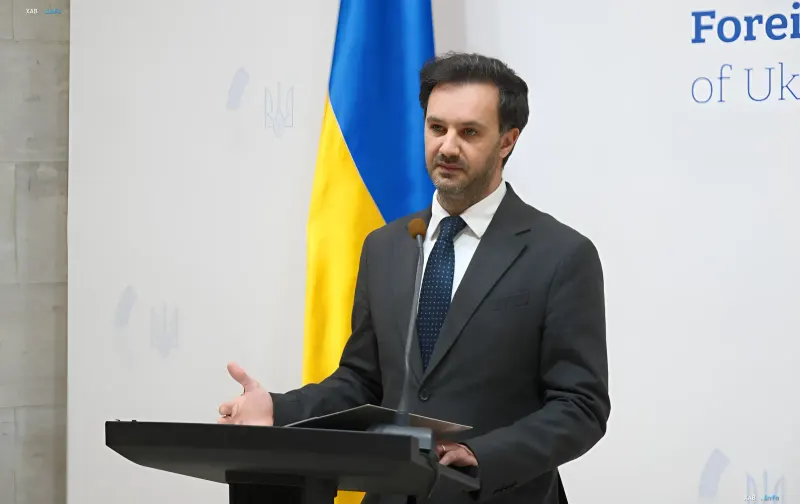
Against the backdrop of growing successes by far-right political forces in Europe, the Ministry of Foreign Affairs of Ukraine has stated its position: Kyiv is ready to build relations with any government elected by the citizens of European states. This was announced, according to RBC-Ukraine, by the press secretary of Ukraine's Foreign Ministry, Georgy Tikhyy, during an official briefing. In his assessment, the coming period will be marked by intensive electoral cycles: in the next year, by the diplomat's count, more than half of the citizens of the European Union will take part in various electoral processes, and elections will be held in nine European countries. That is precisely why, according to the ministry's representative, it is important that Ukraine does not become a topic that provokes disagreement and political polarization within European states.
Diplomatic Readiness for Any Scenario
Tikhyy emphasized that Ukrainian diplomacy is ready for different scenarios regardless of the outcomes of the upcoming elections in European countries. Kyiv, he said, does not intend to interfere in the internal political processes of other states and will work with the political forces and representatives of government elected by the citizens. “We will work with whoever the people of a given country choose. This is our common approach,” the Foreign Ministry press secretary explained. Thus, the ministry has effectively insulated itself from a course reversal in the event that forces traditionally critical of support for Kyiv come to power in European capitals.
Support for Ukraine as a Unifying Factor
Separately, Tikhyy stressed that the Foreign Ministry considers the topic of support for Ukraine “unifying” rather than a reason for politicization. According to him, support for Ukraine serves the interests of the European Union and Europe as a whole: Ukrainian troops are holding back Russian advances, and aid to Kyiv is a contribution to the security of European states. “Therefore, every act of support is, in essence, an investment in the security, peace, and tranquility of the European states themselves,” the ministry's representative stated. This rhetoric is aimed at preserving a unified European front of support even amid internal political fragmentation in individual EU countries.
Regional Elections in Germany and Their Impact
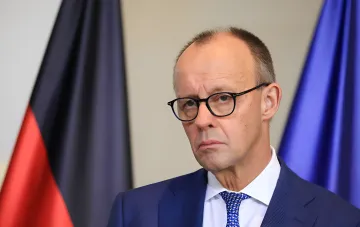
Commenting on the situation in Germany, Tikhyy noted that the elections in question were regional: the German states do not determine the country's foreign policy; that is the responsibility of the federal government in Berlin. In his view, statements by party representatives at the regional level should not be extrapolated onto the foreign policy course of Germany as a whole. This point comes against the backdrop of statements by German Chancellor Friedrich Merz, who earlier warned that a victory for the far-right “Alternative for Germany” in Saxony-Anhalt would have consequences not only for Germany but also for the international situation, in particular pointing to possible risks for further support of Ukraine.
Calls for Negotiations: Kyiv Points to Moscow
In response to calls by representatives of far-right forces to abandon support for Ukraine and move to peace negotiations, Tikhyy stated that such calls should be addressed not to Kyiv but to Moscow, since Ukraine is ready for negotiations. He recalled that President Volodymyr Zelenskyy is ready to meet with Russian leader Vladimir Putin at any convenient time and on any neutral venue, while Kyiv does not consider Russia and Belarus to be neutral territory. Negotiations, the press secretary said, could be held with the mediation of U.S. President Donald Trump. “So it is not to us that these calls should be addressed, but to those who do not want to end the war — that is Moscow,” Tikhyy concluded.
Contradictory Data
The statements of the parties show a discrepancy in assessing the impact of the regional elections and in identifying the addressee of the calls for negotiations. On the one hand, German Chancellor Friedrich Merz publicly linked a far-right victory in Saxony-Anhalt to risks for the international situation and for support of Ukraine, thereby effectively acknowledging the significance of the regional result for the foreign policy course. On the other hand, the press secretary of Ukraine's Foreign Ministry, Georgy Tikhyy, conversely insists that the regional states do not determine Germany's foreign policy and that their statements should not be extrapolated onto Berlin's course. A similar contradiction exists on the question of negotiations: far-right forces call on Kyiv for peace negotiations and a withdrawal of support, while the Ukrainian side asserts that it itself is ready for negotiations and that Moscow is the addressee of the calls for peace. Both positions are recorded in public statements and reflect a difference in the interpretation of the same political events.