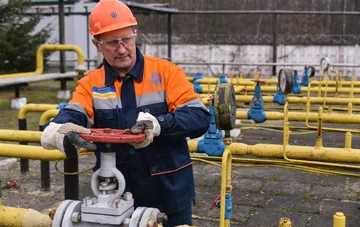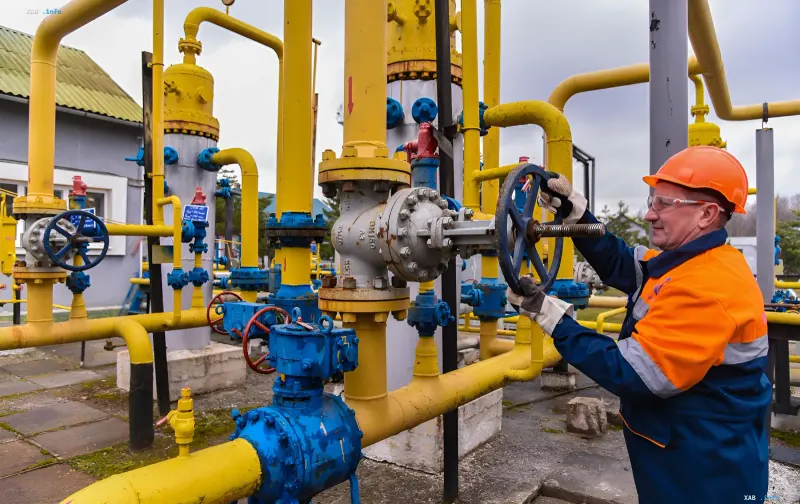
Ahead of the heating season, Ukraine has built up a reserve of approximately 16 billion cubic meters of natural gas in underground gas storage facilities (UGS). According to Volodymyr Omelchenko, Director of Energy Programs at the Razumkov Centre, speaking on a televised telethon, the accumulated volume is not only sufficient to get through the winter but also exceeds last year's figures. The expert stressed that the resource was injected into storage before the start of the heating period, creating an additional reserve against the backdrop of launching a controlled export mechanism for a portion of private production.
Reserves Exceed the Planned Target by More Than a Billion Cubic Meters
A key conclusion made by Omelchenko concerns how actual accumulations compare with the plan. According to him, the available reserves are «much larger» than planned and exceed targets by more than one billion cubic meters. This means that even with high demand during the heating season, Ukraine is entering it with a positive deviation from the baseline scenario rather than a deficit. As the expert noted, accumulating this volume was achieved «even more than last year,» indicating more efficient storage replenishment in the current cycle.
The Result Achieved Amid Strikes on Gas Production Infrastructure
Omelchenko directly linked the achieved result to the systemic nature of Russian strikes on gas production infrastructure, which, in his assessment, failed to prevent the creation of the necessary reserve. At the same time, the expert positively evaluated the work of specialized companies engaged in resource accumulation ahead of winter, specifically calling the activities of Naftogaz and Ukrtransgaz a «plus». According to him, their operational work ensured that more gas ended up in storage by the start of the heating season than was stipulated in the plan.
Controlled Export of Private Production: How the Mechanism Works
In parallel with building winter reserves, the government has allowed private gas production companies to engage in controlled exports of up to 15% of their own production, but only in the absence of domestic demand. The mechanism is designed for limited volumes and contains protective conditions: a ban on exports during the winter period and the ability to promptly halt supplies if risks to the country's gas balance arise. Thus, the export option does not replace domestic accumulation, but complements it within strictly defined frameworks.
What Exports Mean for the Industry and Investment
For the gas production sector, the opportunity to sell part of the resource abroad is viewed primarily as a tool to realize production amid shrinking commercial demand, as previously noted by Artem Petrenko, Executive Director of the Association of Gas Producers of Ukraine. In a broader context, partial exports are also discussed as a source of funds that can be directed toward developing new production. The combination of factors—reserves above plan and a functioning export mechanism—provides the industry and regulator with a more resilient position ahead of the winter season.