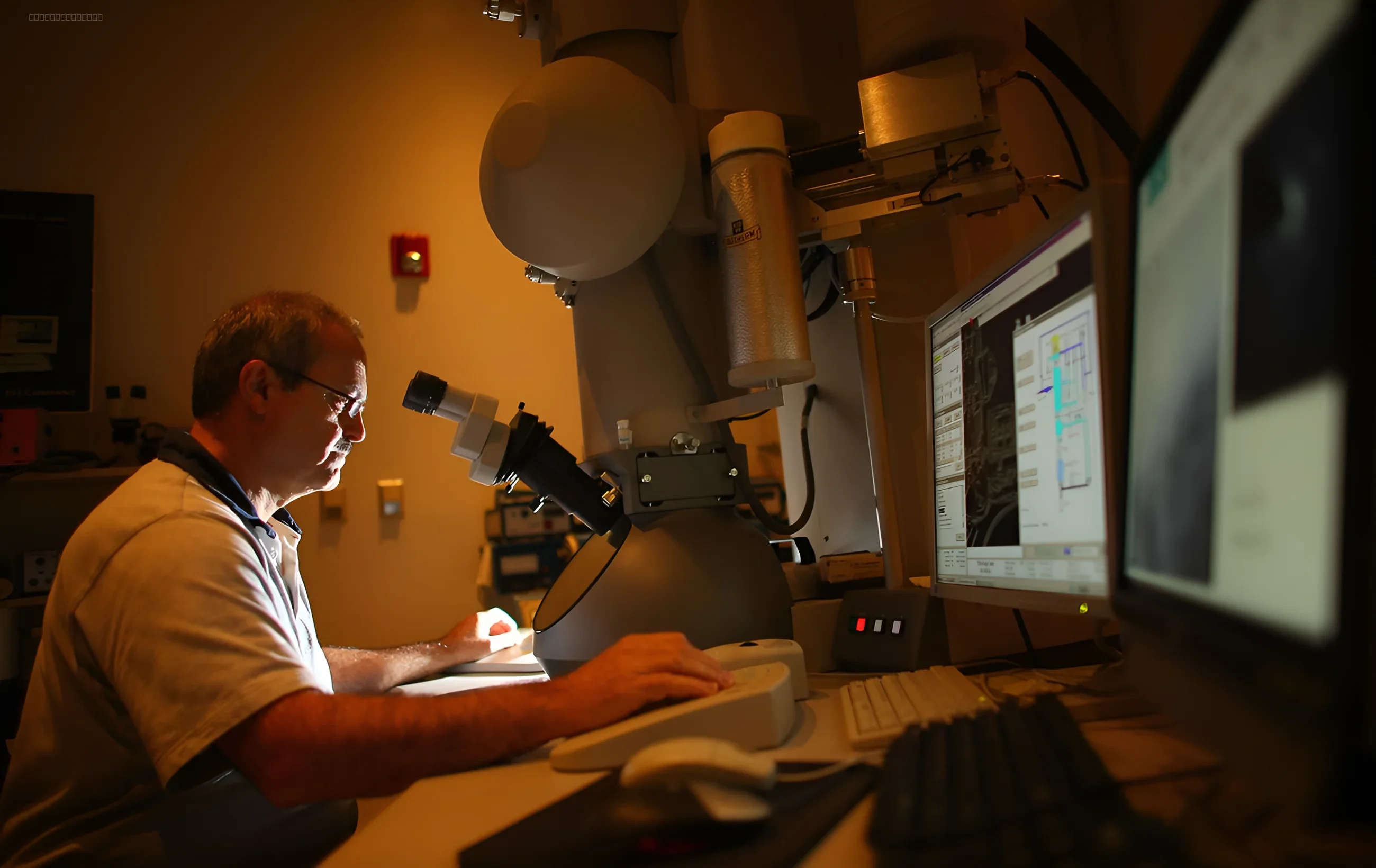
The space race today is less about launching one's own rockets and more about a race for intelligence. Despite the lack of its own orbital infrastructure, Ukraine remains an active player on the global stage. The secret to success lies in the ability to use other people's resources and one's own brains.
Oleg Fedorov, a leading researcher and former director of the Institute of Space Research of the NAS of Ukraine, revealed in an interview with RBC-Ukraine the strategy that allows Ukrainian scientists to work at the forefront of science without billion-dollar investments in rocketry.
The Era of Earth Intelligence: From Data to Solutions
The modern paradigm of space activity has changed radically. Countries no longer need to launch their own satellites to get up-to-date information. Ukrainian specialists are actively integrating into global information flows.
"Modern space activities allow the use of free data. We use data from the European Sentinel constellation. These are not very high-resolution satellites, but they are sufficient for environmental monitoring," notes Fedorov.
In addition to European resources, Ukrainian science receives support from the USA. Small grants from NASA provide access to unique data sets that would be unavailable alone. However, pixels on the screen do not solve anything by themselves. The key factor becomes information processing.
Artificial Intelligence as the Main Tool
To solve such complex tasks as predicting land degradation or accurately modeling crop yields, it is necessary to combine information of different natures. Here, artificial intelligence comes into play.
Today, the global industry is moving to the concept of Earth Intelligence. This is a new level of work where AI instantly analyzes satellite streams and delivers ready-made solutions. The main trend of modernity is not just to own raw data, but to instantly predict risks and identify hidden threats in real-time.
"This is exactly where artificial intelligence is needed — to identify patterns and process large amounts of information from different sources: satellite images, radar data, different ranges and formats. We are interested in the result, and without such technologies it is practically impossible," the institute emphasizes.
A Window to Space Through Antarctica
A unique advantage of Ukraine, which does not require rocket launches, remains the polar station "Academician Vernadsky". The South Pole of the Earth is an indispensable natural test site for observing near-Earth space.
Antarctica is of particular interest for studying magnetic phenomena, processes near the pole, and the precipitation of charged particles. Laboratory specialists process data for the National Antarctic Center, combining satellite and geophysical information.
These studies demonstrate large-scale internal cooperation. Scientists from different fields participate in the processing of Antarctic data: biologists, physicists, and geophysicists from the Main Astronomical Observatory and the Radio Astronomy Institute of the NAS of Ukraine.
A Look into the Future
Despite successes in analytics, the question of its own presence in space remains open. Recently, the director of the Ukrainian company Stetman, Dmytro Stetsenko, reported on work on creating its own satellite constellation in low Earth orbit. A test satellite is planned to be launched into orbit in October 2026.
Parallel to this, the political level also realizes the importance of the issue. The head of the subcommittee on national security, Feodor Venislavsky, stated that Ukraine needs "space forces" and its own "satellite constellation." For now, Ukrainian science proves that even without its own rockets, one can be at the center of space events if one knows how to work with data.


