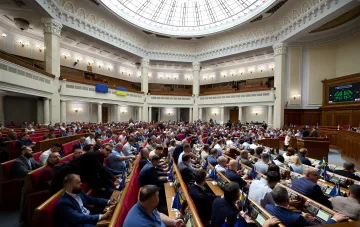
The Verkhovna Rada of Ukraine has ratified agreements with the European Investment Bank (EIB) providing for the allocation of €100 million for the development of the country's social housing system. This was announced by the head of the parliamentary committee on state building, local self-government, regional development and urban planning, Olena Shuliak, as reported by RBC-Ukraine. 296 MPs voted for the ratification of agreement No. 0403. The document, signed on June 25, 2026, in Gdańsk, is now undergoing the final stage of domestic procedures, after which the funds will be available for project implementation.
Funding Structure and Purpose
The total financing under the EIB agreements amounts to €100 million, of which €50 million are loan funds and another €50 million are grants—meaning non-repayable. According to the explanatory memorandum for the ratification, resources will be directed toward creating a municipal social housing fund, providing high-quality and affordable housing for vulnerable categories of the population, and developing a social rental system. The project involves not only direct construction but also strengthening the institutional capacity of authorities and creating sustainable financial and operational mechanisms for managing social housing. In total, an agreement has already been reached with the European Investment Bank to attract €400 million for these purposes, indicating the multi-stage nature of the program.
Pilot Project: Five Out of Twenty-Five Municipalities
The first social housing facilities are planned to be built in five municipalities selected through a competition. 25 municipalities submitted applications, eight reached the shortlist, and five became finalists. Currently, their financial models are being evaluated by the Ministry of Finance of Ukraine. Upon completion of this procedure, the EIB will be able to begin direct funding of construction. The pilot project involves erecting new housing that will be owned by the municipalities, not private investors. This is a fundamental difference from commercial construction and ensures long-term control over pricing and rental terms.
Rental Terms: Yields, Audits, and Buy-back Options
Social housing rent will average no more than 25–30% of a family's income and will be calculated individually, taking into account the tenant's income, the average market rental value in the region, and the characteristics of the specific unit. The rate will be below market, and for certain families and citizens, social rent may be free of charge. Both short-term and long-term contracts are provided. Tenant income will be verified annually: if a family's average monthly aggregate income exceeds the established threshold over two years, this will be grounds for termination of the contract. Additionally, one of the mechanisms will be rent-to-own; funds from such buy-backs are planned to be directed toward replenishing the social housing fund, creating a closed financing cycle.
Social vs. Affordable Housing: The Difference
As Olena Shuliak explained, social housing differs from affordable housing. The right to social rental will depend on the family's income level. If a family can use other housing instruments, such as subsidized mortgages, they will be offered affordable housing. If their income is insufficient for this, the citizen will be eligible for social rent. Among the priority categories eligible for social housing, the MP mentioned vulnerable groups, including internally displaced persons. This distinction allows limited resources to be distributed in a targeted manner without mixing different levels of state support.
Deadlines and Legal Framework: Construction Before Legislation
Construction in the selected municipalities is planned to begin without waiting for a separate law on the social housing fund to be passed. According to Shuliak, this is due to the acute need for housing caused by the war and the large number of internally displaced persons. At the same time, the law on the social housing fund must be adopted no later than June 1, 2027; it will finally regulate the mechanisms for forming and operating the system in Ukraine. Previously, a study by the Housing Construction Institute and the relevant Verkhovna Rada committee revealed that 1006 surveyed municipalities have a total of only 1922 social housing units. The main reasons for the deficit include outdated urban planning documentation, lack of funding and specialists, and the absence of effective legislative mechanisms for integrating social housing into new developments. Contextually, the Verkhovna Rada has previously supported in principle a bill allowing internally displaced persons from temporarily occupied territories to combine housing vouchers with loan funds for purchasing or building housing; state assistance per voucher can reach up to 2 million hryvnias.