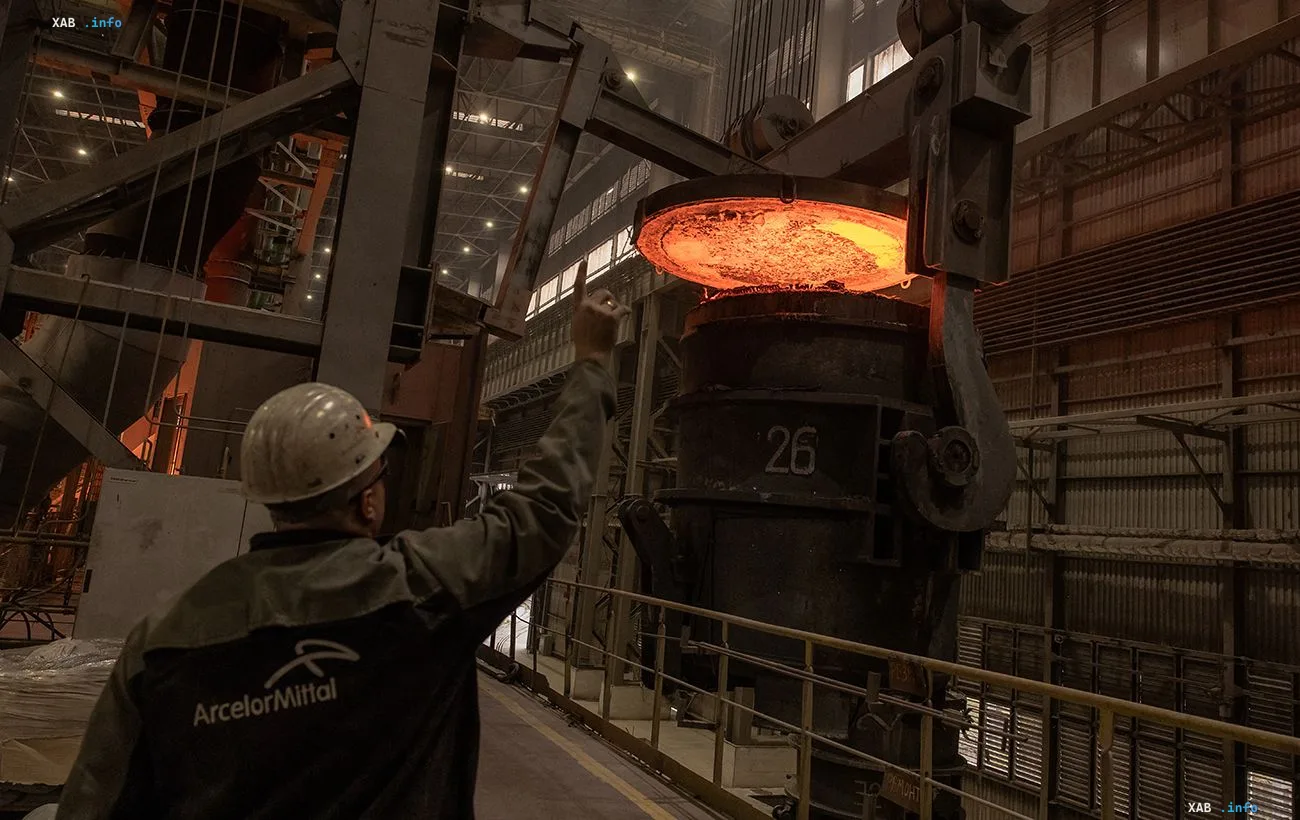
Ukraine's metallurgical industry is going through the deepest crisis in the history of the independent state. A combination of factors — missile strikes on enterprises, the de facto blockade of the deep-sea ports of the Black Sea, rising Ukrainian Railways (Ukrzaliznytsia) tariffs, high electricity costs, as well as external barriers in the form of the CBAM carbon tax and import quotas on the EU market — has led to a systemic collapse of the economy's key industry. According to the industry association Ukrmetallurgprom, steel production in August 2026 fell by half compared to August 2025, amounting to just 277 thousand tonnes. The industry and its representatives, in particular Mauro Longobardo, General Director of ArcelorMittal Kryvyi Rih, insist that the Cabinet of Ministers adopt a separate decree that should serve as a framework document for all state bodies and send a positive signal to investors and creditors.
Chronology of the strikes: from Zaporizhstal to the Dnipro plant
In August and September 2026, a series of missile strikes were carried out against major metallurgical enterprises in Ukraine. As a result, Zaporizhstal and Kametstal, part of the Metinvest group, were shut down. In mid-August, the country's largest metallurgical plant — ArcelorMittal Kryvyi Rih — partially suspended operations; two people were killed in the shelling. On 5 September, a strike hit the Dnipro Metallurgical Plant, part of the DCH group. Each of these incidents sequentially reduced the industry's total capacity, and by the end of August the cumulative effect led to a twofold drop in steel output.
Export blockade: loss of the maritime corridor
Since the end of July 2026, commercial shipping out of the Greater Odesa ports has effectively stopped due to Russian shelling. This means that since the deep-sea ports of the Black Sea were blockaded, Ukrainian metallurgical products cannot be shipped to foreign markets by the traditional sea route. The Ukrainian National Committee of the International Chamber of Commerce (ICC) warned that if the maritime corridor continues to operate in its current mode, Ukraine risks losing about 10% of GDP, $17 billion in export revenue, and a further $8.5 billion in tax receipts. For metallurgy, whose products by mass and volume critically depend on maritime and rail logistics chains, this blockade strikes at the very foundation of the business model.
What the industry proposes: a single decree instead of scattered measures
In a comment to RBC-Ukraine, Mauro Longobardo emphasises that individual initiatives by state bodies are not enough. "No single body can solve the complex of problems. Without a single document with defined responsible parties and deadlines, each issue is considered in isolation and, as a result, 'gets stuck'," note representatives of ArcelorMittal Kryvyi Rih. In their view, the government decree should include diplomatic work with the European Commission to postpone the introduction of the carbon tax (CBAM), the elimination or increase of quotas for Ukrainian metal products on the EU market, as well as an anti-dumping investigation by the Ministry of Economy against suppliers from Turkey and China, who, according to the industry, have access to cheap Russian raw materials and energy and are able to undercut prices on the domestic Ukrainian market.
Energy, logistics and human capital
As conceived by the industry, the decree should provide for stabilising Ukrzaliznytsia tariffs and the cost of other logistics, as well as defining special booking conditions for workers in the metallurgical industry to preserve its human capital under wartime conditions. The energy block proposes continuing the practice of concluding long-term contracts for the purchase of electricity from generation, but with a clear priority — the primary supply of industrial enterprises. In addition, legislation must replace the criterion of the ultimate beneficiary's citizenship with the criterion of the absence of ties to the aggressor state, and the credit limits of the Decarbonisation Fund must be revised to match the real needs of industry. "This will unlock access for industrial companies to decarbonisation tools for recovery after attacks," Longobardo added.
Signal to the market and strategic choice
In the assessment of industry representatives, the government decree should not be merely an administrative act, but a public signal to investors, creditors and international partners that the state recognises the strategic problem of metallurgy and is ready to act systematically. In conditions where steel output has halved and the export channel is effectively closed, the absence of a single coordination mechanism risks turning a temporary crisis into structural degradation of an industry on which a significant part of industrial exports, tax receipts and employment in the eastern and southern regions of Ukraine depend.