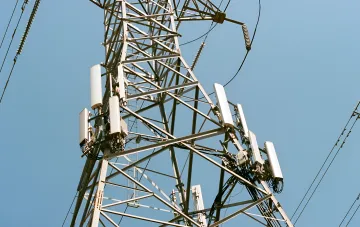
In preparation for a challenging heating season and ongoing energy challenges, the Ministry of Digital Transformation of Ukraine plans to significantly tighten requirements for mobile operators. According to information obtained by RBC-Ukraine, the head of the ministry, Oksana Ferchuk, stated that the current standard for autonomous network operation will be revised upwards.
From 10 hours to a new standard: ministry plans
Currently, Ukraine has a requirement that the largest operators — Kyivstar, Vodafone, and lifecell — must ensure mobile connectivity during blackouts (power outages) for at least 10 hours. However, the Ministry of Digital Transformation intends to increase this limit in the next resolution. The specific figure for the new time interval is not yet disclosed and will be announced in the text of the regulatory act currently being prepared.
Oksana Ferchuk emphasized that preparing infrastructure for prolonged outages is one of the ministry's priority areas. This decision is dictated by the need to ensure communication stability in the event of large-scale attacks on the country's energy system during the winter of 2026.
Economic burden on operators
Tightening standards will inevitably lead to significant financial costs for the telecommunications market. To ensure longer autonomous operation of base stations, operators will need to purchase additional batteries, diesel generators, and other backup equipment. This will create an additional burden on businesses that have already suffered significant losses during infrastructure restoration following destruction.
Nevertheless, the Ministry of Digital Transformation is convinced that operators are interested in increasing network reliability. As Ferchuk noted: "If there is no connection, they will have no subscribers and no revenue." Thus, the state views these investments as a necessary step to preserve business in crisis conditions.
Development of xPON technologies and fixed internet
Alongside regulating mobile communications, the ministry is actively working to improve the resilience of home internet. The key technology here is xPON, which allows the network to operate during power outages if the user has backup power (UPS). According to the ministry, 53% of internet consumers in Ukraine are already using this technology.
To increase transparency, the Ministry of Digital Transformation plans to create a special interactive map. Users will be able to check which areas have networks supporting xPON, allowing citizens to prepare in advance for possible outages and ensure connectivity.
Regulation timeline: from 2024 to 2026
Systematic work to increase network autonomy began in July 2024, when the National Council for Regulation of Communications and Informatization (NCRI) required operators to ensure network operation without electricity for 10 hours. By February 1, 2025, companies were required to equip 100% of base stations with generators and batteries to ensure such a reserve.
Separately, a requirement for 72 hours of uninterrupted operation was established for 25% of critical base stations. For fixed internet providers, the requirement was set to ensure backup power for 95% of the network so that home internet could operate for up to 72 hours. New initiatives in 2026 will be a logical continuation of this strategy aimed at full independence of communications from the centralized power grid.