
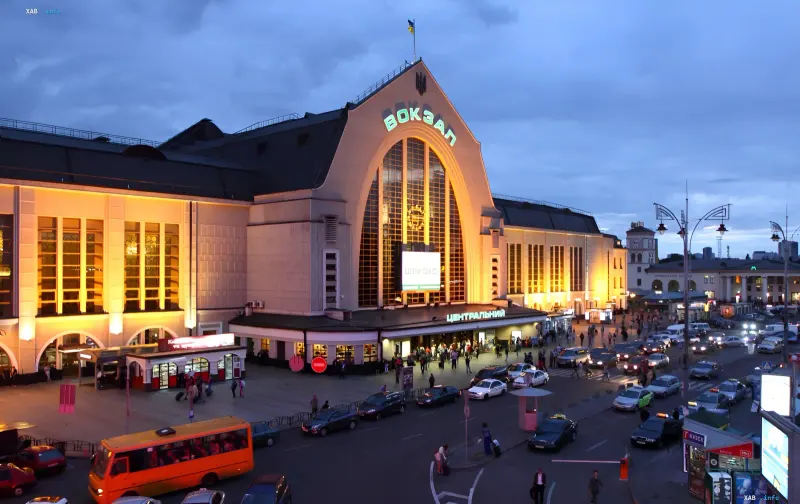
Ukraine's Ministry of Recovery, Infrastructure and Transport has announced the launch of a large-scale program to integrate railway and road passenger transport. The station complexes of five cities — Lviv, Dnipro, Zaporizhzhia, Berdychiv and Bila Tserkva — have been officially included in the electronic Register of Bus Stations, maintained by the regulator Ukrtransbezpeka. This means that from this moment passengers will be able to plan and purchase tickets for bus routes synchronized with the schedules of Ukrzaliznytsia trains, effectively turning railway stations into full-fledged multimodal transport hubs. The initiative is being implemented at a time when the country's logistics chains are subject to constant change due to hostilities, and the need for predictable and safe routes remains critically high.
Which cities joined the pilot and what this changes for passengers
The choice of five cities — Lviv, Dnipro, Zaporizhzhia, Berdychiv and Bila Tserkva — is not accidental: all of them are major transport hubs with high throughput capacity and significant passenger flows. Their inclusion in the Ukrtransbezpeka register of bus stations means that bus routes starting or ending at these stations acquire a legal status identical to that of any other licensed bus station. For passengers this translates into concrete guarantees: a fixed schedule, mandatory insurance, clear rules for ticket refunds and rebooking, as well as a single point of information. According to Serhiy Derkach, First Deputy Minister of Recovery, Infrastructure and Transport, the main goal of the initiative is to make passenger transport predictable and safe, and forming bus routes within the legal framework guarantees the protection of passengers' rights and a stable quality of service.
Priority — front-line directions
Particular emphasis within the program is placed on routes to and from front-line territories. It is precisely in these regions that the combination of railway and bus transport becomes a key tool for ensuring transport accessibility: trains often cannot reach the last settlements, while bus routes cover the "last mile" and the "last tens of kilometers." Minister Derkach emphasized that the multimodal link makes it possible to build a continuous "door-to-door" route even when one mode of transport is temporarily restricted. This is especially important for evacuation flows, the delivery of humanitarian aid and the operation of medical facilities near the line of separation.
How carriers can join the system
Road carriers who wish to integrate their routes into the operation of multimodal hubs and synchronize them with the Ukrzaliznytsia schedule can submit an application to the official email address [email protected] with the mandatory note "Multimodal transport." This means that the onboarding process is open to both private and state road carriers, and coordination will be carried out directly through the Ukrzaliznytsia structure. Experts note that this model lowers the barrier to entry for carriers: they do not need to build separate infrastructure, but only need to obtain inclusion in the electronic register and comply with Ukrtransbezpeka's requirements for safety and passenger service.
Safety and operational context
The launch of multimodal hubs is taking place against the backdrop of strengthened security measures at railway infrastructure facilities. Ukrzaliznytsia regularly introduces additional protocols: under martial law, photo and video filming at railway facilities is prohibited and may entail criminal liability up to imprisonment. Stations operate on a 24-hour basis, and updated boarding rules during prolonged air alerts are being developed for passengers. In parallel, work is underway on solutions that ensure stable train movement even during periods of mass alerts. All these measures create an operational environment in which multimodal hubs will be able to function without interruptions and with minimal risk to passengers.
Contradictory data
Public communications show a slight difference in emphasis: in official ministry statements the initiative is presented as the inclusion of stations in the Ukrtransbezpeka register, whereas in industry and news sources it is more often described as a "large-scale update by Ukrzaliznytsia." In essence, this is not a contradiction but a reflection of two roles: Ukrtransbezpeka acts as the regulator maintaining the electronic register of bus stations, while Ukrzaliznytsia is the operator on whose facilities the integration is physically implemented. Nevertheless, it is important for passengers and carriers to understand that the legal basis for the operation of bus routes at stations is precisely inclusion in the regulator's register, and not an internal decision of the railway company. Until a single regulatory act combining both levels is published, formal responsibility for the quality of bus service at stations may be distributed between the two structures, which potentially creates a zone of uncertainty when considering passenger complaints.


