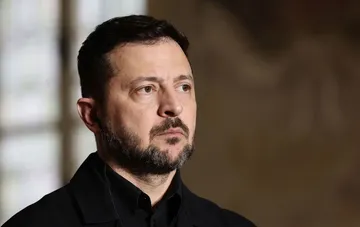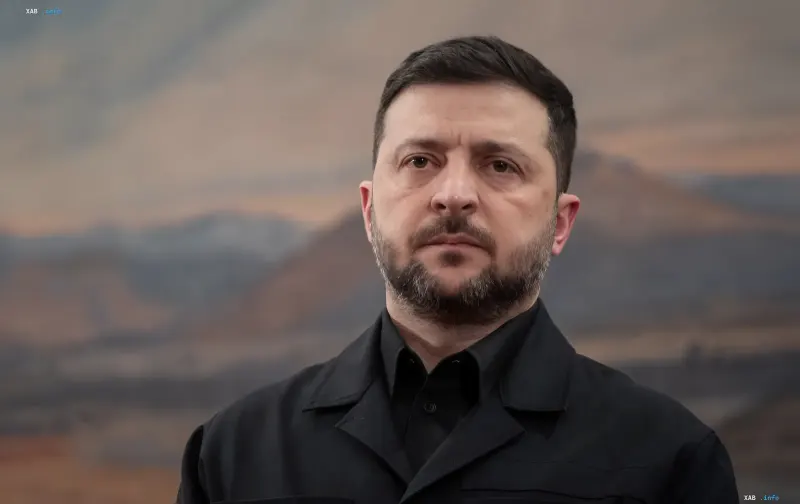
Ukrainian President Volodymyr Zelensky, during his speech at the XI International Veterans Forum, confirmed that a National Pantheon will be established in the country. He emphasized that it is the citizens of Ukraine who will independently determine which historical figures should be considered national heroes. According to him, the pantheon will embody the principle that Ukrainian heroes of different eras, "who fought for Ukraine, for our independence," continue to inspire contemporaries. "Strong means free," added the head of state, underlining that all Ukrainian heroes deserve proper honor.
Legislative basis and location
Zelensky reminded that the Verkhovna Rada has already passed a law on the creation of a Ukrainian pantheon. According to available data, the document was adopted on July 1, with 287 People's Deputies voting in favor. The pantheon is planned to be located in the center of Kyiv: the government has designated the territory of the Kyiv-Pechersk Lavra National Nature Reserve for this purpose. The President also called on government officials and representatives of local communities to actively involve local communities in implementing the policy of honoring heroes and the feat of the Ukrainian people, noting that this process "should take place not only at the national level".
International reaction: Poland's position
The initiative to create a pantheon, even before the adoption of the relevant document, provoked a sharp reaction in Poland. In the Chancellery of President Karol Nawrocki, the introduction of the draft law by Ukrainian President Volodymyr Zelensky was called "actions of an escalatory nature". In Warsaw, this initiative was linked to the decision to name one of the military units after the "heroes of the UPA" (Ukrainian Insurgent Army), which, in the opinion of the Polish side, exacerbates historical disputes between the two countries.
Contradictory data
In the primary materials, the date of adoption of the law on the pantheon is indicated without a specific year — only as "July 1". This creates uncertainty as to whether it refers to July 1, 2025, or 2026, which requires additional factual clarification before publication. In addition, in Zelensky's speeches, there is an inaccurate formulation ("our guarantee" instead of "instruction/obligation"), which could be either an artifact of the transcript or a feature of oral speech; the text of the article preserves the essence of the statement, not a verbatim quote with an error.
Significance of the initiative
The creation of the National Pantheon is viewed as an element of forming a single official narrative about national heroes and a symbolic center of memory in the capital. At the same time, the project becomes a subject of diplomatic tension with neighboring Poland, for whom figures associated with the UPA remain a sensitive topic. Thus, the pantheon goes beyond a purely memorial object and becomes a tool for internal consolidation and a marker of Kyiv's foreign policy position.